Vegetarian recipes
Von Die ThatCleanChef-Küche · Aktualisiert 4. September 2026 · 13 Min. Lesezeit
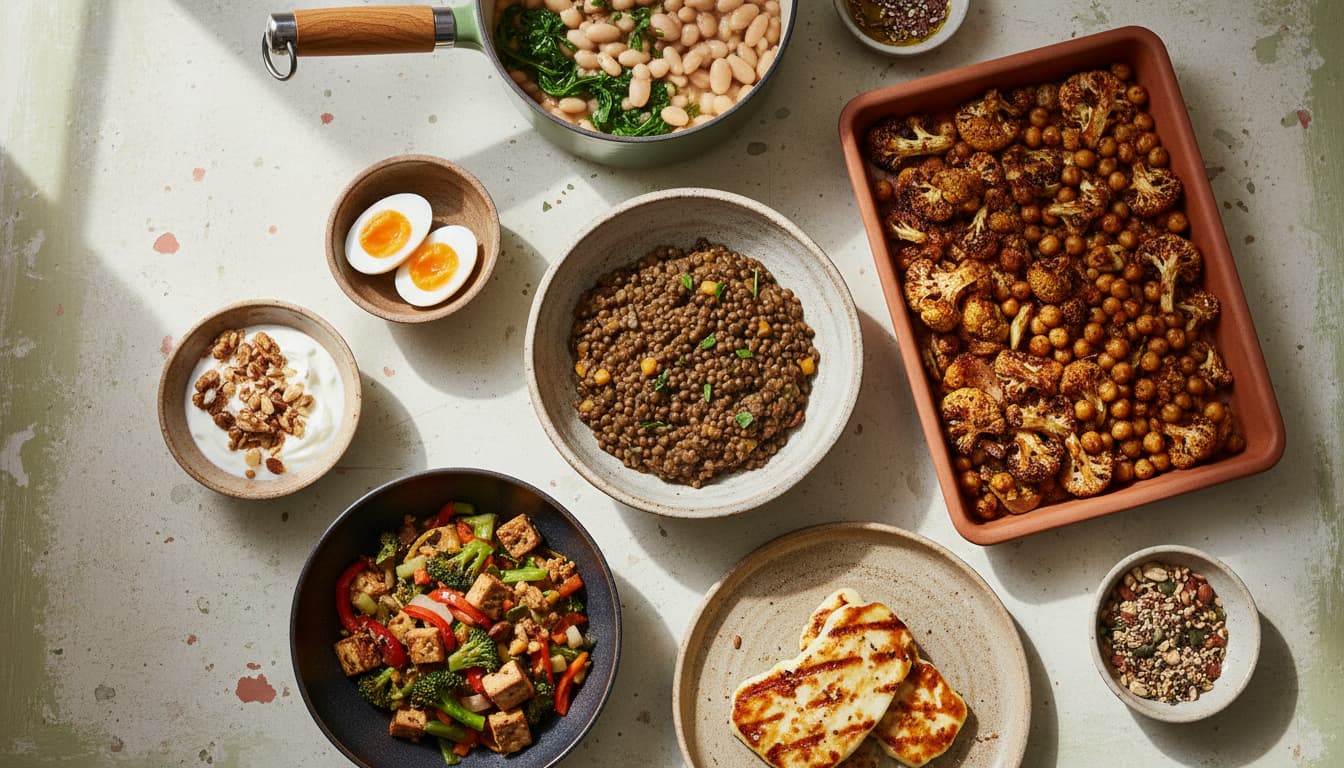
Vegetarian cooking almost never fails for lack of ideas. It fails on two things: not enough protein on the plate, and not enough browning in the pan. Fix those and a meatless dinner stops reading as the version without the main thing. Where the protein comes from, the four nutrients worth attention, the techniques that make plants taste cooked-for, and a week of dinners.
Why we tested this vegetarian recipes 3 times.
Every flagship recipe on this site goes through at least three rounds of kitchen testing before publication. We log what changed between tests so you can see the recipe's evolution, and so we can't quietly drop the failures.
- 01
Test 1
- What we tried
- Cooked a week of vegetarian dinners from popular published recipes without changing anything, and logged the protein.
- What happened
- Five of the seven landed between 10 and 14g per serving. Four of us were reliably hungry within two hours of eating.
- What we changed
- Every dinner on this page now carries a legume or a dairy element sized to reach 25g minimum.
- 02
Test 2
- What we tried
- Cooked firm tofu straight from the packet, patted dry, in a hot oiled pan.
- What happened
- It steamed in its own water for six minutes, stuck to the pan, and came off pale and broken.
- What we changed
- Press for thirty minutes, or buy super-firm vacuum-packed tofu, then cornstarch and real heat.
- 03
Test 3
- What we tried
- Made the same lentil stew twice, once plain and once with fried tomato paste, a spoon of miso and lemon at the end.
- What happened
- The plain version tasted like seasoned lentils. The second tasted like a dish somebody had cooked on purpose.
- What we changed
- Two or three deliberate umami sources plus acid at the finish, in every savoury vegetarian recipe on this site.
- 01
The definition, and the three sub-patterns worth naming
Vegetarian eating excludes meat, poultry and fish, and includes eggs and dairy. Lacto-ovo is the common form and the one this page assumes. Lacto-vegetarian drops eggs, ovo-vegetarian drops dairy, and vegan drops both plus honey. Pescatarian, which includes fish, is technically not vegetarian at all, though it shares most of the cooking. The distinction matters in a kitchen mainly because eggs and dairy are the easiest protein levers available, and dropping them changes the planning considerably.
- 02
Aim for 25 to 30g of protein per plate, and count it once
Most vegetarian dinners that leave people hungry two hours later are landing around 12g of protein. The target that keeps you full and preserves muscle is 25 to 30g a meal. You do not have to count forever. Count for one week, write down what your usual dinners actually deliver, and you will find the same two or three gaps every time. Almost always the fix is adding a legume or a dairy element rather than replacing the whole dish.
- 03
The protein sources, with real numbers
Per standard portion: cooked lentils 18g a cup, chickpeas 15g a cup, black beans 15g a cup, firm tofu around 20g per 200g block, tempeh 31g per 200g, edamame 17g a cup, seitan 25g per 100g. On the dairy side, Greek yogurt 17g a cup, cottage cheese 24g a cup, and two eggs 13g. Cooked quinoa contributes 8g a cup and pasta about 8g a plate. Stack any two of those and 30g stops being difficult.
- 04
The complete protein question, answered properly
Plant proteins are lower in one or two essential amino acids rather than missing them: legumes are low in methionine, grains are low in lysine. The old advice to combine them within a single meal was withdrawn decades ago, because the body maintains an amino acid pool across the day. Eat a varied diet with legumes and grains at some point in the same twenty-four hours and this is handled. Soy, quinoa, buckwheat and hemp are complete on their own if you want to stop thinking about it.
- 05
Brown things hard, because this is where vegetarian food loses
The single biggest technical failing in home vegetarian cooking is timidity with heat. Mushrooms, tofu, cauliflower, chickpeas and cabbage all need a genuinely hot pan, real fat and enough space, and they need to be left alone long enough to take colour. Meat browns almost by accident because of its fat and protein content. Vegetables need to be pushed. If your vegetarian dinners taste flat, the problem is far more often the pan temperature than the recipe.
- 06
Press the tofu, or buy the kind that does not need it
Water is what stops tofu browning, and firm tofu straight from the packet is about 80 percent water. Press it between two plates with a weight for thirty minutes, or freeze and thaw the block, which ruptures the structure and lets you squeeze out far more. Then cut it, dry it again, toss in cornstarch, and give it real heat and real oil. Super-firm vacuum-packed tofu skips the pressing entirely and is the single best purchase for people who have written tofu off.
- 07
Build umami deliberately, since you removed the main source of it
Meat brings glutamate and inosinate, and taking it out leaves a gap you have to fill on purpose. The tools: tomato paste fried until it darkens, dried mushrooms and their soaking liquid, miso, soy sauce or tamari, nutritional yeast, aged hard cheese, roasted garlic, anchovy-free Worcestershire, and seaweed. Use two or three of them in a dish, not all seven. This is the difference between a lentil stew that tastes savoury and one that tastes like seasoned lentils.
- 08
Fat and acid, in the same quantities you would use for meat
Vegetarian dishes are frequently under-fatted, because the fat that would have come from the meat was never replaced. Olive oil, butter, tahini, yogurt, nuts and cheese all carry flavour and create satiety, and cutting them is the fastest route to a dinner nobody wants again. Acid at the end matters just as much: lemon, vinegar, pickled onion, yogurt. A bowl of beans and grains without acid tastes heavy and monotone no matter how well seasoned it is.
- 09
Iron and zinc, and the vitamin C trick that changes the maths
Plant iron is non-heme and absorbed at roughly two to twenty percent, against fifteen to thirty-five percent for the heme iron in meat, which is why vegetarian iron intake targets are set higher. Vitamin C in the same meal can increase non-heme absorption several-fold, so lemon on the lentils, peppers in the bean chili, tomatoes with the spinach. Tea and coffee with a meal do the opposite, because their polyphenols bind iron, so move them to between meals. Zinc follows a similar pattern and soaking or sprouting legumes helps.
- 10
B12, and the one place a supplement is not optional
Lacto-ovo vegetarians get B12 from dairy and eggs, and most meet the requirement, though intakes tend to sit at the low end and deficiency is measurably more common than in meat eaters. If you eat dairy daily you are probably fine. If your intake is patchy, or you are vegan, a supplement or reliably fortified foods are required rather than advisable, because plants do not produce B12 and the deficiency is neurological rather than merely tiring. Ask for a serum B12 test if you have been vegetarian for years and have never checked.
- 11
Omega-3, and why flax is not the whole answer
Ground flaxseed, chia and walnuts supply ALA, which the body converts to the longer-chain EPA and DHA at a conversion rate generally estimated in the low single digits. That is enough for many people and not obviously enough for everyone. Grind the flax, since whole seeds pass through undigested, and keep it in the freezer because it oxidises fast. An algae-derived EPA and DHA supplement is the direct route and is the same source the fish get it from.
- 12
Vegetarian is not automatically healthier, and here is the honest version
Cohort studies consistently show vegetarians with lower rates of heart disease and type 2 diabetes, but those cohorts also smoke less, drink less and exercise more, and the well-run analyses adjust for only some of that. Meanwhile, chips, white pasta and processed meat substitutes are all vegetarian. The label describes what is absent. What predicts the health outcome is legumes, whole grains, vegetables, nuts and olive oil being present, which is the same thing that predicts it for anyone else.
- 13
Meat substitutes, used well
Modern burger substitutes are useful for the transition and for feeding a mixed table, and they are also ultraprocessed, high in sodium at around 350 to 500mg a patty, and comparable to beef in saturated fat. Treat them the way you would treat a good sausage: occasional, not the base of the diet. Tofu, tempeh, seitan and beans are cheaper, less processed and better nutritionally. The exception worth keeping is a bag of frozen edamame, which is neither processed nor a substitute for anything.
- 14
A week of vegetarian dinners that hit the protein target
Monday, chickpea curry with yogurt and rice, 26g. Tuesday, halloumi and roasted vegetable traybake with lentils underneath, 31g. Wednesday, black bean and sweet potato tacos with cotija and lime, 22g plus a fried egg to 28g. Thursday, pasta with white beans, greens and a lot of parmesan, 29g. Friday, crisp tofu with peanut sauce and edamame, 34g. Saturday, shakshuka with feta and bread, 27g. Sunday, mushroom and barley stew with a spoon of yogurt, 24g. That is a full week of meal prep with two cook-once components.
What people ask us next.
- How do vegetarians get enough protein?
- By putting a named protein source on every plate rather than hoping vegetables add up. Lentils at 18g a cup, chickpeas and black beans at 15g, tofu at around 20g per 200g, tempeh at 31g, Greek yogurt at 17g a cup and cottage cheese at 24g are the workhorses. Two of those in one meal reaches 30g comfortably. The failure mode is a plate of vegetables and grain with a garnish of beans, which lands nearer 12g and leaves you hungry.
- Do I need to combine proteins at every meal?
- No. That advice came from a 1970s book and was formally withdrawn by its own author, because the body maintains a free amino acid pool and draws on it across roughly a day rather than a single sitting. Eat legumes and grains at some point in the same twenty-four hours and the amino acid profile takes care of itself. If you would rather not think about it, soy, quinoa, buckwheat and hemp are complete proteins on their own.
- What is the difference between vegetarian and vegan?
- Vegetarian excludes meat, poultry and fish but includes eggs and dairy. Vegan excludes all animal products including eggs, dairy and honey. In a kitchen the practical difference is large, because eggs and dairy are the easiest high-protein ingredients available and they also handle B12, calcium and much of the iodine intake. A vegan diet needs a B12 supplement without exception and benefits from attention to iodine, calcium and long-chain omega-3.
- Do vegetarians need supplements?
- Usually one, sometimes none. If you eat dairy and eggs daily, your B12 intake is probably adequate, though vegetarians as a group sit lower than meat eaters and deficiency is more common, so a test is worthwhile after a few years. Iron and zinc are worth attention through food rather than pills, using vitamin C alongside plant iron and keeping tea and coffee away from meals. Vitamin D is a general population issue rather than a vegetarian one.
- Is a vegetarian diet healthier than eating meat?
- On average, in the cohort data, vegetarians have lower rates of heart disease and type 2 diabetes. Those cohorts also smoke less and exercise more, and the adjustments for that are imperfect. More usefully: the health effect tracks what is on the plate rather than what is absent from it. A vegetarian diet built on legumes, whole grains, vegetables, nuts and olive oil is excellent. One built on white pasta, cheese and crisps is not better than any other poor diet.
- Why does my vegetarian food taste bland?
- Three causes, in order. Not enough browning, because vegetables need a hotter pan, more fat and more patience than most home cooks give them. Not enough umami, because removing meat removed the main glutamate source and nothing replaced it, so add fried tomato paste, miso, dried mushrooms or aged cheese. And not enough acid at the end. Fix those three before you look for a different recipe, because they are almost always the actual problem.
- Are meat substitutes healthy?
- They are useful and they are ultraprocessed. A typical patty carries 350 to 500mg of sodium and saturated fat comparable to beef, plus a long ingredient list. As an occasional convenience or a way to feed a mixed table they are entirely reasonable. As a dietary staple they are worse than tofu, tempeh, beans or lentils on cost, sodium and processing. The useful mental model is that they replace a burger, not that they replace vegetables.
- What is the easiest vegetarian dinner for a beginner?
- A pot of lentils cooked with aromatics, finished with olive oil and lemon, served with yogurt and bread or rice. It costs very little, delivers 18g of protein a cup, keeps five days, and it is a dish rather than a substitution. Learn that, then learn to brown tofu properly, then learn one traybake where roasted vegetables sit on something with protein in it. Those three cover most weeknights without ever feeling like a compromise.
- Can a vegetarian diet be high-protein and still simple?
- Yes, if you batch-cook one legume and keep two fast dairy proteins in the fridge. Cook two cups of dried lentils or a pot of chickpeas on Sunday, and keep Greek yogurt and cottage cheese stocked. That combination alone lets you reach 30g on any plate in under ten minutes: lentils in the bowl, yogurt on top. Everything else in a vegetarian kitchen is flavour work rather than protein work once those two are handled.
Woher die Technik stammt
- Harvard T.H. Chan School of Public Health, The Nutrition Source, on plant protein and healthy vegetarian patterns.
- Academy of Nutrition and Dietetics, position on vegetarian and vegan eating patterns.
- NIH Office of Dietary Supplements, fact sheets for vitamin B12, iron and zinc.
- Dietary Guidelines for Americans 2020-2025, the healthy vegetarian eating pattern.
- USDA FoodData Central, reference database for nutrient values.
Über die ThatCleanChef-Küche
Ein kleines Team aus Rezeptentwicklerinnen und Foodfotografen, das Rezepte in Privatküchen mit haushaltsüblichem Equipment testet. Jede Nährwertkarte ist USDA-FoodData-Central-belegt und wird geprüft von Lena Marsh, RDN, MS. Wir geben nicht vor, ein einzelner Küchenchef zu sein, wir sind die Menschen hinter den Tellern. Das ganze Team kennenlernen →
Ähnliche Beiträge
Magnesiumreiche Lebensmittel: Kürbiskerne schlagen Spinat
Eine Handvoll Kürbiskerne liefert rund 156 mg Magnesium, mehr als eine Tasse gekochter Spinat und etwa das Fünffache einer Banane. Etwa die Hälfte der Erwachsenen bleibt unter dem geschätzten Bedarf, und der größte einzelne Grund ist die Ausmahlung von Getreide, die dem Weizen rund achtzig Prozent seines Magnesiums nimmt.
Kaliumreiche Lebensmittel: mehr als Bananen, mit echten Zahlen
Die Banane steht nicht einmal unter den ersten zwanzig. Welche Lebensmittel wirklich viel Kalium liefern, wie Kochen und Wässern den Gehalt senken, und warum Kalium ohne weniger Natrium nur die halbe Rechnung ist.
Eisenhaltige Lebensmittel: Häm, Nicht-Häm und was die Aufnahme steuert
Nicht die Eisenmenge auf der Nährwerttabelle entscheidet, sondern wie viel davon aufgenommen wird. Der Unterschied zwischen Häm- und Nicht-Häm-Eisen, warum Vitamin C die Aufnahme vervielfacht und welche Getränke sie blockieren.
Das Clean-Chef-Starter-Kit.
Ein 14-Tage-Plan für entzündungshemmende Ernährung als PDF, Einkaufsliste nach Abteilungen, Makros pro Tag aufsummiert, Sonntags-Vorbereitung. Kostenlos.
Mit der Anmeldung stimmen Sie unserer Datenschutzerklärung zu. Eine ruhige E-Mail pro Woche. Jederzeit abbestellbar.