Meal prep recipes
By The ThatCleanChef Kitchen · Updated August 20, 2026 · 14 min read
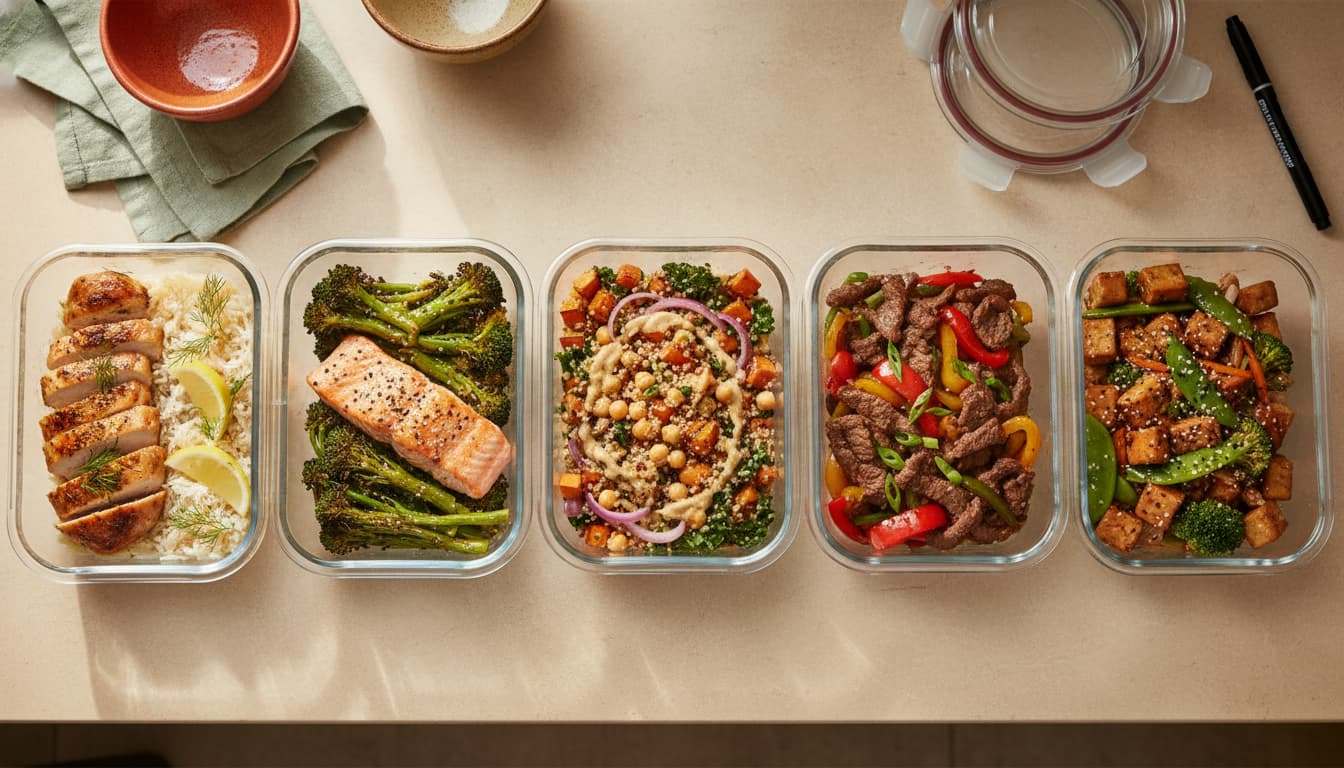
Most meal prep fails on day three, when the container tastes like a container. This is the fix: which dishes actually improve after two days in the fridge, which ones collapse, the order you cook them in so the oven is never idle, and five build templates that hold from Monday to Thursday. Ninety minutes on Sunday, no batch of identical sad chicken.
We'd rather answer the question you actually asked in the first paragraph, then earn your trust by showing the chef notes.
What actually matters, in order.
- 01
Prep components, not finished plates
The single change that rescues most meal prep weeks: cook four or five components rather than five identical dinners. A tray of roasted vegetables, a pot of grains, a protein, a sauce, and something raw and crunchy. Monday is a grain bowl, Wednesday is the same protein in a wrap, Thursday is the vegetables folded through eggs. You get variety without cooking five times, and you stop staring at the fourth identical container.
- 02
Cook in oven-first order so nothing waits
Oven on before you take your coat off. Two sheet pans go in at 425F, then the grains go on the stove, then the protein, then the sauces while everything else runs. Working in that order means the ninety minutes is mostly waiting time you spend chopping the next thing, not standing at a burner. Reverse the order and you finish in two and a half hours with a cold tray of vegetables.
- 03
Know which dishes get better and which fall apart
Braises, chilis, stews, lentil and bean dishes, roasted root vegetables, and grain salads with a sturdy dressing all improve by day two. Anything crisp does not survive: breaded cutlets go soft, roasted broccoli slumps, fried rice goes claggy. Leafy salad stays whole only if the dressing rides separately. Plan the crisp things for the night you cook them and prep the forgiving ones.
- 04
Undercook the vegetables by about three minutes
Anything you will reheat gets cooked to just short of done. Broccoli, green beans, and zucchini pulled while still squeaky come out correct after a reheat; cooked to perfect on Sunday they are grey mush on Wednesday. Grains get the same treatment, a minute short of tender and spread on a tray to steam off, which keeps them from turning to paste in the container.
- 05
Dress at the table, never in the box
Vinaigrettes, tahini sauces, and yogurt dressings all go into small jars, not onto the food. Acid breaks down greens and turns grains soggy within a day. The exception is a sturdy grain salad, where a little dressing on warm grains soaks in and improves things. Everything else waits. This one habit is the difference between a meal you look forward to and a wet box.
- 06
Cool fast, then seal, and respect the four-day line
Hot food in a sealed container steams itself and lands in the temperature range where bacteria multiply fastest. Spread cooked food on a sheet pan for fifteen minutes, then box it and refrigerate. USDA guidance puts cooked leftovers at three to four days in the fridge, so a Sunday cook covers Monday through Thursday honestly. Friday's portion goes in the freezer on Sunday, not on Thursday when it is already old.
- 07
Five templates that carry a real week
Grain bowl: farro, roasted vegetables, a protein, lemon-tahini. Sheet-pan dinner: one tray, staged so nothing overcooks. Big pot: turkey chili or lentil stew, six portions, better on day two. Breakfast: overnight oats or egg bites, made in one batch of six. Assembly lunch: a chopped salad with beans and feta that needs no reheating. Rotate three of the five and the week never repeats itself.
- 08
Reheat in a pan when the texture matters
The microwave is fine for soups, stews, chili, and grains with sauce. It is wrong for anything that had a crust: it steams the surface soft. Thirty seconds in a hot dry skillet brings back roasted vegetables, seared protein, and anything with a browned edge. Rice reheats best with a tablespoon of water and a lid. Two minutes of attention buys back most of what the fridge took.
- 09
Buy containers you can see into and stack
Glass with a locking lid, one size, rectangular so they tessellate in the fridge. Round tubs waste shelf space and mixed sizes never stack. Clear beats opaque because food you cannot see is food you forget. Five identical containers plus four small jars for sauces is the whole kit. This is genuinely the only equipment decision that changes whether prep sticks as a habit.
The questions cooks bring us.
- How long does meal prep last in the fridge?
- Three to four days for most cooked dishes, which is the USDA guideline for cooked leftovers held at or below 40F. That is why a Sunday cook covers Monday through Thursday and no further. If you want a Friday portion, freeze it on Sunday while it is fresh rather than freezing what is already three days old. Cooked grains and roasted vegetables sit at the shorter end; chili, stew, and braises hold the full four days and taste better for it.
- How do I stop meal prep tasting boring by Wednesday?
- Prep components instead of finished plates, and change the sauce rather than the food. The same roasted vegetables and chicken become a grain bowl with lemon-tahini on Monday, a wrap with garlic yogurt on Tuesday, and a chopped salad with a sharp vinaigrette on Thursday. Add one fresh element at serving time, herbs, a squeeze of lemon, sliced scallion, pickled onion. Boredom is almost always a sauce problem, not a cooking problem.
- How much time does a week of meal prep actually take?
- Ninety minutes for five lunches and two or three dinner components, including the washing up. That is the honest number for one person working through an oven-first sequence, and it assumes you shopped beforehand. Anyone promising twenty minutes is timing the chopping and leaving out the roasting, the cooling, and the dishes. Shopping and putting the food away is another forty minutes on top.
- Can I freeze meal prep instead of refrigerating it?
- Yes, and it is the right call for anything past day four. Soups, chilis, stews, cooked grains, meatballs, and cooked pulses all freeze well for around three months. Things that freeze badly: cabbage and cucumber, potato in a thin sauce, dairy-heavy sauces that split, and anything crisp. Freeze in single portions and flat, they thaw in a fraction of the time and stack better.
Where the technique comes from
About the ThatCleanChef Kitchen
A small team of recipe developers and food photographers testing recipes in home kitchens on home equipment. Every Nutrition Ledger is USDA FoodData Central-sourced and reviewed by Lena Marsh, RDN, MS. We don't pretend to be a single chef, we're the people behind the plates. Meet the full team →
Related posts
Fried Rice: Cold Rice, Hot Pan, and Soy Down the Side
Fried rice is a moisture-management problem wearing a stir-fry costume. Freshly cooked rice is saturated and its starch is still gelatinised, so it clumps and steams. Rice that has spent a night uncovered in the fridge has lost surface water and retrograded, and it separates into individual grains in a hot pan. Twenty-five minutes of cooking, and one decision made the day before.
Apple Crisp: Two Varieties, Cold Butter, Forty-Five Minutes
A watery apple crisp is not a topping problem. It is an apple problem and a time problem. One variety of apple gives you either mush or raw wedges, and thirty minutes is long enough to brown a topping but not long enough to cook fruit through and drive off its water. Two varieties, a spoon of cornstarch, coarse oat topping made with cold butter, and forty-five minutes at 375F. Seventy-five minutes total, and it wants twenty of them to rest.
Coleslaw: Salt the Cabbage, Squeeze It, Then Dress It
Coleslaw goes watery for one reason. Cabbage is ninety-two percent water, and if you dress it raw, the salt in the dressing pulls that water out over the next hour and dilutes everything you just made. Salt the shredded cabbage first, let it drain for thirty minutes, squeeze it, and then dress it. Fifty minutes including the wait, and the difference is a slaw that is still crunchy on day three.
The Clean Chef Starter Kit.
A 14-day anti-inflammatory meal plan PDF, grocery list by section, macros totaled per day, Sunday prep sequence. Free.
By subscribing, you agree to our Privacy Policy. One calm email a week. Unsubscribe anytime.