High-protein recipes
By The ThatCleanChef Kitchen · Updated June 28, 2026 · 15 min read
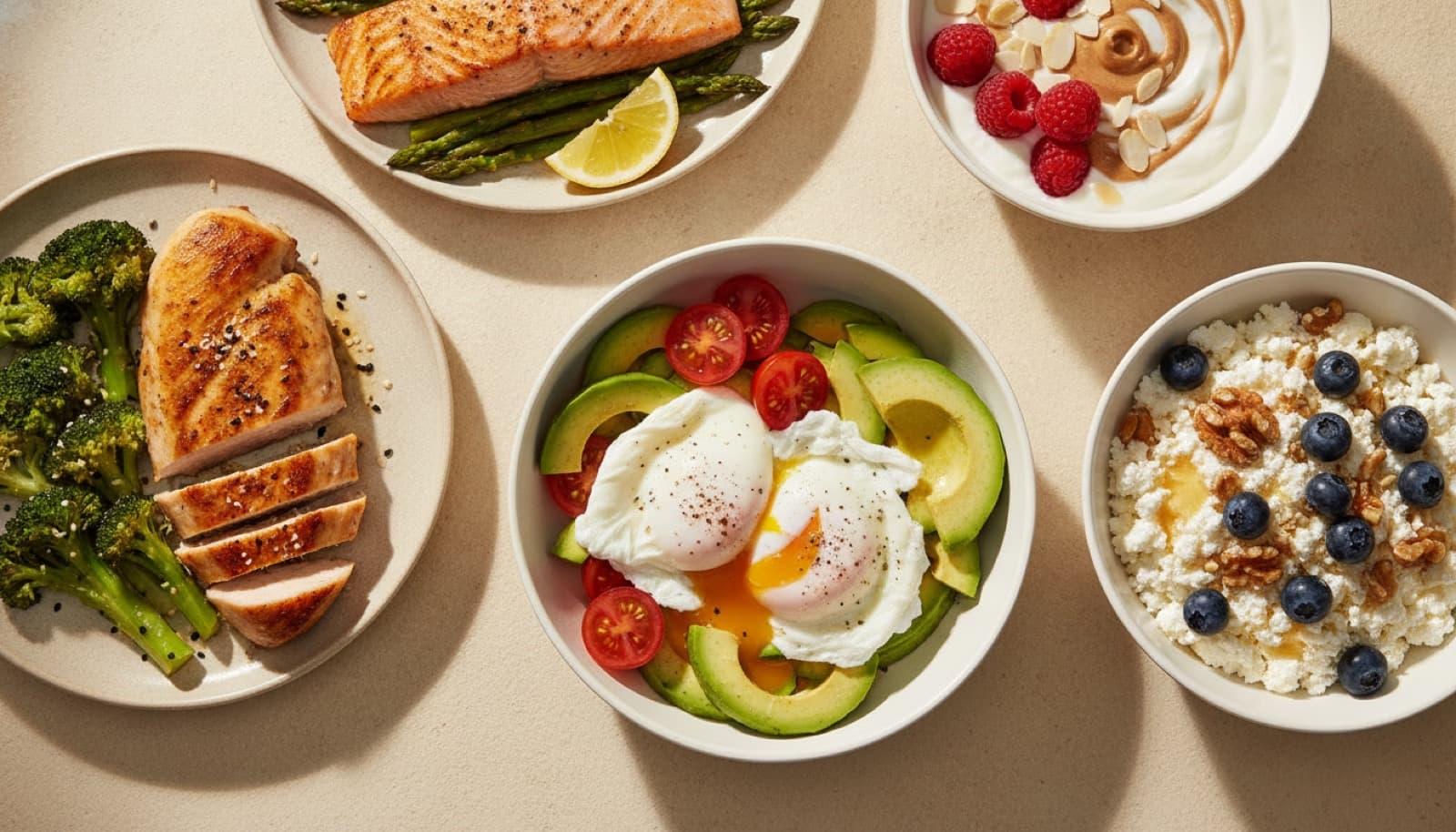
High protein here means 30g or more per serving from real food, not a scoop of powder stirred into oats. This is the frame, why the protein floor matters, how much you actually need, and how to hit it at breakfast, lunch, and dinner, plus the chef-tested recipes that get you there. Start with the high-protein breakfast bowl, marry me chicken, the cottage cheese recipes, or the high-protein snacks roundup.
We'd rather answer the question you actually asked in the first paragraph, then earn your trust by showing the chef notes.
What actually matters, in order.
- 01
The target: 1.2-1.6g per kg of body weight, landed in real meals
The 0.8g/kg RDA is a floor to prevent deficiency, not a target for active adults. The research consensus for muscle preservation and satiety (Phillips 2016, Morton 2018 meta-analysis) sits at 1.2-1.6g/kg. For a 75kg adult that's 90-120g a day, and it has to land in meals you'll actually cook, not a shaker bottle.
- 02
30g per meal is the working floor, here's why
Muscle protein synthesis responds to roughly 2.5g of leucine per sitting, which falls out at about 25-30g of mixed protein from animal sources, a touch higher from plants. Below that the anabolic signal is muted. We build every recipe in this hub to clear 30g per serving so three meals get you most of the way.
- 03
Breakfast is where most people lose the day
Cereal and toast is a 6g start. The high-protein breakfast bowl, the egg-white frittata, the spinach-feta egg bites, and overnight oats built right all clear 25-35g before 9am. Front-load protein and the rest of the day's target gets easy. The high protein breakfast collection is the full shelf.
- 04
Cottage cheese is the cheapest 25g in the fridge
Half a cup of 4% cottage cheese is roughly 12-14g, a full cup pushes 25g, and it disappears into flatbread, pancakes, bagels, and even ice cream. The cottage cheese recipes collection is the deepest sub-cluster on the site, eight recipes and counting, and the single biggest low-competition win on the board.
- 05
Chicken, salmon, and eggs do the heavy lifting at dinner
Marry me chicken (42g), the salmon rice bowl meal prep, air-fryer chicken breast, and the high-protein buddha bowl are the dinner anchors. A 6oz chicken breast is 38g, a salmon fillet 34g. Cook the protein once, build three meals off it.
- 06
Snacks are a fourth meal slot, not an afterthought
When appetite is unreliable, a 15-20g snack closes the daily gap. Cottage cheese, skyr, a tuna pouch, edamame, hard-boiled eggs. The high-protein snacks roundup ranks twelve that actually hit 15g+, honest about which ones don't.
- 07
Real food beats powder for everything except convenience
Powder has a place when you genuinely can't cook, but whole-food protein brings fiber, micronutrients, and satiety that whey dust doesn't. Every recipe in this hub is powder-free by design. The arithmetic still hits the target with ingredients you'd cook anyway.
The questions cooks bring us.
- How much protein do I actually need per day?
- The RDA of 0.8g per kg of body weight is a floor to prevent deficiency, not an optimum. Most nutrition researchers put the target for active adults and anyone protecting muscle at 1.2-1.6g per kg, so roughly 90-120g a day for a 75kg adult. Older adults sit at the higher end. The practical move is to spread it across meals rather than load one, which is why we build to 30g per serving.
- What counts as a high-protein recipe?
- On this site, 30g or more of protein per serving from real food. That's the per-meal floor that meaningfully drives muscle protein synthesis. Some snacks land lower (15g+) and earn their place on satiety and convenience. We label the protein number at the top of every recipe and it's USDA FoodData Central-sourced, not estimated.
- Can I hit a high-protein target without meat?
- Yes, with a slightly higher per-serving target (33-35g) to account for plant protein digestibility. Cottage cheese, Greek yogurt, eggs, lentils, chickpeas, tofu, and edamame are the workhorses. The cottage cheese recipes and the dense bean salad are the easiest entry points; pair plant proteins across the day to round out the amino-acid profile.
- Are protein powders necessary?
- No. Powder is a convenience tool for when you genuinely can't cook, not a requirement. Whole-food protein brings fiber, micronutrients, and satiety that powder doesn't, and it's usually cheaper per gram than a tub of branded whey. Every recipe in this hub is powder-free. Use a scoop in a pinch, but don't build your intake around it.
- What's the easiest high-protein breakfast?
- Overnight oats built with Greek yogurt and a spoon of cottage cheese, or the high-protein breakfast bowl, both clear 25-30g and take five minutes of active work. Egg bites and the egg-white frittata batch on Sunday and reheat all week. Front-loading protein at breakfast is the single highest-leverage change most people can make.
Where the technique comes from
- Phillips SM, et al. Protein requirements and recommendations for older adults. Appl Physiol Nutr Metab. 2016.
- Morton RW, et al. Systematic review and meta-analysis of protein supplementation on resistance training. Br J Sports Med. 2018.
- Dietary Reference Intakes, protein RDA of 0.8g per kg body weight (National Academies).
- USDA FoodData Central, protein values for all recipes in this hub.
About the ThatCleanChef Kitchen
A small team of recipe developers and food photographers testing recipes in home kitchens on home equipment. Every Nutrition Ledger is USDA FoodData Central-sourced and reviewed by Lena Marsh, RDN, MS. We don't pretend to be a single chef, we're the people behind the plates. Meet the full team →
Related posts
Beef Bourguignon: Dry the Meat, Crowd Nothing, Wait a Day
This is a braise that fails at the first step or not at all. Wet beef in a crowded pot steams, and a stew built on steamed beef cannot be rescued later by wine, stock or time. Dry the cubes, brown them in three batches, cook the garnish separately, and give it three hours at 325F. Then, ideally, put it in the fridge overnight, because the second day is a different dish.
How to Cook Tofu: Press It, Coat It in Starch, Sauce It Last
Tofu is bland and soggy for two mechanical reasons, and both are fixable. It is packed in water, so the surface cannot brown until that water is gone, and it is a set protein gel with no internal channels, so marinade does not penetrate it no matter how long you wait. Press it, coat it in cornstarch, fry it hard, and sauce it after it is crisp. An hour, most of it pressing.
Enchiladas: Fry the Tortillas, Fry the Sauce, Bake Them Briefly
Nearly every bad enchilada is the same enchilada: a raw corn tortilla soaked in canned sauce and baked until the whole tray turns to porridge. Two steps fix it permanently. Pass each tortilla through hot oil for twenty seconds so it waterproofs, and fry the blended chile sauce in fat before it goes anywhere near the pan. Ninety minutes, most of it the sauce, and twenty of it in the oven.
The Clean Chef Starter Kit.
A 14-day anti-inflammatory meal plan PDF, grocery list by section, macros totaled per day, Sunday prep sequence. Free.
By subscribing, you agree to our Privacy Policy. One calm email a week. Unsubscribe anytime.