- Kalorien
- 205
- Eiweiß
- 4g
- Ballaststoffe
- 1g
- Ges. Fett
- 0g
- Natrium
- 190mg
- Zugesetzter Zucker
- 0g
Was dieses Rezept für Sie leistet.
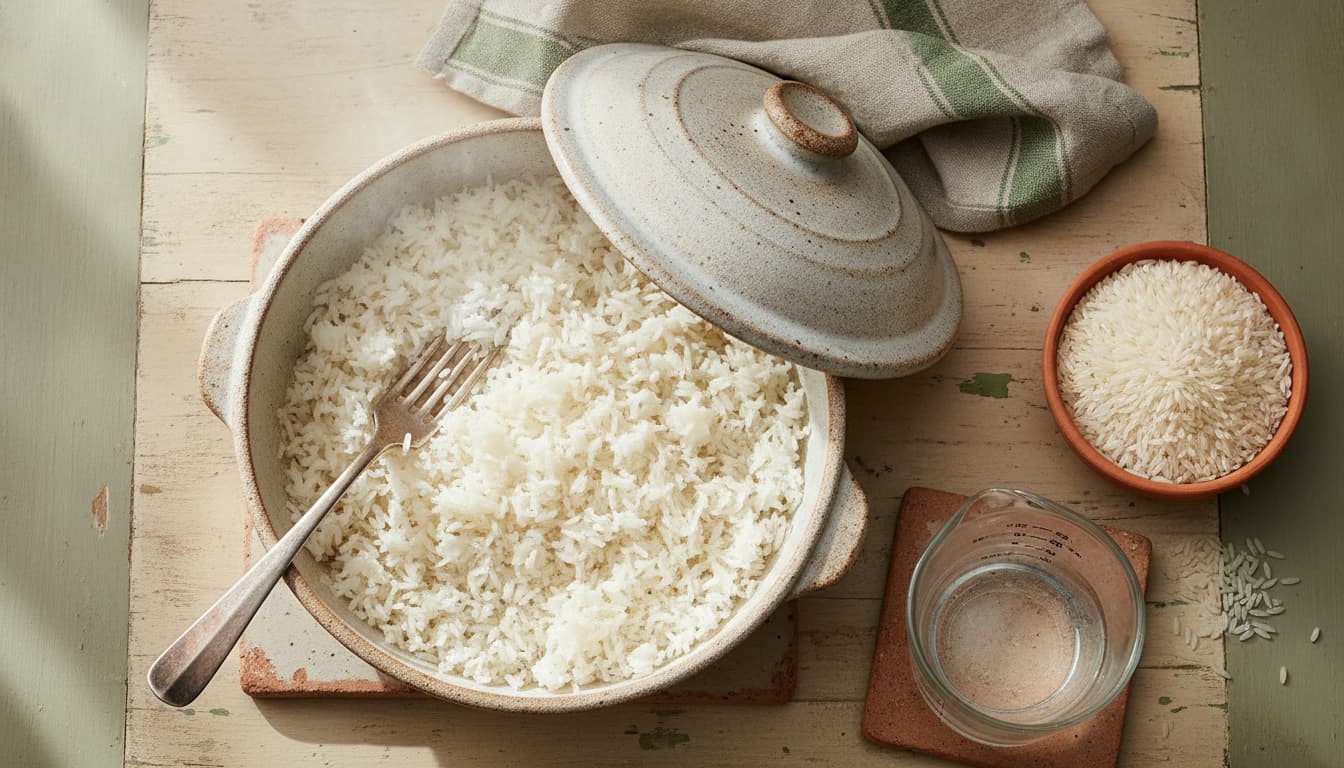
Rice is not difficult, it is unforgiving of two specific mistakes: too much water and not enough rest. Here are the absorption ratios by variety, what rinsing does and when to skip it, the ten minutes off the heat that decide the texture, and the food-safety rule about leftover rice that most people have never heard.
Warum das funktioniert
Jedes Rezept auf dieser Seite kommt mit einer Erklärung der Technik-Entscheidungen: warum erst anbraten, dann schmoren, warum die Säure zum Schluss kommt, warum das Fett vor den Aromaten ausgelassen wird. Die Methode unten besteht aus genau diesen Entscheidungen, der Reihe nach.
Zutaten
- Vollständige Zutatenliste folgt mit der Foto-Produktion
Methode
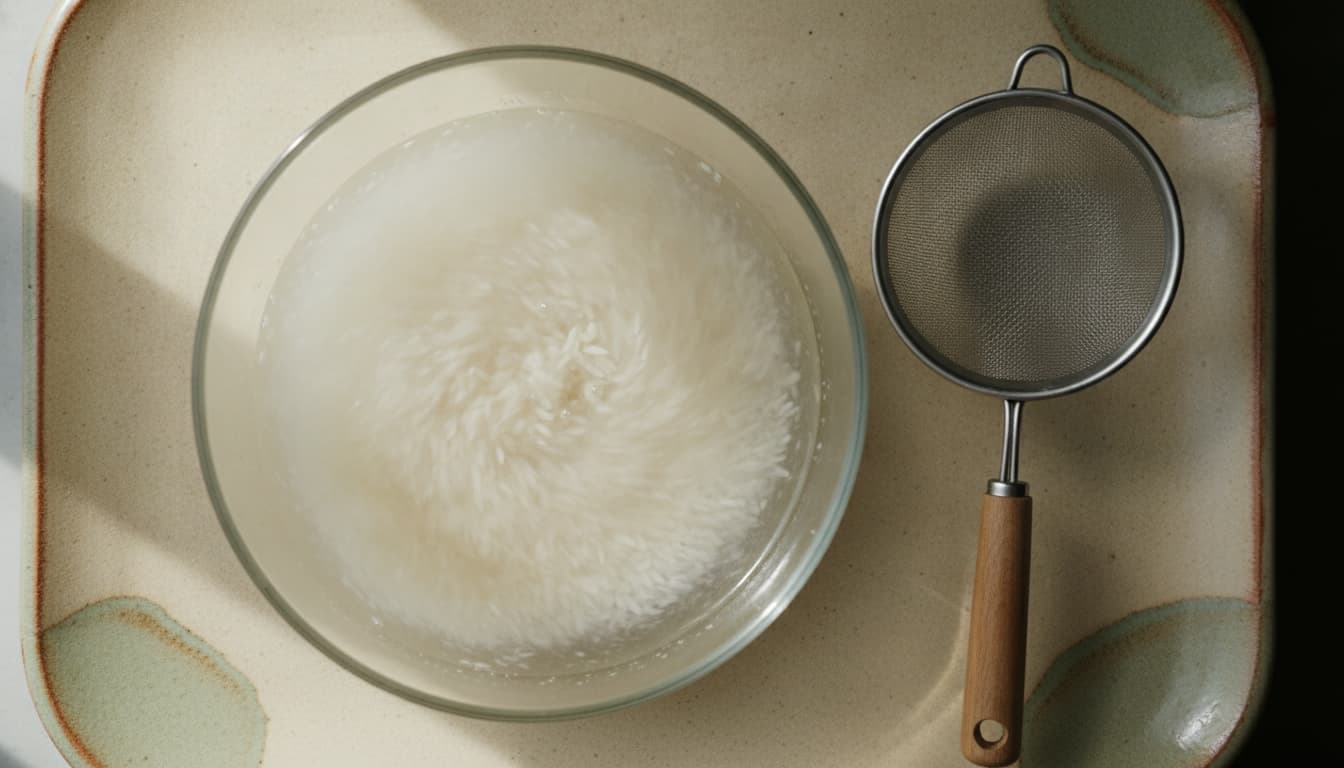
Rinse, and know what rinsing is for
Rinsing removes loose surface starch, which is the stuff that turns into paste and glues grains together. Put the rice in a bowl, cover with cold water, swish with your hand, pour off the cloudy water, and repeat until it runs nearly clear, usually three or four changes. Rinse long-grain, basmati and jasmine every time. Do not rinse risotto rice or paella rice, where that surface starch is the sauce, and do not rinse enriched US white rice if you specifically want the added vitamins, which rinse off.
The ratios, by variety, for the absorption method
Measured by volume, rice to water: long-grain white 1 to 1.5. Basmati 1 to 1.5, or 1 to 1.25 if you soaked it thirty minutes. Jasmine 1 to 1.25, because it is a softer grain and drinks less. Short-grain white 1 to 1.25. Brown rice 1 to 2 and it needs closer to forty minutes. Wild rice 1 to 3. Those are for a lidded pot on a stove, not for a rice cooker, which usually wants slightly less. Write your pot's number on a card once and stop guessing.
The method, in five moves
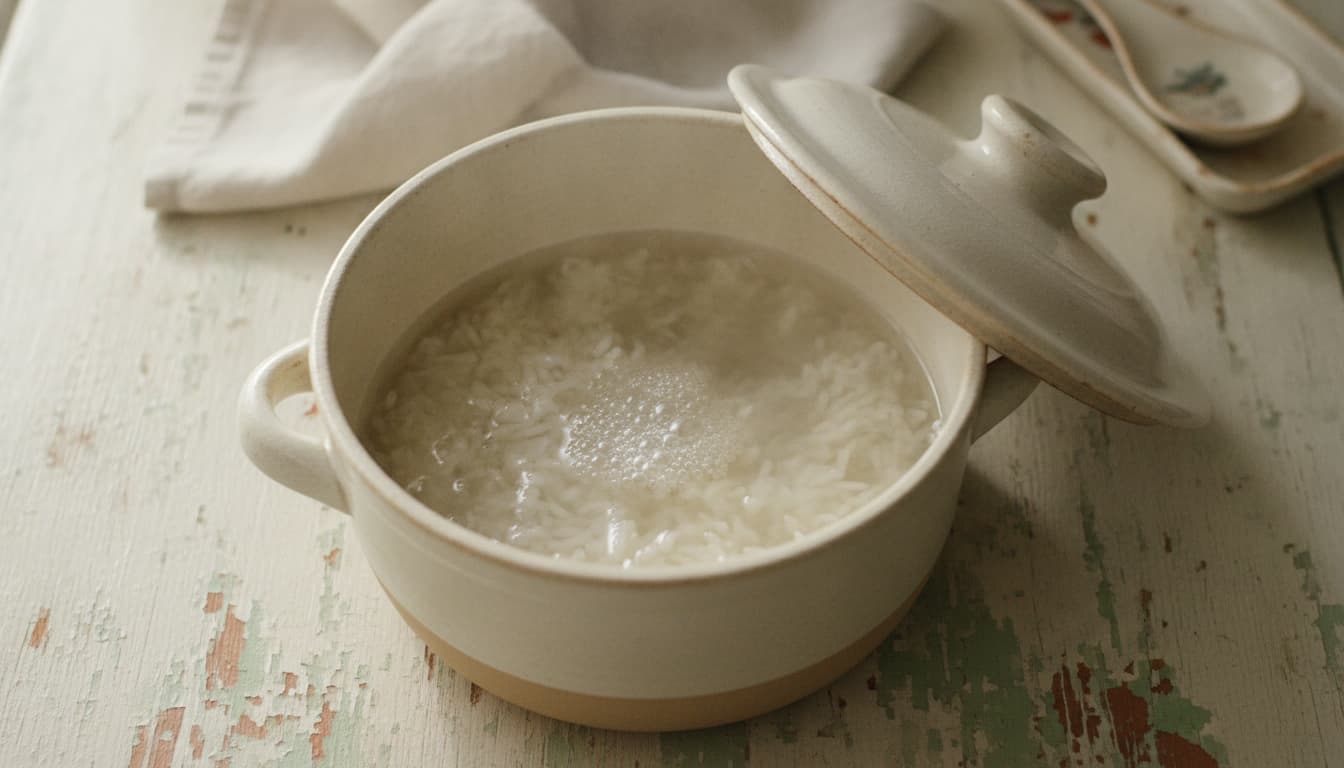
Rinsed rice and measured water into a heavy pot with a tight lid, plus half a teaspoon of salt per cup of dry rice. Bring it to a hard boil uncovered. Turn the heat to its lowest setting, put the lid on, and set a timer: twelve minutes for jasmine, fifteen for long-grain white, eighteen for basmati, forty for brown. Do not lift the lid, because every peek releases the steam that is doing the cooking. Then off the heat entirely, lid still on, for ten minutes.
The ten-minute rest is where the texture happens
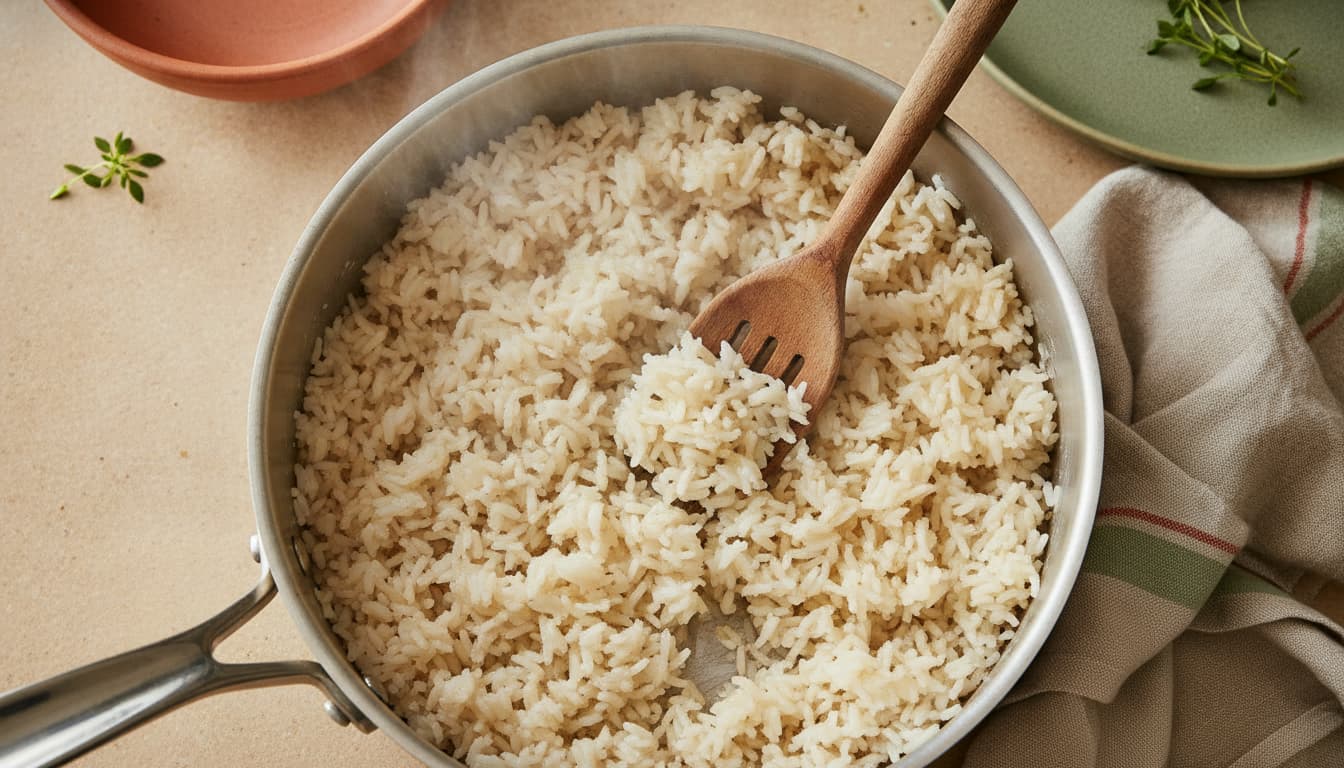
When the timer goes off, the grains at the bottom are wetter than the grains at the top and the starch has not set. Ten minutes off the heat with the lid on redistributes that moisture and firms the structure, which is the difference between distinct grains and a slightly gluey mass. Fluff with a fork, not a spoon, lifting from the edge inward. If you want insurance against condensation dripping back in, lay a clean tea towel between the pot and the lid during the rest.
Salt the water, and consider salting it properly
Rice cooked in plain water tastes like nothing and cannot be fixed afterwards, because salt added to finished grains sits on the outside. Half a teaspoon of kosher salt per cup of dry rice is the baseline. Replacing a third of the water with stock is the single biggest flavour upgrade available, and a knob of butter or a tablespoon of olive oil in the pot at the start keeps grains separate. A bay leaf, a bruised cardamom pod or a strip of lemon peel costs nothing and reads as effort.
Brown rice needs more water, more time and more rest
The bran layer is the point of brown rice and it is also a water barrier, which is why the ratio goes to 1 to 2 and the time to forty minutes. It benefits more than white rice does from a soak, thirty to sixty minutes, which cuts five to ten minutes off the cook and softens the bran. Rest it fifteen minutes rather than ten. If it consistently comes out chalky in the middle, your lid is not tight and you are losing steam, so use foil under the lid.
The pilaf variation, which is a different dish in the same pot
Toast the rinsed and dried rice in butter or oil over medium heat for two or three minutes until it smells nutty and turns slightly opaque, usually with a chopped shallot going in first. Then add hot liquid, and reduce the ratio by about a quarter cup per cup of rice because you have lost none to a boil and toasting hardens the exterior. Cook and rest as normal. The result is nuttier and far more distinctly separate, which is why every rice side in a restaurant is made this way.
What went wrong, in three symptoms
Gummy and stuck together: too much water, or you skipped the rinse, or you stirred it during cooking. Crunchy in the middle with dry surface: not enough water, heat too high, or steam escaped through a loose lid. Scorched on the bottom: your lowest burner setting is not low enough, so use a heat diffuser or a heavier pot. A scorched bottom layer is salvageable, tip the good rice out of the top without scraping and do not stir the burnt part in.
Leftover rice, and the food-safety rule nobody mentions
Uncooked rice carries Bacillus cereus spores that survive cooking. They are harmless until cooked rice sits at room temperature, at which point they germinate and produce a heat-stable toxin that reheating does not destroy. So cool cooked rice fast, spread it out rather than leaving it in a deep pot, refrigerate within an hour, keep it no more than three or four days, and reheat once until steaming. Day-old refrigerated rice is also the correct rice for fried rice, because it has dried out.
In pictures
Variationen
Substitutionen und Anpassungen folgen mit der Foto-Produktion. Die Methode hält bei den meisten sinnvollen Austauschen.
Aufbewahrung
Kühlschrank: 3 bis 4 Tage, verschlossen. Gefrierfach: bis zu 3 Monate. Abgedeckt aufwärmen, um die Feuchtigkeit zu halten.
Häufige Fragen
- What is the water to rice ratio?
- For the absorption method in a lidded pot, by volume: long-grain white rice 1 part rice to 1.5 parts water, jasmine and short-grain 1 to 1.25, basmati 1 to 1.5 unsoaked, brown rice 1 to 2, wild rice 1 to 3. The much-repeated 2 to 1 rule comes from very large batches and older, drier rice, and it is why so much home rice comes out soft. Scale the same ratio up, but note that a big pot loses proportionally less to evaporation, so ease the water down slightly above three cups of dry rice.
- Do I have to rinse rice?
- For long-grain, basmati and jasmine, yes, if you want separate grains, because you are washing off the loose surface starch that otherwise turns to glue. Skip it for risotto and paella rice, where that starch is doing the work of the sauce. In the US, enriched white rice has vitamins sprayed onto the surface and rinsing removes some of them, which is a real trade-off if rice is a staple in your diet rather than a side. Rinsing does not remove a meaningful amount of arsenic; cooking in excess water and draining does.
- Why is my rice always mushy?
- Three causes, in order of likelihood. Too much water, usually because of the 2 to 1 rule. Skipping the rinse, so surface starch gelatinises into paste. And stirring during the cook, which abrades the grains and releases more starch. There is a fourth, less obvious one: cutting the rest short and fluffing hot rice, which breaks grains that have not set. Fix the ratio first, then the rinse, and most mushy rice problems disappear.
- Can I cook rice without a lid or a rice cooker?
- Yes, use the pasta method: a large pot of well-salted boiling water, rice in loose, boil for the variety's usual time, then drain in a sieve and let it steam-dry for five minutes. It is more forgiving than absorption because the water quantity does not matter, and it is the method that removes the most inorganic arsenic. The cost is flavour, since some starch and any stock you might have used goes down the drain, and slightly less distinct grains.
- How long does cooked rice keep?
- Three to four days refrigerated, provided you cooled it quickly. The Bacillus cereus risk is about the time cooked rice spends at room temperature, not the total days in the fridge, so the important step is spreading it out to cool and getting it into the fridge within an hour rather than letting the pot sit on the stove all evening. Reheat once, until steaming throughout. It freezes well for a month in portioned bags and reheats straight from frozen with a splash of water.
Ähnliche Rezepte
Alle ansehen →- Technique
Steak braten: früh salzen, trocken tupfen, Kerntemperatur messen
Ein Steak hat vier Variablen, und die Pfanne gehört nicht dazu. Die Dicke bestimmt die Methode, die Oberflächenfeuchte entscheidet über Kruste oder Dampf, die Kerntemperatur über den Garpunkt. Mindestens 45 Minuten vorher salzen, alle 30 Sekunden wenden und nach Thermometer garen statt nach Uhr.
80m42g Eiweiß - Technique
Rührei: niedrige Hitze, ständig rühren, früh vom Herd nehmen
Rührei ist eine Temperaturübung mit acht Minuten Spielraum, den kaum jemand nutzt. Eiweiß gerinnt zwischen 63 und 74 Grad, darüber presst es Wasser heraus und wird gummiartig. Kalte Pfanne, kalte Butter, Salz ins rohe Ei, ununterbrochen rühren und die Pfanne vom Herd nehmen, solange die Masse noch feucht aussieht.
15m19g Eiweiß - Technique
Kartoffelpüree: kalt aufsetzen, Milch erwärmen, niemals mixen
Klebriges Püree ist kein Würzproblem, sondern ein mechanisches. Stärkekörner platzen, sobald man sie schlägt, und danach ist die Textur nicht mehr zu retten. Kartoffeln in kaltem Salzwasser aufsetzen, im Topf trocken dämpfen, durch die Presse drücken und die Butter vor der warmen Milch zugeben.
45m5g Eiweiß
Erhalten Sie jeden Sonntag ein getestetes Rezept und eine Nährwert-Notiz in Ihr Postfach.
Ein Rezept pro Woche, fotografiert am selben Dienstag, an dem es getestet wurde. Von einer Ernährungsberaterin geprüft. Keine Werbung, keine Pop-ups, kein Tracking.
Das Clean-Chef-Starter-Kit.
Ein 14-Tage-Plan für entzündungshemmende Ernährung als PDF, Einkaufsliste nach Abteilungen, Makros pro Tag aufsummiert, Sonntags-Vorbereitung. Kostenlos.
Mit der Anmeldung stimmen Sie unserer Datenschutzerklärung zu. Eine ruhige E-Mail pro Woche. Jederzeit abbestellbar.
Wir bauen einen Shop.
Kuratiertes Kochgeschirr, Vorratsbasics, die wir wirklich kaufen, Rezept-Bundle-PDFs. Erfahren Sie als Erste, wann er öffnet.
Wir schreiben Ihnen nur zur Shop-Eröffnung. In jeder E-Mail abbestellbar. Siehe unsere Datenschutzerklärung.