- Calories
- 205
- Protein
- 4g
- Fiber
- 1g
- Sat. fat
- 0g
- Sodium
- 190mg
- Added sugar
- 0g
What this recipe does for you.
Rice is not difficult, it is unforgiving of two specific mistakes: too much water and not enough rest. Here are the absorption ratios by variety, what rinsing does and when to skip it, the ten minutes off the heat that decide the texture, and the food-safety rule about leftover rice that most people have never heard.
Why this works
Every recipe on this site ships with an explanation of the technique decisions, why sear then braise, why the acid goes in at the end, why the fat renders before the aromatics. The method below is those decisions, in order.
Ingredients
- Full ingredient list ships with photography
Method
Rinse, and know what rinsing is for
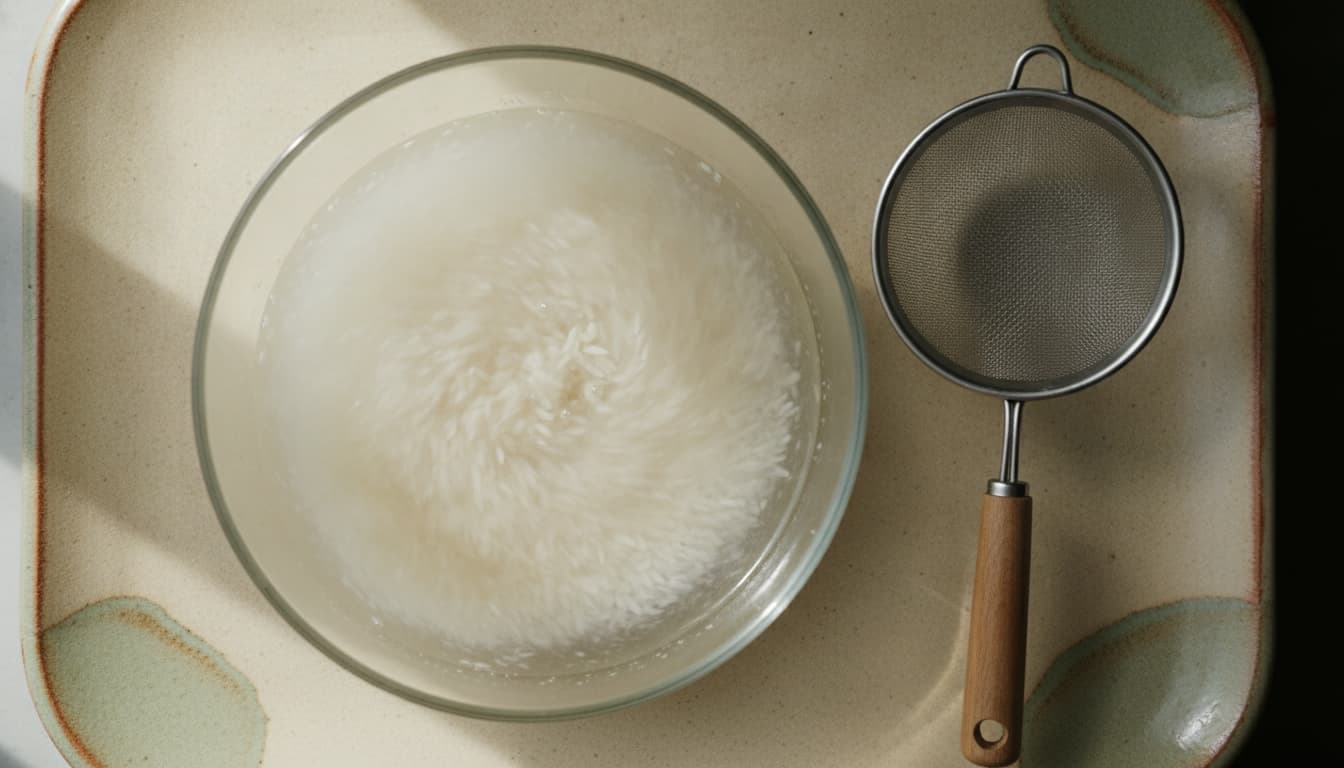
Rinsing removes loose surface starch, which is the stuff that turns into paste and glues grains together. Put the rice in a bowl, cover with cold water, swish with your hand, pour off the cloudy water, and repeat until it runs nearly clear, usually three or four changes. Rinse long-grain, basmati and jasmine every time. Do not rinse risotto rice or paella rice, where that surface starch is the sauce, and do not rinse enriched US white rice if you specifically want the added vitamins, which rinse off.
The ratios, by variety, for the absorption method
Measured by volume, rice to water: long-grain white 1 to 1.5. Basmati 1 to 1.5, or 1 to 1.25 if you soaked it thirty minutes. Jasmine 1 to 1.25, because it is a softer grain and drinks less. Short-grain white 1 to 1.25. Brown rice 1 to 2 and it needs closer to forty minutes. Wild rice 1 to 3. Those are for a lidded pot on a stove, not for a rice cooker, which usually wants slightly less. Write your pot's number on a card once and stop guessing.
The method, in five moves
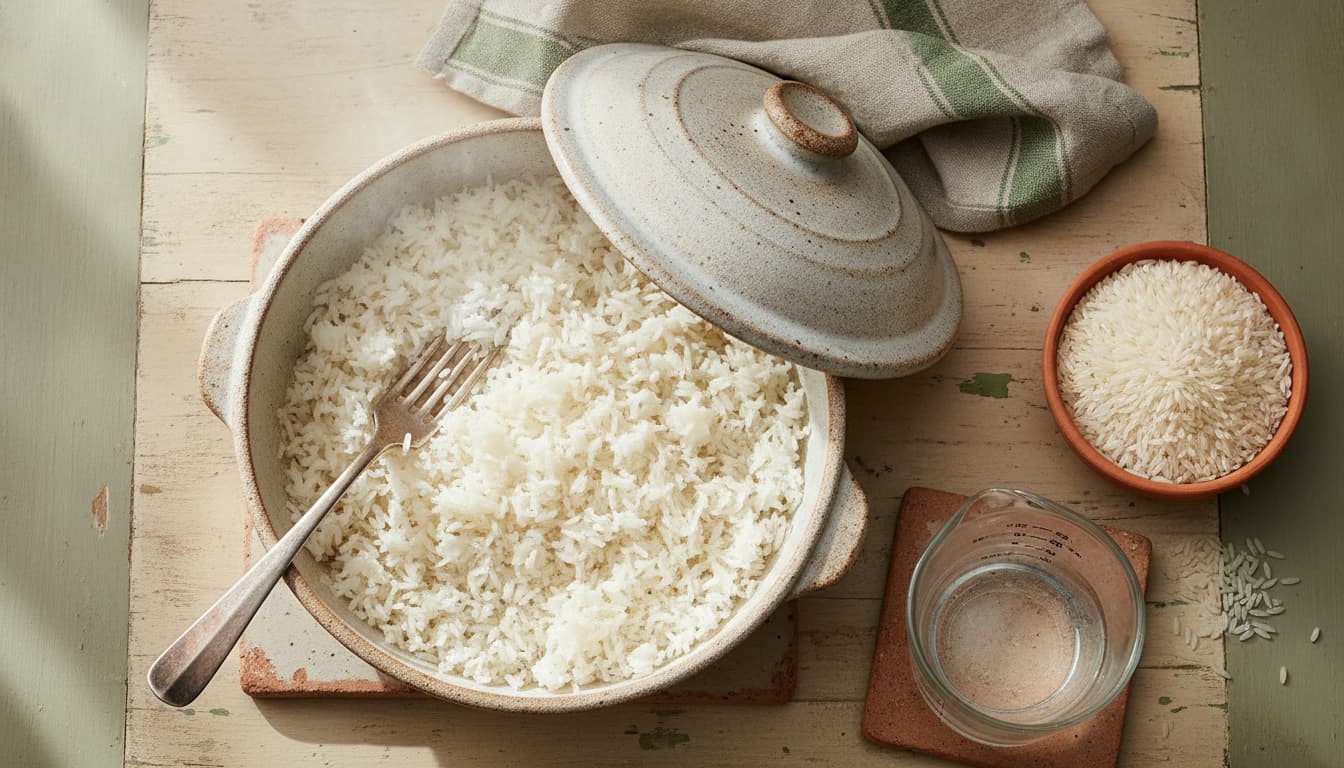
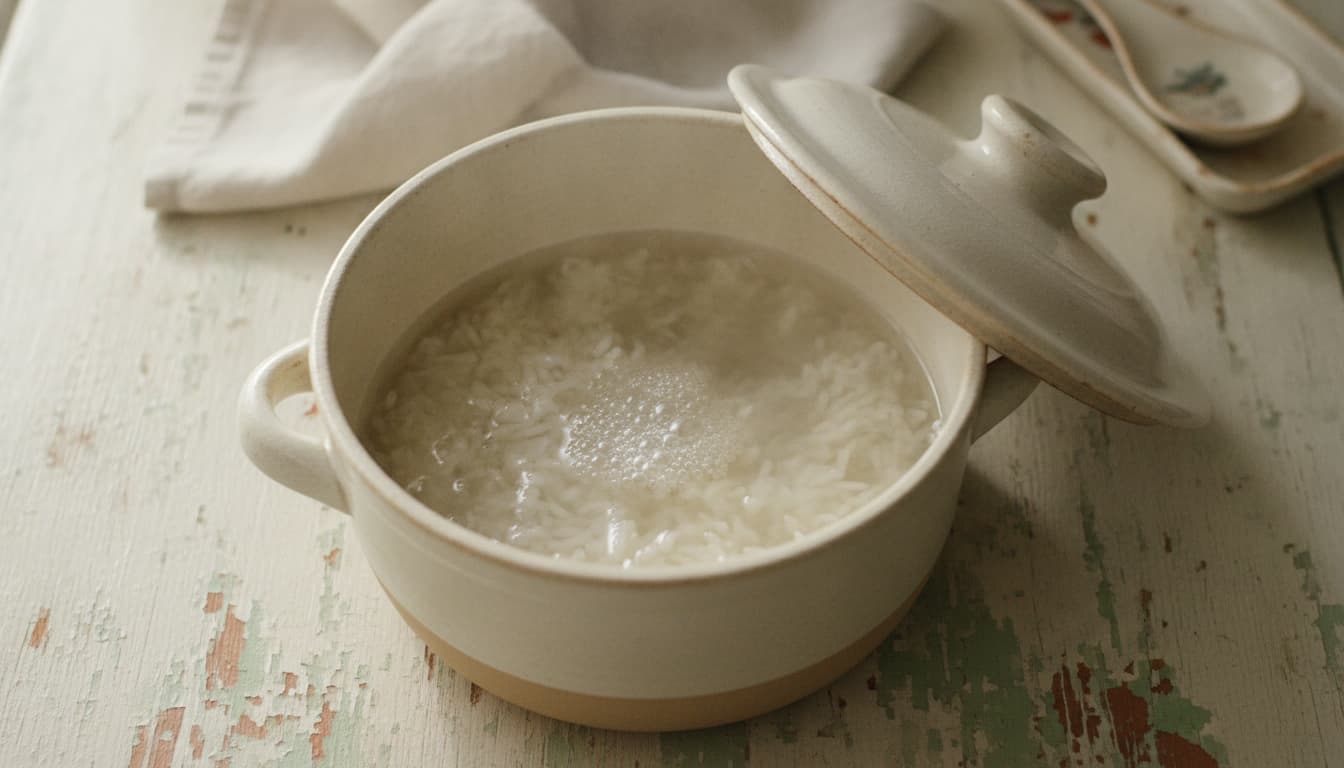
Rinsed rice and measured water into a heavy pot with a tight lid, plus half a teaspoon of salt per cup of dry rice. Bring it to a hard boil uncovered. Turn the heat to its lowest setting, put the lid on, and set a timer: twelve minutes for jasmine, fifteen for long-grain white, eighteen for basmati, forty for brown. Do not lift the lid, because every peek releases the steam that is doing the cooking. Then off the heat entirely, lid still on, for ten minutes.
The ten-minute rest is where the texture happens
When the timer goes off, the grains at the bottom are wetter than the grains at the top and the starch has not set. Ten minutes off the heat with the lid on redistributes that moisture and firms the structure, which is the difference between distinct grains and a slightly gluey mass. Fluff with a fork, not a spoon, lifting from the edge inward. If you want insurance against condensation dripping back in, lay a clean tea towel between the pot and the lid during the rest.
Salt the water, and consider salting it properly
Rice cooked in plain water tastes like nothing and cannot be fixed afterwards, because salt added to finished grains sits on the outside. Half a teaspoon of kosher salt per cup of dry rice is the baseline. Replacing a third of the water with stock is the single biggest flavour upgrade available, and a knob of butter or a tablespoon of olive oil in the pot at the start keeps grains separate. A bay leaf, a bruised cardamom pod or a strip of lemon peel costs nothing and reads as effort.
Brown rice needs more water, more time and more rest
The bran layer is the point of brown rice and it is also a water barrier, which is why the ratio goes to 1 to 2 and the time to forty minutes. It benefits more than white rice does from a soak, thirty to sixty minutes, which cuts five to ten minutes off the cook and softens the bran. Rest it fifteen minutes rather than ten. If it consistently comes out chalky in the middle, your lid is not tight and you are losing steam, so use foil under the lid.
The pilaf variation, which is a different dish in the same pot
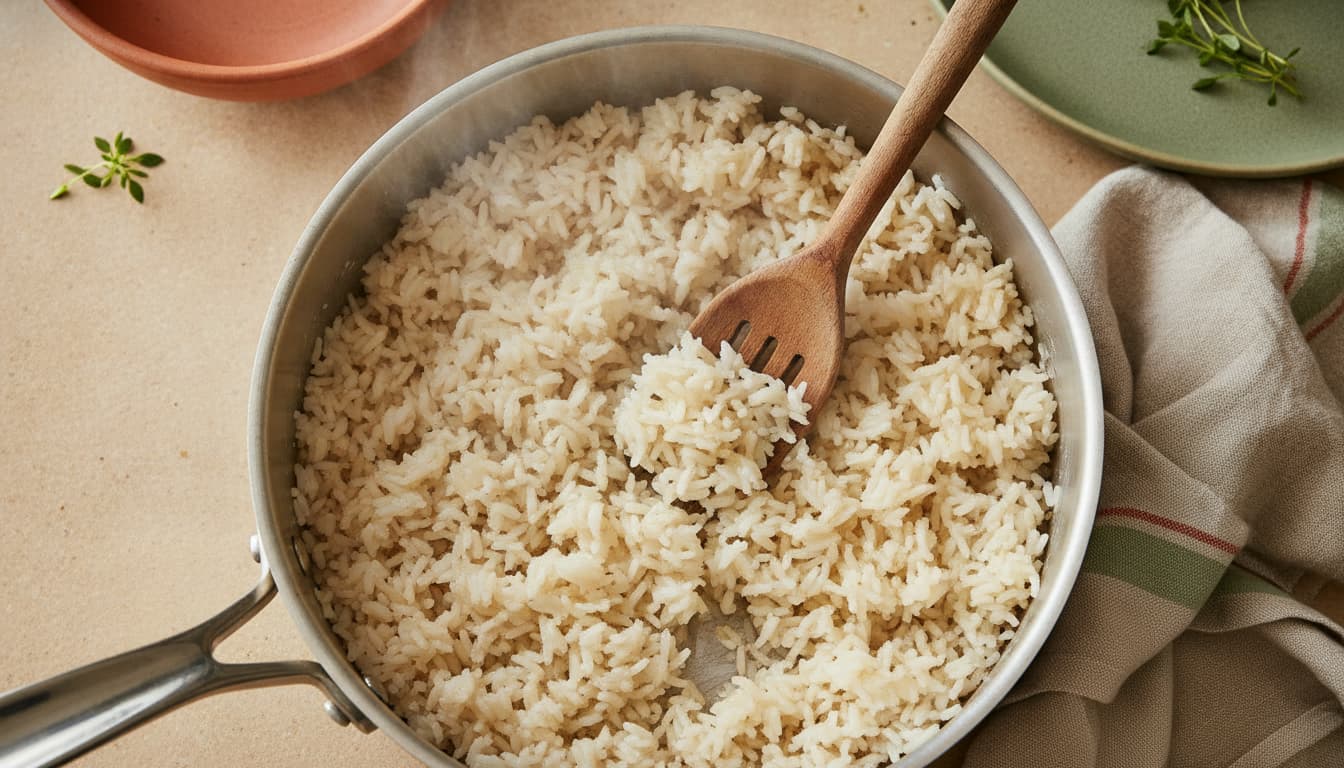
Toast the rinsed and dried rice in butter or oil over medium heat for two or three minutes until it smells nutty and turns slightly opaque, usually with a chopped shallot going in first. Then add hot liquid, and reduce the ratio by about a quarter cup per cup of rice because you have lost none to a boil and toasting hardens the exterior. Cook and rest as normal. The result is nuttier and far more distinctly separate, which is why every rice side in a restaurant is made this way.
What went wrong, in three symptoms
Gummy and stuck together: too much water, or you skipped the rinse, or you stirred it during cooking. Crunchy in the middle with dry surface: not enough water, heat too high, or steam escaped through a loose lid. Scorched on the bottom: your lowest burner setting is not low enough, so use a heat diffuser or a heavier pot. A scorched bottom layer is salvageable, tip the good rice out of the top without scraping and do not stir the burnt part in.
Leftover rice, and the food-safety rule nobody mentions
Uncooked rice carries Bacillus cereus spores that survive cooking. They are harmless until cooked rice sits at room temperature, at which point they germinate and produce a heat-stable toxin that reheating does not destroy. So cool cooked rice fast, spread it out rather than leaving it in a deep pot, refrigerate within an hour, keep it no more than three or four days, and reheat once until steaming. Day-old refrigerated rice is also the correct rice for fried rice, because it has dried out.
In pictures
Variations
Substitutions and adaptations land with the photography shoot. The method holds across most reasonable swaps.
Storage
Refrigerator: 3 to 4 days, sealed. Freezer: up to 3 months. Reheat covered to retain moisture.
Frequently asked
- What is the water to rice ratio?
- For the absorption method in a lidded pot, by volume: long-grain white rice 1 part rice to 1.5 parts water, jasmine and short-grain 1 to 1.25, basmati 1 to 1.5 unsoaked, brown rice 1 to 2, wild rice 1 to 3. The much-repeated 2 to 1 rule comes from very large batches and older, drier rice, and it is why so much home rice comes out soft. Scale the same ratio up, but note that a big pot loses proportionally less to evaporation, so ease the water down slightly above three cups of dry rice.
- Do I have to rinse rice?
- For long-grain, basmati and jasmine, yes, if you want separate grains, because you are washing off the loose surface starch that otherwise turns to glue. Skip it for risotto and paella rice, where that starch is doing the work of the sauce. In the US, enriched white rice has vitamins sprayed onto the surface and rinsing removes some of them, which is a real trade-off if rice is a staple in your diet rather than a side. Rinsing does not remove a meaningful amount of arsenic; cooking in excess water and draining does.
- Why is my rice always mushy?
- Three causes, in order of likelihood. Too much water, usually because of the 2 to 1 rule. Skipping the rinse, so surface starch gelatinises into paste. And stirring during the cook, which abrades the grains and releases more starch. There is a fourth, less obvious one: cutting the rest short and fluffing hot rice, which breaks grains that have not set. Fix the ratio first, then the rinse, and most mushy rice problems disappear.
- Can I cook rice without a lid or a rice cooker?
- Yes, use the pasta method: a large pot of well-salted boiling water, rice in loose, boil for the variety's usual time, then drain in a sieve and let it steam-dry for five minutes. It is more forgiving than absorption because the water quantity does not matter, and it is the method that removes the most inorganic arsenic. The cost is flavour, since some starch and any stock you might have used goes down the drain, and slightly less distinct grains.
- How long does cooked rice keep?
- Three to four days refrigerated, provided you cooled it quickly. The Bacillus cereus risk is about the time cooked rice spends at room temperature, not the total days in the fridge, so the important step is spreading it out to cool and getting it into the fridge within an hour rather than letting the pot sit on the stove all evening. Reheat once, until steaming throughout. It freezes well for a month in portioned bags and reheats straight from frozen with a splash of water.
Related recipes
See all →- Technique
How to Cook Steak: Salt It Early, Dry It Properly, Use a Thermometer
There are only four variables in a steak and none of them is the pan. Thickness decides the method, surface moisture decides whether it browns or steams, internal temperature decides doneness, and the rest decides how much of the juice ends up on the board instead of in the meat. Salt forty-five minutes ahead, cook to a number rather than to a timer, and stop cutting into it to check.
80m42g Protein - Technique
Scrambled Eggs: Low Heat, Constant Motion, Off the Hob Early
Scrambled eggs are a temperature exercise with an eight-minute margin for error and almost nobody uses it. Egg protein sets between 145F and 165F, and above that it squeezes out water and turns to rubber sitting in a grey puddle. Low heat, a spatula that never stops, fat that goes in cold, salt at the start, and the pan off the burner while they still look underdone.
15m19g Protein - Technique
Mashed Potatoes: Cold Water Start, Warm Dairy, and Never a Blender
Gluey mash is not a seasoning problem, it is a mechanical one. Potato starch granules burst when you agitate them, and once they have burst nothing brings the texture back. Start the potatoes in cold salted water so they cook evenly, dry them over the burner, push them through a ricer rather than beating them, and add butter before dairy. Forty-five minutes including the pot you have to wash.
45m5g Protein
Get a tested recipe + a nutritional note in your inbox each Sunday.
One recipe a week, photographed on the same Tuesday it tested. Reviewed by an RD. No promotions, no pop-ups, no tracking.
The Clean Chef Starter Kit.
A 14-day anti-inflammatory meal plan PDF, grocery list by section, macros totaled per day, Sunday prep sequence. Free.
By subscribing, you agree to our Privacy Policy. One calm email a week. Unsubscribe anytime.
We're building a shop.
Curated cookware, pantry staples we actually buy, recipe-bundle PDFs. Be the first to know when it opens.
We'll only email you about the shop opening. Unsubscribe in any email. See our Privacy Policy.