- Kalorien
- 285
- Eiweiß
- 5g
- Ballaststoffe
- 3g
- Ges. Fett
- 9g
- Natrium
- 340mg
- Zugesetzter Zucker
- 0g
Was dieses Rezept für Sie leistet.
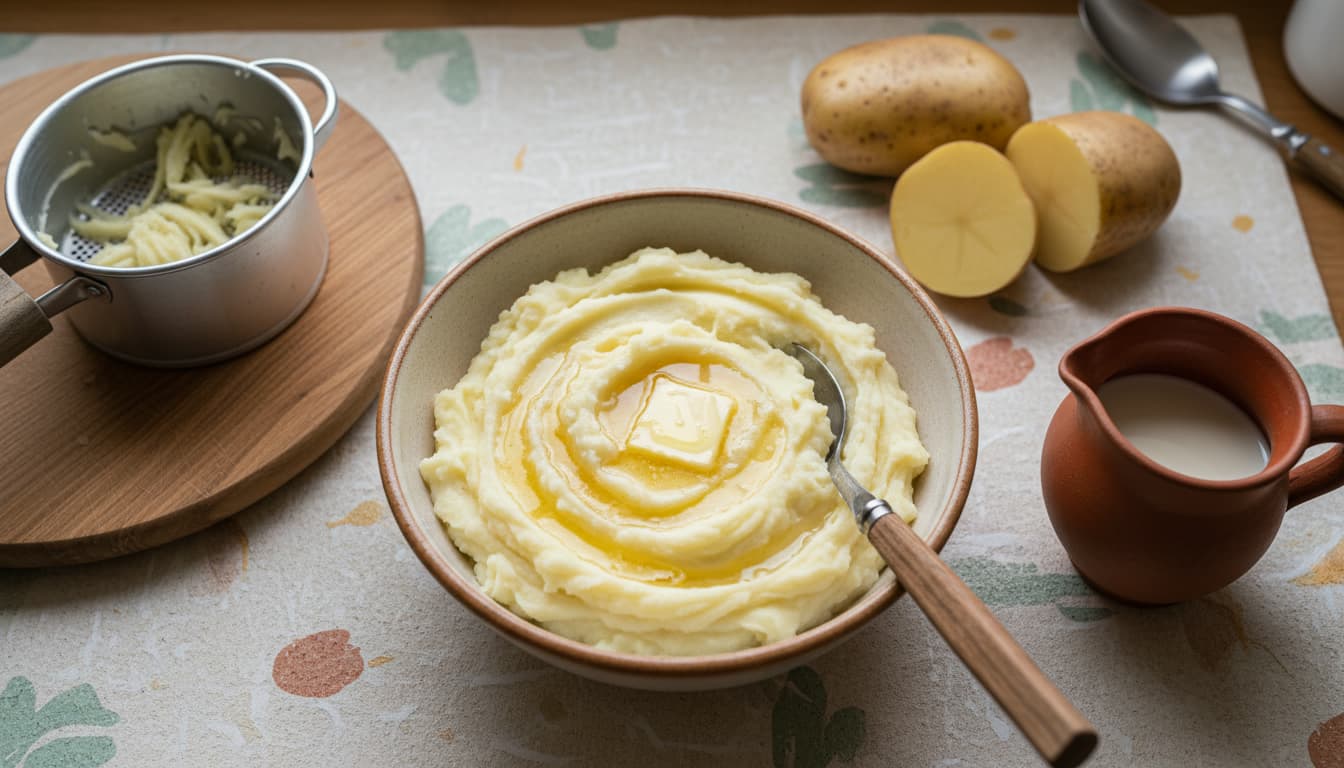
Gluey mash is not a seasoning problem, it is a mechanical one. Potato starch granules burst when you agitate them, and once they have burst nothing brings the texture back. Start the potatoes in cold salted water so they cook evenly, dry them over the burner, push them through a ricer rather than beating them, and add butter before dairy. Forty-five minutes including the pot you have to wash.
Warum das funktioniert
Jedes Rezept auf dieser Seite kommt mit einer Erklärung der Technik-Entscheidungen: warum erst anbraten, dann schmoren, warum die Säure zum Schluss kommt, warum das Fett vor den Aromaten ausgelassen wird. Die Methode unten besteht aus genau diesen Entscheidungen, der Reihe nach.
Zutaten
6 Portionen- 3 lbYukon Gold potatoes · peeled and cut into even 2 inch chunks, or russets for a fluffier and drier mash
- 2 tbspkosher salt · for the cooking water, which should taste like a well-seasoned soup
- 6 tbspunsalted butter · cold and cubed, going in before any liquid
- 1 cupwhole milk · warmed, or half milk and half heavy cream for a richer version
- 2 wholegarlic cloves · smashed, steeped in the warming milk and then removed, optional
- 1 wholebay leaf · steeped in the warming milk and removed, optional
- 1 tspfine sea salt · for seasoning at the end, added after tasting
- 1/2 tspwhite pepper · black pepper works and shows as specks, which some people mind
- 2 tbspcreme fraiche or sour cream · optional, stirred in at the very end for tang
- 2 tbspchives · finely sliced, optional, for the top
Methode
Yukon Gold for creamy, russet for fluffy, and do not mix them
Yukon Golds are medium-starch and hold enough moisture to give a dense, buttery, slightly waxy mash that takes dairy well. Russets are high-starch and low-moisture, so they drink butter and cream and come out lighter and drier, which is the texture most American restaurants serve. Both are correct. Red and new potatoes are waxy, resist breaking down and give a lumpy, gummy result no matter how you treat them. Pick one variety and stay with it, because two varieties cook at different rates in the same pot.
Cold water start, and cut the pieces the same size
Potatoes dropped into boiling water cook from the outside in, so the exterior is falling apart and waterlogged by the time the centre is done. Starting in cold water lets the whole piece climb through the temperature range together. Cut two-inch chunks and be genuinely fussy about consistency: a piece half the size of its neighbour is finished ten minutes earlier and spends those ten minutes absorbing water you will later have to drive off.
Salt the water hard, because this is your only chance
Two tablespoons of kosher salt to a large pot. Potato is bland, dense and thirsty, and salt added at the end sits on the surface of the mash rather than inside the pieces. Salted cooking water seasons all the way through. The water should taste like a decent soup, not like the sea; pasta-water advice is too aggressive here because potatoes sit in it for half an hour rather than ten minutes.
A bare simmer, not a rolling boil
Bring it up to the boil, then drop it to the point where the surface just shivers. A hard boil knocks the chunks against each other and the pot, breaking off edges that dissolve into the water and take starch and flavour with them. Twenty to twenty-five minutes for two-inch pieces. They are done when a paring knife slides in and out with no resistance at all, and when a piece lifted on the knife falls off under its own weight.
Drain, then put them back over the heat to dry
This is the step almost every home recipe leaves out and it is worth more than any dairy upgrade. Drain thoroughly, return the potatoes to the empty hot pot, and set it over low heat for one to two minutes, shaking occasionally, until the surfaces go chalky and matte and you can see steam lifting off. You are evaporating surface water so the potatoes have room to absorb butter and milk instead. Wet potatoes make watery mash and then you add more butter to compensate, which does not work.
A ricer or a food mill, and this is where gluey mash is decided
Potato cells are packed with starch granules. A ricer pushes cells apart while leaving most of them intact; a masher squashes and ruptures a share of them; a whisk, mixer or blender destroys them wholesale and releases free starch, which is glue. A drum ricer or a food mill gives the finest, lightest result. A hand masher gives an honest, rustic mash if you use restraint. A food processor gives wallpaper paste in about eight seconds and there is no recovery from it.
Rice them hot, straight out of the pot
Work while they are too hot to hold comfortably, using a tea towel if you need to. Warm potato is soft, breaks cleanly and takes fat readily. As it cools, the starch begins to retrograde and firm, and cold potato forced through a ricer comes out in tight ricey threads that never smooth out. Rice directly back into the warm pot, off the heat, so nothing loses temperature between stages.
Butter before liquid, and the order is not arbitrary
Fold the cold cubed butter into the hot riced potato first and stir until it disappears. Fat coats the starch granules and waterproofs them, so the milk that follows cannot penetrate and swell them into stickiness. Add the milk first and you get a wetter, gummier mash from the same ingredients. This is the same principle as a roux going in before stock, and it is the second-biggest lever on texture after the ricer.
Warm the dairy, and infuse it while you are there
Cold milk poured into hot potato drops the temperature of the whole bowl and makes the mash seize slightly, so you stir more to fix it and make it gluier. Warm the milk in a small pan with a smashed garlic clove and a bay leaf while the potatoes boil, let it sit for ten minutes off the heat, then fish out the aromatics. It costs one extra pan and turns plain mash into something that tastes deliberate.
Add the milk in stages and stop before you think you should
Pour in half, fold gently with a flexible spatula, and look at it. Mash thickens noticeably in the two minutes after you stop stirring, as residual starch hydrates and the whole thing cools slightly. What looks correct in the pot will be stiff on the plate, and what looks marginally loose in the pot will be right. Every additional stir past the point of incorporation costs you texture, so aim to be finished in about twenty folds.
Season at the end, and use white pepper
Taste before you add anything. The cooking water has already done most of the work, and butter carries salt perception, so the number you need is smaller than it looks. Add fine sea salt a quarter teaspoon at a time. White pepper is the classical choice here for two reasons: it is floral rather than sharp against dairy, and it does not leave black specks in something white, which matters more than it should when the mash is the pale thing on a dark plate.
The tang question, and where creme fraiche belongs
Straight butter-and-milk mash is rich and slightly flat, which is exactly right under a red-wine braise like the beef bourguignon on this site, because the sauce brings the acid. Under a plain roast chicken or a pork chop it can taste like it is missing something. Two tablespoons of creme fraiche, sour cream or buttermilk folded in at the very end fixes that without making it taste like a dip. Add it last, off the heat, and fold no more than five times.
Make-ahead: a double boiler, not a microwave
Mash holds for two hours in a heatproof bowl set over barely simmering water, covered, with an extra splash of milk stirred through before serving. For a day ahead, cool it, refrigerate, and reheat in the same setup or in a covered dish at 325F for thirty minutes, again with extra warm milk. A microwave heats unevenly, and the hot spots overcook starch into rubber. Never reheat mash over direct heat, which scorches the bottom instantly.
Leftovers are better as something else
Cold mash is dense because the starch has retrograded, and no reheating fully reverses that. Use it as the topping on the shepherds pie on this site, roll it into potato cakes with an egg and a spoon of flour and fry them in butter, drop it into a soup as a thickener, or stir it into bread dough for a softer crumb. Three days in the fridge, and it freezes acceptably for a month specifically because you are going to repurpose it anyway.
The restaurant version, and whether you want it
Joel Robuchon's pomme puree runs close to one part butter to two parts potato by weight, passed through a fine tamis twice. It is extraordinary and it is roughly six hundred calories a portion of butter alone. The version here uses six tablespoons for three pounds, which is generous by domestic standards and modest by professional ones. If you want to move up the scale, add butter rather than cream: butter is what makes mash taste rich, cream mostly makes it looser.
Variationen
Substitutionen und Anpassungen folgen mit der Foto-Produktion. Die Methode hält bei den meisten sinnvollen Austauschen.
Aufbewahrung
Kühlschrank: 3 bis 4 Tage, verschlossen. Gefrierfach: bis zu 3 Monate. Abgedeckt aufwärmen, um die Feuchtigkeit zu halten.
Häufige Fragen
- Why are my mashed potatoes gluey?
- Because starch granules have been ruptured. That happens with a hand mixer, a stick blender, a food processor, or simply too much stirring with a spoon. It also happens when you add cold liquid to hot potato, which makes the mixture seize so you stir more to correct it. Use a ricer or a food mill, work while the potatoes are hot, add cold cubed butter before any liquid, warm the milk, and stop folding as soon as it comes together.
- Should you start potatoes in cold or boiling water?
- Cold, for mash. Dropping chunks into boiling water cooks the outer layer to collapse while the centre is still firm, which means the exterior spends ten minutes absorbing water. Starting cold lets the whole piece rise through the temperature range together, so it finishes evenly and holds less water. Boiling-water starts are for small whole new potatoes you want to stay waxy and intact, which is the opposite of what mash needs.
- What are the best potatoes for mashed potatoes?
- Yukon Gold or russet, depending on the texture you want. Yukon Gold is medium-starch and gives a dense, creamy, buttery mash that holds its shape on the plate. Russet is high-starch and low-moisture, so it produces a lighter, fluffier, drier mash that takes more butter and cream. Avoid waxy red and new potatoes, which have low starch and high moisture and go lumpy and gummy no matter how carefully you treat them.
- Should you peel potatoes for mash?
- For a smooth mash, yes, and peel before boiling so the pieces are even. Skin-on mash is a legitimate rustic style, but the skins do not break down in a ricer and they will block a food mill, so it has to be made with a hand masher and it will be coarse. Note that peeling costs you fibre and a share of the potassium, most of which sits in and just under the skin.
- Can you make mashed potatoes ahead of time?
- Yes. For a couple of hours, hold them in a covered heatproof bowl over barely simmering water and stir in a splash of warm milk before serving. For a day ahead, refrigerate and reheat covered at 325F for about thirty minutes with extra warm milk and a little more butter, or in the same double-boiler setup. Skip the microwave, which creates hot spots that turn starch rubbery, and never reheat over direct heat.
- Why do restaurants use so much butter in mashed potatoes?
- Because butter is the ingredient that reads as richness, and because fat coating the starch granules is also what keeps the texture silky. A classic French pomme puree can run to one part butter to two parts potato by weight. That is a deliberate choice with a real calorie cost, not a secret. If you want a richer mash than the one here, increase the butter rather than the cream, and increase it in half-stick steps so you can taste where you want to stop.
- How do I make mashed potatoes without dairy?
- Replace the butter with a good olive oil, about a third of a cup, and the milk with the reserved potato cooking water, which is starchy and seasoned and works far better than any nut milk. This is essentially a Mediterranean skordalia approach and it is genuinely good rather than a compromise. Warm the oil with a smashed garlic clove first. Unsweetened oat milk is the closest dairy substitute if you want something closer to the original.
- How much mashed potato should I make per person?
- Half a pound of raw potato per person as a side dish, which is why three pounds serves six. Increase to three quarters of a pound each if the mash is the main carbohydrate under a stew rather than one of two sides, or if it is a holiday table where people take more than they intend to. Leftovers are useful rather than wasteful, so erring high costs very little.
- Why do my mashed potatoes taste bland even though I salted them?
- Almost always because the salt went in at the end rather than into the cooking water. Potato is dense and absorbs seasoning slowly, so salt stirred into finished mash sits on the surface and reads as sharp rather than integrated. Salt the water properly, then correct at the end. The other common cause is under-drying: a mash carrying too much cooking water tastes diluted, and no amount of salt fixes dilution.
Ähnliche Rezepte
Alle ansehen →- Technique
Steak braten: früh salzen, trocken tupfen, Kerntemperatur messen
Ein Steak hat vier Variablen, und die Pfanne gehört nicht dazu. Die Dicke bestimmt die Methode, die Oberflächenfeuchte entscheidet über Kruste oder Dampf, die Kerntemperatur über den Garpunkt. Mindestens 45 Minuten vorher salzen, alle 30 Sekunden wenden und nach Thermometer garen statt nach Uhr.
80m42g Eiweiß - Technique
Rührei: niedrige Hitze, ständig rühren, früh vom Herd nehmen
Rührei ist eine Temperaturübung mit acht Minuten Spielraum, den kaum jemand nutzt. Eiweiß gerinnt zwischen 63 und 74 Grad, darüber presst es Wasser heraus und wird gummiartig. Kalte Pfanne, kalte Butter, Salz ins rohe Ei, ununterbrochen rühren und die Pfanne vom Herd nehmen, solange die Masse noch feucht aussieht.
15m19g Eiweiß - Technique
Linsen kochen: Sorten, Zeiten und wann das Salz dazukommt
Braune, grüne, Beluga- und rote Linsen kochen völlig unterschiedlich. Die Zeiten pro Sorte, warum Einweichen meist überflüssig ist, woher der Salzmythos kommt und wie Linsen bissfest bleiben, statt zu Brei zu zerfallen.
45m18g Eiweiß
Erhalten Sie jeden Sonntag ein getestetes Rezept und eine Nährwert-Notiz in Ihr Postfach.
Ein Rezept pro Woche, fotografiert am selben Dienstag, an dem es getestet wurde. Von einer Ernährungsberaterin geprüft. Keine Werbung, keine Pop-ups, kein Tracking.
Das Clean-Chef-Starter-Kit.
Ein 14-Tage-Plan für entzündungshemmende Ernährung als PDF, Einkaufsliste nach Abteilungen, Makros pro Tag aufsummiert, Sonntags-Vorbereitung. Kostenlos.
Mit der Anmeldung stimmen Sie unserer Datenschutzerklärung zu. Eine ruhige E-Mail pro Woche. Jederzeit abbestellbar.
Wir bauen einen Shop.
Kuratiertes Kochgeschirr, Vorratsbasics, die wir wirklich kaufen, Rezept-Bundle-PDFs. Erfahren Sie als Erste, wann er öffnet.
Wir schreiben Ihnen nur zur Shop-Eröffnung. In jeder E-Mail abbestellbar. Siehe unsere Datenschutzerklärung.