Mediterranean diet breakfast
Von Die ThatCleanChef-Küche · Aktualisiert 21. August 2026 · 11 Min. Lesezeit
What people actually eat for breakfast around the Mediterranean, and how to cook it on a Tuesday: eggs with tomatoes and olive oil, white beans on toast, yogurt with walnuts and honey, and seven more. Each one with protein and fiber numbers, a five-minute version and a twenty-minute version, and an honest note on which ones can be made the night before.
- 01
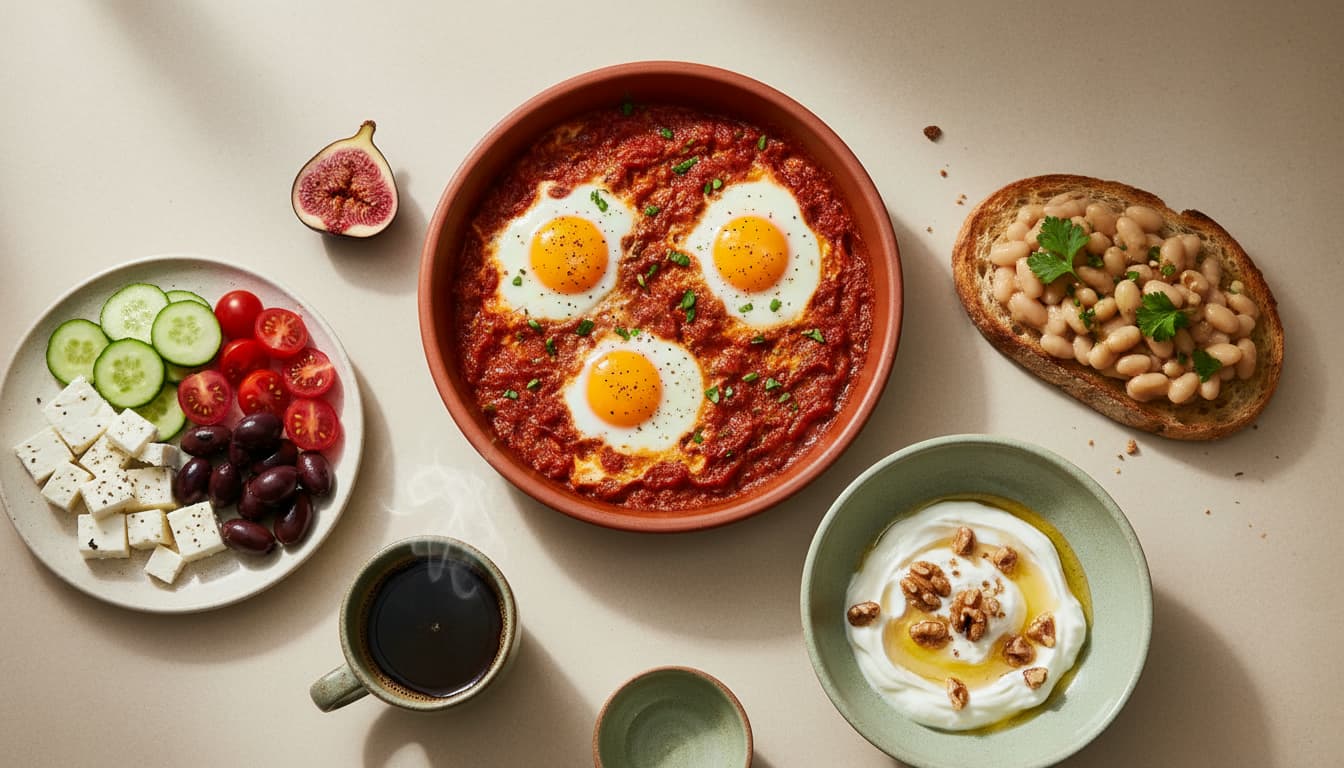
Eggs with blistered tomatoes and olive oil, 10 minutes
The default Mediterranean breakfast is savory, not sweet. Cherry tomatoes blistered in a generous pour of olive oil until they burst, two eggs cracked in alongside, oregano, salt, and bread to mop the pan. About 16g protein and a proper amount of fat, which is the point, the olive oil is not a compromise here. Ten minutes and one pan.
- 02
Greek yogurt with walnuts, honey, and cinnamon, 3 minutes
Full-fat plain Greek yogurt, a small handful of walnuts, a teaspoon of honey, cinnamon. Around 20g protein and roughly 3g fiber from the nuts. Plain and full-fat is the whole instruction, flavored yogurt carries as much added sugar as a dessert and undoes the reason you chose yogurt. This is the three-minute morning that requires no cooking and no planning.
- 03
White beans on sourdough with lemon and parsley, 8 minutes
A tin of cannellini warmed in olive oil with garlic, crushed slightly with a fork, piled onto toasted sourdough, finished with lemon zest, parsley, and chili flakes. Around 15g protein and 11g fiber, which is more fiber than most people get before lunch all week. Beans for breakfast reads odd to an American palate for about two mornings and then it does not.
- 04
Shakshuka, 25 minutes, cooks four portions at once
Eggs poached in a spiced tomato and pepper base. It is a weekend breakfast because of the twenty-five minutes, but the tomato base keeps five days in the fridge, so a Sunday batch makes four weekday breakfasts that need only an egg cracked into a ladle of reheated sauce. Around 18g protein with two eggs and 6g fiber from the peppers and tomato.
- 05
Labneh or thick yogurt with cucumber, tomato, and za'atar, 6 minutes
Strained yogurt spread thick on a plate, olive oil poured over, chopped cucumber and tomato, za'atar, and warm flatbread. This is a Levantine breakfast table compressed to one plate. About 18g protein, and it works as a savory answer for people who cannot face sweet food in the morning. Strain your own yogurt overnight in cheesecloth if you cannot buy labneh.
- 06
Overnight oats with Greek yogurt, orange, and pistachio, 5 minutes the night before
Rolled oats, Greek yogurt rather than milk alone, orange zest and segments, chopped pistachios. The yogurt takes it from 8g protein to about 20g, which is what makes it hold until lunch. Around 7g fiber. Made in a jar the night before, and it improves by the second day, so make two at once.
- 07
Feta and herb omelette with a tomato salad, 12 minutes
Three eggs, a spoon of crumbled feta, dill and mint folded in at the last second, with a sliced tomato salad dressed in olive oil and salt on the side. Around 24g protein. The salad next to the eggs, rather than nothing next to the eggs, is what separates a Mediterranean breakfast from a keto one, and it costs sixty seconds.
- 08
Sardines on toast with lemon, 5 minutes
One tin of good sardines in olive oil, forked onto toasted whole-grain bread with lemon, black pepper, and parsley. About 22g protein and a real dose of omega-3 before nine in the morning. It is the least fashionable item on this list and the most nutritionally efficient. Buy the better tin, the cheap ones are mushy and the difference is a dollar.
- 09
Chickpea and spinach hash with a fried egg, 15 minutes
Drained chickpeas crisped in olive oil with garlic and smoked paprika, spinach wilted through at the end, an egg fried in the same pan. Around 20g protein and 10g fiber. This is the breakfast to cook when there is nothing in the house, since it comes entirely out of the cupboard except the egg and the spinach.
- 10
Fruit, nuts, and cheese, the no-cook plate, 2 minutes
Figs or melon or orange, a handful of almonds, a piece of hard cheese, and coffee. It is a genuine Mediterranean breakfast and it is what to eat on the mornings you are not going to cook. Around 12g protein, so it is the lightest plate here, and best on days when lunch is early. Better than skipping and better than a pastry.
What people ask us next.
- What do people actually eat for breakfast on the Mediterranean diet?
- Savory food, mostly: eggs cooked in olive oil with tomatoes, beans on bread, thick yogurt with nuts and honey, tinned fish on toast, cheese with fruit, and a lot of coffee. Sweet breakfast cereal is not part of the pattern, and neither is a large pastry, though a small one on the weekend is a normal part of life in the region. The through-lines are olive oil, vegetables or fruit present at breakfast, and a protein anchor.
- Is oatmeal Mediterranean?
- Oats are not traditional in most of the Mediterranean, where the breakfast grain is bread, but whole oats fit the pattern comfortably: whole grain, high in soluble fiber, and a good vehicle for nuts, fruit, and yogurt. If you eat oats, make them with Greek yogurt folded in or a spoon of nut butter stirred through, because oats and water alone run around 8g of protein and leave most people hungry by ten.
- How much protein should a Mediterranean breakfast have?
- Twenty grams is a reasonable floor if you want to reach lunch without a mid-morning snack. Two eggs get you to 12g, so they need a partner: yogurt, beans, cheese, or fish. Greek yogurt, sardines, and a feta omelette all clear 20g on their own. The Mediterranean pattern is not high-protein by design, but a breakfast that holds is a breakfast you keep eating.
- Can I drink coffee on the Mediterranean diet?
- Yes, coffee is part of daily life across the whole region and there is nothing in the pattern against it. Take it black, or with a little milk, and keep the sugar modest. Where it goes wrong is the large sweetened coffee drink that carries forty grams of sugar and is functionally a dessert. Tea is equally fine.
Woher die Technik stammt
Über die ThatCleanChef-Küche
Ein kleines Team aus Rezeptentwicklerinnen und Foodfotografen, das Rezepte in Privatküchen mit haushaltsüblichem Equipment testet. Jede Nährwertkarte ist USDA-FoodData-Central-belegt und wird geprüft von Lena Marsh, RDN, MS. Wir geben nicht vor, ein einzelner Küchenchef zu sein, wir sind die Menschen hinter den Tellern. Das ganze Team kennenlernen →
Ähnliche Beiträge
Gazpacho: reife Tomaten, altes Brot, vier Stunden kalt
Gazpacho ist eine Emulsion, keine kalte Tomatensuppe. Warum eingeweichtes Brot und langsam eingegossenes Olivenöl die Textur machen, wie viel Sherryessig hineingehört und warum kalt immer nachgewürzt werden muss.
Tabouleh: ein Kräutersalat mit Bulgur, nicht umgekehrt
Echtes Tabouleh besteht zu drei Vierteln aus Petersilie. Warum der Bulgur nur eingeweicht und nicht gekocht wird, warum die Petersilie vollständig trocken sein muss und warum die Tomaten vor dem Mischen abtropfen müssen.
Carbonara: keine Sahne, Guanciale, Pfanne runter vom Herd
Rührei statt Sauce entsteht bei zu viel Hitze. Warum Guanciale und nicht Speck, warum Pecorino und nicht Parmesan, wie viel Nudelwasser in die Eier gehört und bei welcher Temperatur die Emulsion bindet statt zu stocken.
Das Clean-Chef-Starter-Kit.
Ein 14-Tage-Plan für entzündungshemmende Ernährung als PDF, Einkaufsliste nach Abteilungen, Makros pro Tag aufsummiert, Sonntags-Vorbereitung. Kostenlos.
Mit der Anmeldung stimmen Sie unserer Datenschutzerklärung zu. Eine ruhige E-Mail pro Woche. Jederzeit abbestellbar.