Keto recipes
By The ThatCleanChef Kitchen · Updated June 29, 2026 · 14 min read
What keto actually is, what to eat and avoid, how the macros work, and the starter recipes that prove the diet is not just bacon and despair. Pillar for the Keto hub.
We'd rather answer the question you actually asked in the first paragraph, then earn your trust by showing the chef notes.
What actually matters, in order.
- 01
Protein: eggs, fatty fish, well-marbled meat
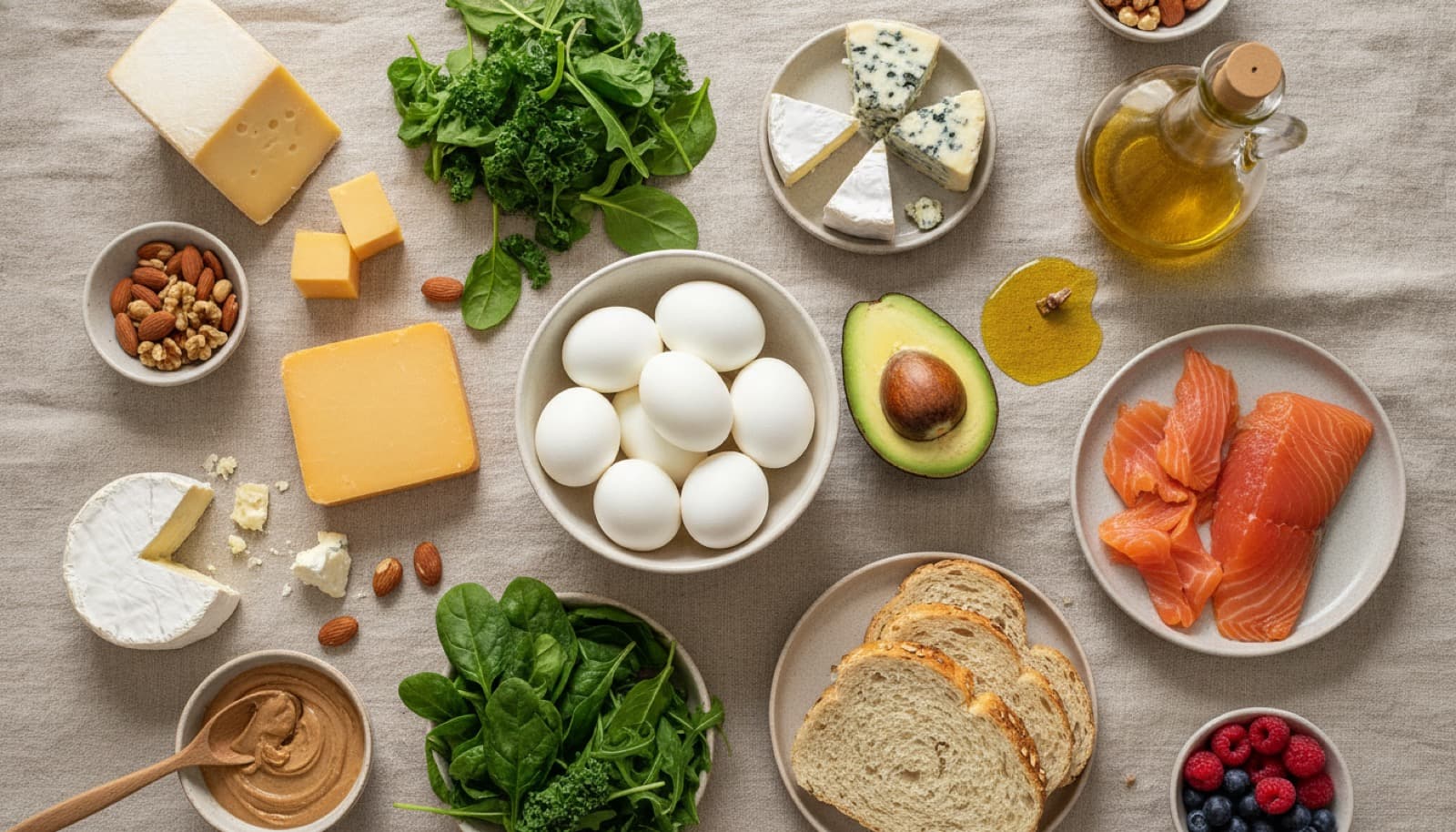
Eggs are the keto staple for a reason: cheap, complete protein, endlessly cookable. Fatty fish twice a week covers omega-3s. Choose thighs over breasts, ribeye over loin; the fat is the point, not the enemy.
- 02
Fat: olive oil, butter, avocado
Extra-virgin olive oil for cold and finishing, butter or beef tallow for high heat, avocado for the bowl. Fat is what makes keto sustainable rather than miserable. Do not chase fat for its own sake, but do not fear it either.
- 03
Vegetables: above ground, leafy and cruciferous
Leafy greens, broccoli, cauliflower, zucchini, asparagus, peppers, mushrooms. Cauliflower is the workhorse, it stands in for rice and mash. Roast at 425F in olive oil for the char that makes a vegetable taste like dinner.
- 04
Dairy: full-fat only
Aged cheese, full-fat Greek yogurt, cream, butter. Skip the flavored and low-fat versions, that is where the sugar hides. Plain whole-milk Greek yogurt with a few berries is the keto-legal dessert that actually works.
- 05
Avoid: sugar, grains, starch, most fruit
Bread, pasta, rice, potatoes, beans, and sugar in all its disguises. Berries in small portions are the fruit exception. The hidden carbs are in sauces, read every label that ends in -glaze or -teriyaki.
The questions cooks bring us.
- What is the keto diet, in one paragraph?
- Keto is a very-low-carbohydrate, high-fat way of eating that pushes your body to run on ketones (made from fat) instead of glucose. The working target for most people is under 50g total carbs a day, often nearer 20-30g net, with protein moderate and fat filling the rest of the plate. The metabolic switch is real and well-documented; whether you need it is a separate question. We cook it as a pattern, not a religion.
- What can I eat on keto? The short food list.
- Eat freely: eggs, fatty fish (salmon, sardines, mackerel), beef, chicken thighs, pork, full-fat dairy (cheese, Greek yogurt, butter, cream), avocado, olive oil, nuts and seeds, and the low-carb vegetables (leafy greens, broccoli, cauliflower, zucchini, asparagus, peppers, mushrooms). Berries in small amounts. That is most of the cooking on this site already, minus the grains.
- What do I avoid on keto?
- Avoid: sugar in all its names, bread, pasta, rice, potatoes, most fruit, beans and lentils, and anything labelled low-fat (the fat is usually replaced with sugar or starch). The quiet trap is sauces and dressings: ketchup, teriyaki, balsamic glaze, and most bottled marinades carry more sugar than people expect. Read the label, count the total carbs.
- How do the macros actually work?
- A common split is roughly 70-75% of calories from fat, 20-25% from protein, and 5-10% from carbs. On a 2,000-calorie day that is about 165g fat, 100g protein, and 25g net carbs. You do not need to weigh every gram forever; you need to keep carbs genuinely low and let protein and fat do the rest. The Nutrition Ledger on each recipe below gives you the per-serving numbers to build the day.
- Is keto safe, and who should not do it?
- For most healthy adults a well-formulated ketogenic diet is safe in the medium term. It is not for everyone: people who are pregnant, who have type 1 diabetes, certain kidney conditions, a history of disordered eating, or who take medication for blood sugar or blood pressure should talk to a clinician first, because keto can change medication needs quickly. This is a cook's guide, not medical advice.
- What is the keto flu and how do I avoid it?
- In the first week, as you drop carbs, you lose water and the electrolytes with it. The headaches, fatigue, and crankiness people call keto flu are mostly low sodium, potassium, and magnesium. The fix is unglamorous: salt your food properly, drink broth, eat leafy greens and avocado, and consider a magnesium supplement at night. It usually passes inside a week.
- Where do I start this week?
- Two moves. Swap the starch on your dinner plate for a second vegetable cooked in fat (cauliflower roasted in olive oil, not boiled). And build three breakfasts around eggs. Cook the three starter recipes below and you have proof of concept before you commit to a full week. The keto food list is the reference; come back to it when you shop.
Where the technique comes from
- Westman EC, et al. Low-carbohydrate nutrition and metabolism. Am J Clin Nutr. 2007.
- Paoli A, et al. Beyond weight loss: a review of the therapeutic uses of very-low-carbohydrate (ketogenic) diets. Eur J Clin Nutr. 2013.
- NIH Office of Dietary Supplements, electrolyte fact sheets (sodium, potassium, magnesium).
- USDA FoodData Central, reference database for nutrient values.
About the ThatCleanChef Kitchen
A small team of recipe developers and food photographers testing recipes in home kitchens on home equipment. Every Nutrition Ledger is USDA FoodData Central-sourced and reviewed by Lena Marsh, RDN, MS. We don't pretend to be a single chef, we're the people behind the plates. Meet the full team →
Related posts
Magnesium-Rich Foods: Pumpkin Seeds Beat Spinach, and Bread Lost Most of Its
An ounce of pumpkin seeds carries about 156mg of magnesium, which is more than a cup of cooked spinach and roughly five times what a banana delivers. Around half of adults in national survey data take in less than the estimated requirement, and the largest single reason is grain refining, which strips about eighty percent of the magnesium out of wheat before it reaches a loaf.
Potassium-Rich Foods: The Banana Is Not Even in the Top Twenty
A medium banana has 422mg of potassium. A baked potato with the skin on has around 900mg, a cup of white beans about 1,000mg, and a cup of cooked spinach about 840mg. The banana became the symbol because it is portable, not because it is dense. What the number on the plate actually depends on is portion size, whether you cooked it in water, and how much sodium is sitting next to it.
Vegetarian Recipes: Protein, Browning, and Actual Dinners
Vegetarian cooking almost never fails for lack of ideas. It fails on two things: not enough protein on the plate, and not enough browning in the pan. Fix those and a meatless dinner stops reading as the version without the main thing. Where the protein comes from, the four nutrients worth attention, the techniques that make plants taste cooked-for, and a week of dinners.
The Clean Chef Starter Kit.
A 14-day anti-inflammatory meal plan PDF, grocery list by section, macros totaled per day, Sunday prep sequence. Free.
By subscribing, you agree to our Privacy Policy. One calm email a week. Unsubscribe anytime.