- Kalorien
- 280
- Eiweiß
- 12g
- Ballaststoffe
- 11g
- Ges. Fett
- 2g
- Natrium
- 540mg
- Zugesetzter Zucker
- 4g
Was dieses Rezept für Sie leistet.
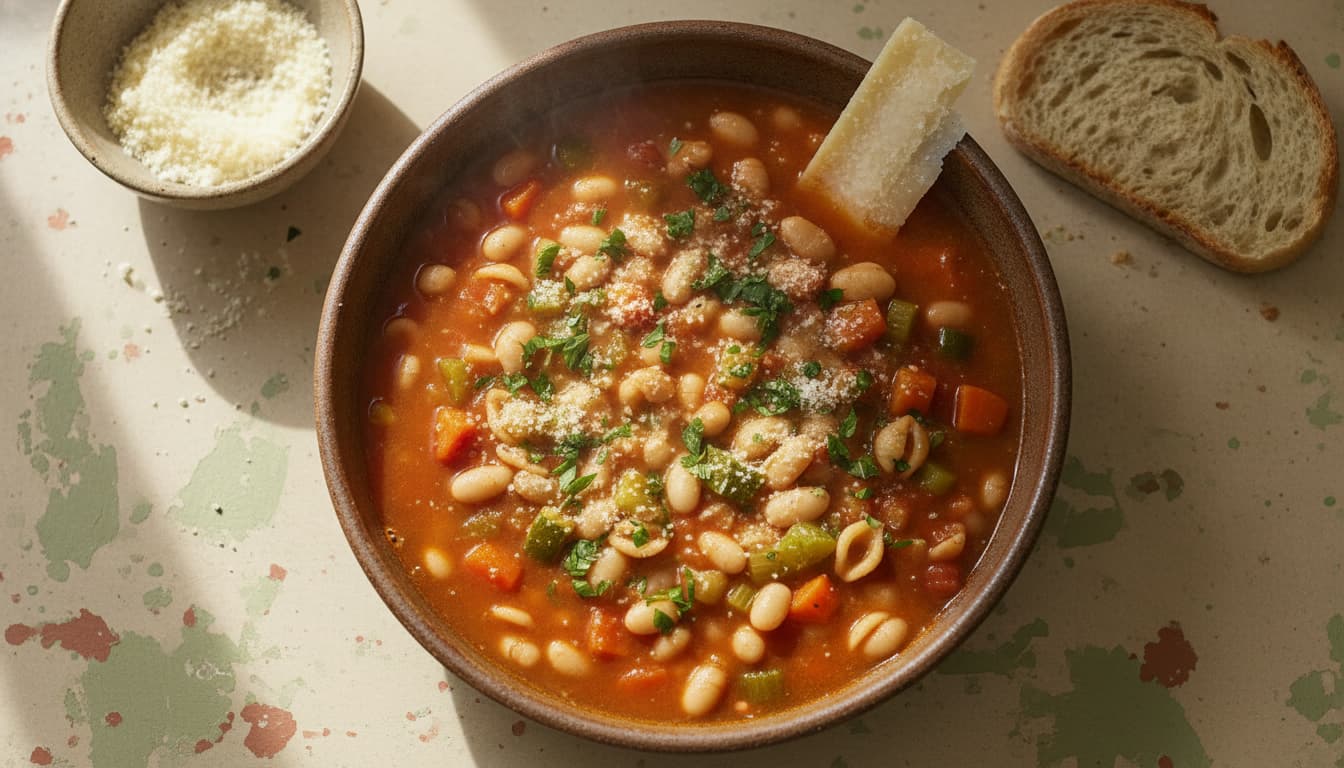
Minestrone the way it should be: a thick, vegetable-packed Italian soup with beans, tomatoes, greens and a parmesan rind simmered into the broth. Naturally high-fiber at 11g a bowl, easily vegetarian or vegan.
Warum das funktioniert
Jedes Rezept auf dieser Seite kommt mit einer Erklärung der Technik-Entscheidungen: warum erst anbraten, dann schmoren, warum die Säure zum Schluss kommt, warum das Fett vor den Aromaten ausgelassen wird. Die Methode unten besteht aus genau diesen Entscheidungen, der Reihe nach.
Zutaten
5 Portionen- 2 tbspolive oil
- 1onion · diced
- 2carrots · diced
- 2 stalkscelery · diced
- 4 clovesgarlic · minced
- 2 tbsptomato paste
- 1 candiced tomatoes · 14 oz
- 1 cancannellini beans · 15 oz, drained
- 6 cupsvegetable broth · low-sodium
- 1 pieceparmesan rind · optional but recommended
- 2 cupskale or spinach · chopped
- 3/4 cupsmall pasta · cooked separately
- 1 tspdried oregano
Methode
Build a soffritto base first
Sweat the onion, carrot and celery slowly in olive oil until soft and sweet before anything else goes in. This Italian aromatic base, the soffritto, is the foundation of the soup flavour. Rushing it with high heat gives you raw crunch and a thinner-tasting broth.
The parmesan rind is the secret weapon
Drop a parmesan rind into the simmering broth. As it softens it releases savoury, salty depth that makes a vegetable soup taste like it has been cooking all day. Save your rinds in the freezer for exactly this. Fish it out before serving.
Fry the tomato paste before the liquid
Cook the tomato paste with the soffritto and garlic for a minute or two until it darkens. This removes the raw edge and concentrates the tomato flavour that runs through the whole pot.
Cook the pasta separately
Boil the pasta on the side and add it to each bowl, not the pot. Pasta left in the soup keeps drinking the broth and turns to mush by the second day, and you lose your liquid. Kept separate, leftovers stay good all week.
Beans add body, protein and fibre
Cannellini beans push the fibre to eleven grams a bowl and make the soup filling enough to be a meal. Mash a few against the side of the pot to thicken the broth naturally without cream or flour.
Greens in at the end
Stir kale in for the last five minutes, or spinach for the last one, so they keep colour and structure rather than cooking to a grey sludge. Finish with a drizzle of good olive oil and grated parmesan at the table.
Variationen
Substitutionen und Anpassungen folgen mit der Foto-Produktion. Die Methode hält bei den meisten sinnvollen Austauschen.
Aufbewahrung
Kühlschrank: 3 bis 4 Tage, verschlossen. Gefrierfach: bis zu 3 Monate. Abgedeckt aufwärmen, um die Feuchtigkeit zu halten.
Häufige Fragen
- What vegetables go in minestrone?
- Minestrone is flexible by design, it was a peasant soup built from whatever was in season. The constants are a soffritto of onion, carrot and celery, tomatoes, beans and greens. Beyond that, zucchini, green beans, potato and cabbage all work. Use what you have.
- How do I make it vegan?
- Skip the parmesan rind and finishing cheese, and build the savoury depth with a spoon of miso or a splash of soy stirred in at the end, plus a generous glug of good olive oil. The beans and vegetables carry the rest.
- Why cook the pasta separately?
- Pasta stored in the soup keeps absorbing liquid, so it bloats to mush and drinks your broth dry by the next day. Cooking it separately and adding it per bowl keeps the pasta al dente and the leftovers good for four or five days.
- Can I freeze minestrone?
- Yes, freeze the soup base without the pasta for up to three months. Add freshly cooked pasta when you reheat. The bean-and-vegetable base freezes and thaws well; pasta frozen in soup turns mushy.
Ähnliche Rezepte
Alle ansehen →Gazpacho: reife Tomaten, altes Brot, vier Stunden kalt
Gazpacho ist eine Emulsion, keine kalte Tomatensuppe. Warum eingeweichtes Brot und langsam eingegossenes Olivenöl die Textur machen, wie viel Sherryessig hineingehört und warum kalt immer nachgewürzt werden muss.
270m4g EiweißTabouleh: ein Kräutersalat mit Bulgur, nicht umgekehrt
Echtes Tabouleh besteht zu drei Vierteln aus Petersilie. Warum der Bulgur nur eingeweicht und nicht gekocht wird, warum die Petersilie vollständig trocken sein muss und warum die Tomaten vor dem Mischen abtropfen müssen.
45m4g EiweißCarbonara: keine Sahne, Guanciale, Pfanne runter vom Herd
Rührei statt Sauce entsteht bei zu viel Hitze. Warum Guanciale und nicht Speck, warum Pecorino und nicht Parmesan, wie viel Nudelwasser in die Eier gehört und bei welcher Temperatur die Emulsion bindet statt zu stocken.
30m27g Eiweiß
Erhalten Sie jeden Sonntag ein getestetes Rezept und eine Nährwert-Notiz in Ihr Postfach.
Ein Rezept pro Woche, fotografiert am selben Dienstag, an dem es getestet wurde. Von einer Ernährungsberaterin geprüft. Keine Werbung, keine Pop-ups, kein Tracking.
Das Clean-Chef-Starter-Kit.
Ein 14-Tage-Plan für entzündungshemmende Ernährung als PDF, Einkaufsliste nach Abteilungen, Makros pro Tag aufsummiert, Sonntags-Vorbereitung. Kostenlos.
Mit der Anmeldung stimmen Sie unserer Datenschutzerklärung zu. Eine ruhige E-Mail pro Woche. Jederzeit abbestellbar.
Wir bauen einen Shop.
Kuratiertes Kochgeschirr, Vorratsbasics, die wir wirklich kaufen, Rezept-Bundle-PDFs. Erfahren Sie als Erste, wann er öffnet.
Wir schreiben Ihnen nur zur Shop-Eröffnung. In jeder E-Mail abbestellbar. Siehe unsere Datenschutzerklärung.