- Calories
- 280
- Protein
- 12g
- Fiber
- 11g
- Sat. fat
- 2g
- Sodium
- 540mg
- Added sugar
- 4g
What this recipe does for you.
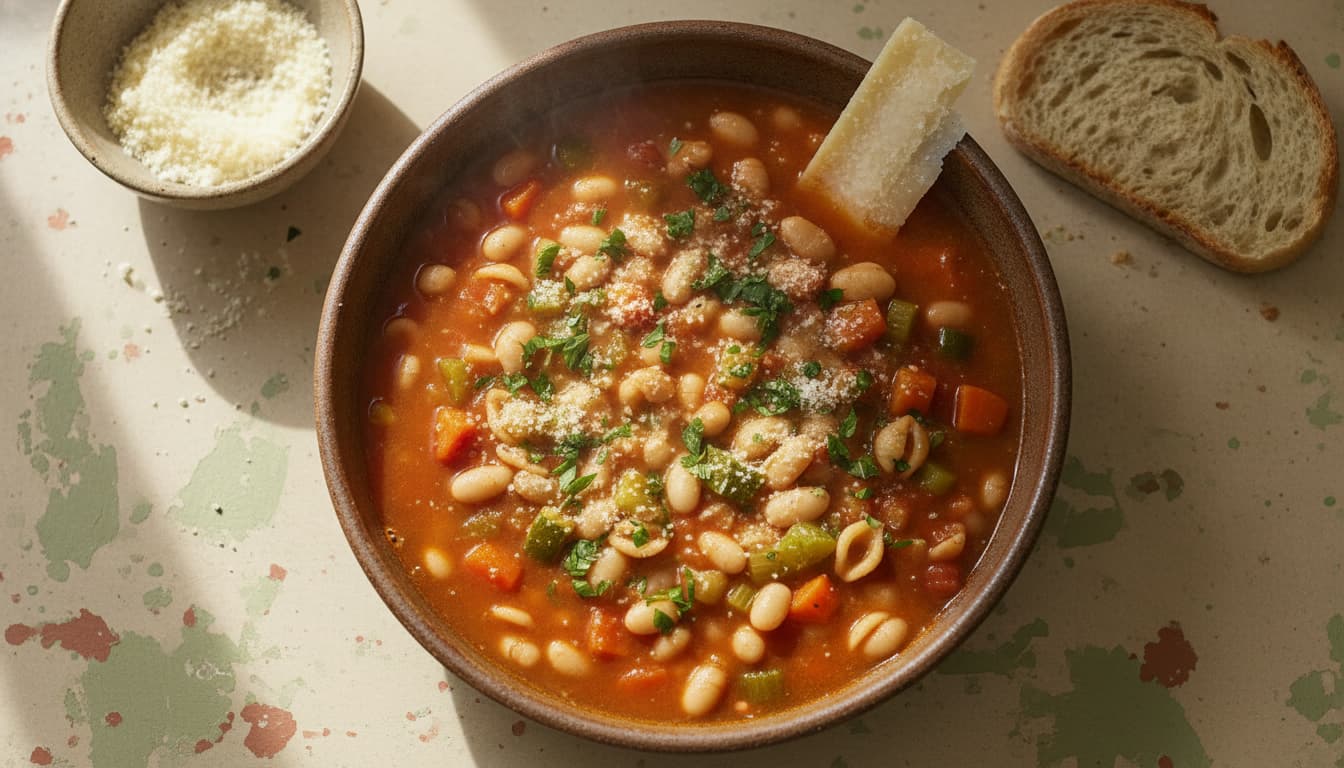
Minestrone the way it should be: a thick, vegetable-packed Italian soup with beans, tomatoes, greens and a parmesan rind simmered into the broth. Naturally high-fiber at 11g a bowl, easily vegetarian or vegan.
Why this works
Every recipe on this site ships with an explanation of the technique decisions, why sear then braise, why the acid goes in at the end, why the fat renders before the aromatics. The method below is those decisions, in order.
Ingredients
Serves 5- 2 tbspolive oil
- 1onion · diced
- 2carrots · diced
- 2 stalkscelery · diced
- 4 clovesgarlic · minced
- 2 tbsptomato paste
- 1 candiced tomatoes · 14 oz
- 1 cancannellini beans · 15 oz, drained
- 6 cupsvegetable broth · low-sodium
- 1 pieceparmesan rind · optional but recommended
- 2 cupskale or spinach · chopped
- 3/4 cupsmall pasta · cooked separately
- 1 tspdried oregano
Method
Build a soffritto base first
Sweat the onion, carrot and celery slowly in olive oil until soft and sweet before anything else goes in. This Italian aromatic base, the soffritto, is the foundation of the soup flavour. Rushing it with high heat gives you raw crunch and a thinner-tasting broth.
The parmesan rind is the secret weapon
Drop a parmesan rind into the simmering broth. As it softens it releases savoury, salty depth that makes a vegetable soup taste like it has been cooking all day. Save your rinds in the freezer for exactly this. Fish it out before serving.
Fry the tomato paste before the liquid
Cook the tomato paste with the soffritto and garlic for a minute or two until it darkens. This removes the raw edge and concentrates the tomato flavour that runs through the whole pot.
Cook the pasta separately
Boil the pasta on the side and add it to each bowl, not the pot. Pasta left in the soup keeps drinking the broth and turns to mush by the second day, and you lose your liquid. Kept separate, leftovers stay good all week.
Beans add body, protein and fibre
Cannellini beans push the fibre to eleven grams a bowl and make the soup filling enough to be a meal. Mash a few against the side of the pot to thicken the broth naturally without cream or flour.
Greens in at the end
Stir kale in for the last five minutes, or spinach for the last one, so they keep colour and structure rather than cooking to a grey sludge. Finish with a drizzle of good olive oil and grated parmesan at the table.
Variations
Substitutions and adaptations land with the photography shoot. The method holds across most reasonable swaps.
Storage
Refrigerator: 3 to 4 days, sealed. Freezer: up to 3 months. Reheat covered to retain moisture.
Frequently asked
- What vegetables go in minestrone?
- Minestrone is flexible by design, it was a peasant soup built from whatever was in season. The constants are a soffritto of onion, carrot and celery, tomatoes, beans and greens. Beyond that, zucchini, green beans, potato and cabbage all work. Use what you have.
- How do I make it vegan?
- Skip the parmesan rind and finishing cheese, and build the savoury depth with a spoon of miso or a splash of soy stirred in at the end, plus a generous glug of good olive oil. The beans and vegetables carry the rest.
- Why cook the pasta separately?
- Pasta stored in the soup keeps absorbing liquid, so it bloats to mush and drinks your broth dry by the next day. Cooking it separately and adding it per bowl keeps the pasta al dente and the leftovers good for four or five days.
- Can I freeze minestrone?
- Yes, freeze the soup base without the pasta for up to three months. Add freshly cooked pasta when you reheat. The bean-and-vegetable base freezes and thaws well; pasta frozen in soup turns mushy.
Related recipes
See all →Gazpacho: An Emulsion, Not a Cold Tomato Soup
The Andalusian version is thick, orange-pink and creamy without any dairy in it, and the two things that get it there are stale bread and olive oil poured in slowly at the end. Watery red gazpacho is a blender-order problem. It needs genuinely ripe tomatoes, sherry vinegar rather than any other kind, and four hours in the fridge, which the time on this page includes.
270m4g ProteinTabbouleh: A Parsley Salad With Bulgur In It, Not the Reverse
Almost every tabbouleh sold outside the Levant has the ratio backwards: a bowl of wet bulgur with parsley stirred through. The Lebanese version is three quarters herbs by volume, with fine bulgur used the way you would use breadcrumbs, soaked in tomato juice rather than boiled. Forty-five minutes, no cooking at all, and most of the work is drying parsley and chopping it properly.
45m4g ProteinCarbonara: Four Ingredients, One Temperature, No Cream
Carbonara is not a cream sauce and it is not scrambled eggs. It is an emulsion of egg yolk, rendered pork fat, grated sheep cheese and starchy pasta water, held together by heat that stops just short of setting the egg. Everything that goes wrong goes wrong in the last ninety seconds. Thirty minutes, four ingredients, and a pan that comes off the burner before the eggs arrive.
30m27g Protein
Get a tested recipe + a nutritional note in your inbox each Sunday.
One recipe a week, photographed on the same Tuesday it tested. Reviewed by an RD. No promotions, no pop-ups, no tracking.
The Clean Chef Starter Kit.
A 14-day anti-inflammatory meal plan PDF, grocery list by section, macros totaled per day, Sunday prep sequence. Free.
By subscribing, you agree to our Privacy Policy. One calm email a week. Unsubscribe anytime.
We're building a shop.
Curated cookware, pantry staples we actually buy, recipe-bundle PDFs. Be the first to know when it opens.
We'll only email you about the shop opening. Unsubscribe in any email. See our Privacy Policy.