- Kalorien
- 230
- Eiweiß
- 11g
- Ballaststoffe
- 2g
- Ges. Fett
- 7g
- Natrium
- 340mg
- Zugesetzter Zucker
- 2g
Was dieses Rezept für Sie leistet.
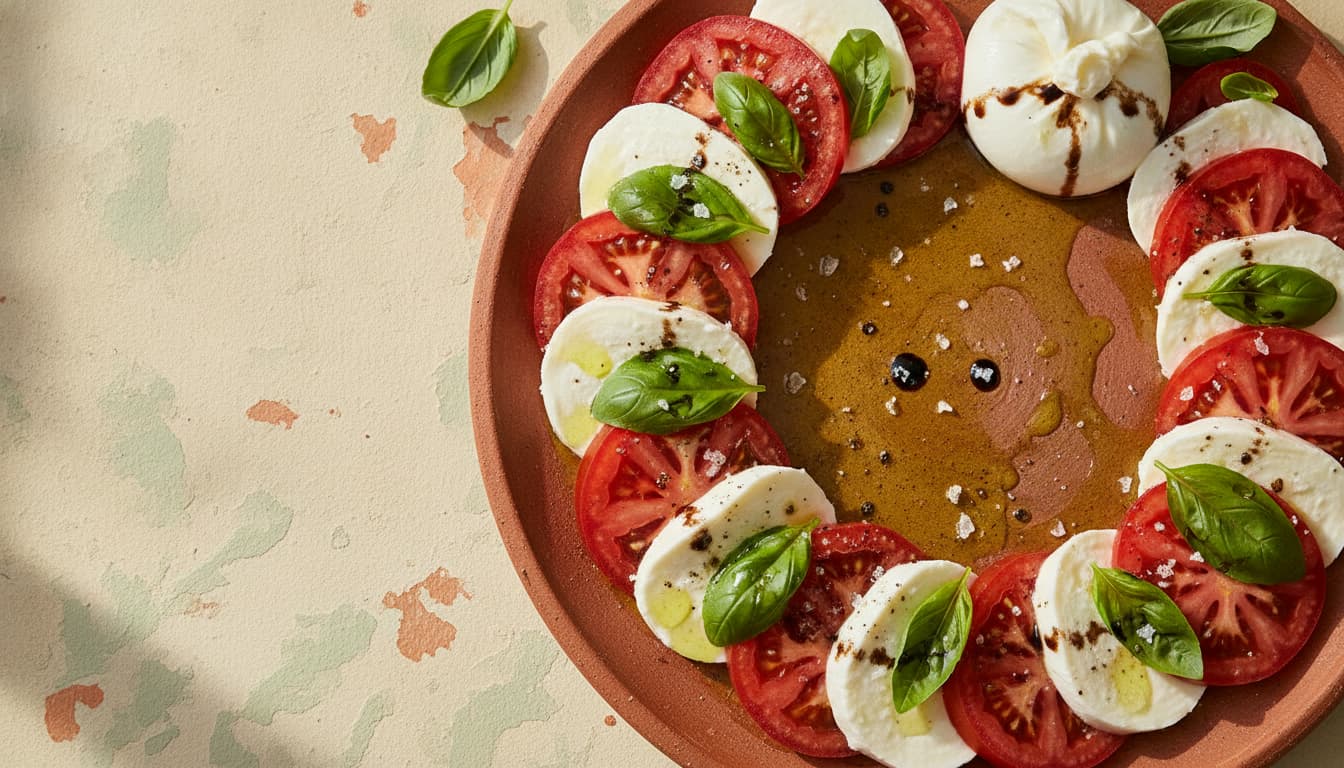
Caprese salad lives on quality, not technique: ripe tomatoes, good mozzarella and fresh basil, seasoned with proper olive oil, sea salt and an optional touch of balsamic. Naturally vegetarian and gluten-free.
Warum das funktioniert
Jedes Rezept auf dieser Seite kommt mit einer Erklärung der Technik-Entscheidungen: warum erst anbraten, dann schmoren, warum die Säure zum Schluss kommt, warum das Fett vor den Aromaten ausgelassen wird. Die Methode unten besteht aus genau diesen Entscheidungen, der Reihe nach.
Zutaten
4 Portionen- 1.5 lbripe tomatoes · mixed, at room temperature
- 8 ozfresh mozzarella · or buffalo mozzarella, torn or sliced
- 1large bunch basil · leaves picked
- 3 tbspextra-virgin olive oil · the good bottle
- 1/2 tspflaky sea salt · to taste
- 1/4 tspblack pepper · cracked
- 1 tbspaged balsamic · optional, used sparingly
Methode
This is a shopping recipe, not a cooking one
With three main ingredients and no heat, caprese is entirely about quality. Buy the ripest tomatoes you can find, real fresh mozzarella packed in water, fresh basil, and a good olive oil. No technique rescues pale winter tomatoes and rubbery pre-shredded cheese.
Tomatoes at room temperature, always
Cold from the fridge, tomatoes are mealy and muted. At room temperature their flavour and aroma open up completely. Take them out at least an hour before serving. This single thing does more for a caprese than any dressing.
Salt the tomatoes first, on their own
Season the sliced tomatoes with flaky salt a few minutes before assembling. The salt draws out a little juice and concentrates their flavour, and seasoned tomatoes taste of tomato rather than water. Do this before the cheese and oil go on.
Tear the mozzarella rather than slicing it
Tearing fresh mozzarella into rough pieces creates craggy surfaces that hold the oil and juices better than neat slices, and it looks generous rather than clinical. Buffalo mozzarella, if you can get it, is worth the extra.
Good olive oil is a component, not a garnish
This is the place to use your best extra-virgin olive oil. It is one of only a few flavours on the plate, so it matters. Be generous, and season with cracked pepper and a little more salt at the end.
Balsamic is optional and easy to overdo
A traditional caprese needs no balsamic at all. If you like it, use a small amount of genuinely aged balsamic, not a flood of thin supermarket vinegar or a sweet glaze that drowns the tomato. A few drops, or none.
Variationen
Substitutionen und Anpassungen folgen mit der Foto-Produktion. Die Methode hält bei den meisten sinnvollen Austauschen.
Aufbewahrung
Kühlschrank: 3 bis 4 Tage, verschlossen. Gefrierfach: bis zu 3 Monate. Abgedeckt aufwärmen, um die Feuchtigkeit zu halten.
Häufige Fragen
- What is the best mozzarella for caprese?
- Fresh mozzarella packed in water, and ideally buffalo mozzarella (mozzarella di bufala) if you can find it, which is creamier and more flavourful. Avoid the firm low-moisture blocks meant for pizza and never use pre-shredded, which is coated to stop it clumping and tastes of nothing.
- Do I have to use balsamic?
- No. A classic caprese is just tomato, mozzarella, basil, olive oil and salt, with no balsamic at all. If you enjoy it, use a small amount of aged balsamic sparingly. A heavy sweet glaze overwhelms the delicate tomato and cheese.
- How do I make caprese when tomatoes are out of season?
- Honestly, it is best not to, this is a summer dish. If you must, use the best cherry or cocktail tomatoes you can find, as they tend to be sweeter than pale large tomatoes in winter, and lean a little harder on salt and good oil.
- Can I make it dairy-free?
- The mozzarella is central, so a true caprese is hard to replicate without dairy. A plant-based mozzarella can stand in, or you could build a tomato-and-basil salad with avocado for creaminess instead, which is a different but good dish.
Ähnliche Rezepte
Alle ansehen →Gazpacho: reife Tomaten, altes Brot, vier Stunden kalt
Gazpacho ist eine Emulsion, keine kalte Tomatensuppe. Warum eingeweichtes Brot und langsam eingegossenes Olivenöl die Textur machen, wie viel Sherryessig hineingehört und warum kalt immer nachgewürzt werden muss.
270m4g EiweißTabouleh: ein Kräutersalat mit Bulgur, nicht umgekehrt
Echtes Tabouleh besteht zu drei Vierteln aus Petersilie. Warum der Bulgur nur eingeweicht und nicht gekocht wird, warum die Petersilie vollständig trocken sein muss und warum die Tomaten vor dem Mischen abtropfen müssen.
45m4g EiweißCarbonara: keine Sahne, Guanciale, Pfanne runter vom Herd
Rührei statt Sauce entsteht bei zu viel Hitze. Warum Guanciale und nicht Speck, warum Pecorino und nicht Parmesan, wie viel Nudelwasser in die Eier gehört und bei welcher Temperatur die Emulsion bindet statt zu stocken.
30m27g Eiweiß
Erhalten Sie jeden Sonntag ein getestetes Rezept und eine Nährwert-Notiz in Ihr Postfach.
Ein Rezept pro Woche, fotografiert am selben Dienstag, an dem es getestet wurde. Von einer Ernährungsberaterin geprüft. Keine Werbung, keine Pop-ups, kein Tracking.
Das Clean-Chef-Starter-Kit.
Ein 14-Tage-Plan für entzündungshemmende Ernährung als PDF, Einkaufsliste nach Abteilungen, Makros pro Tag aufsummiert, Sonntags-Vorbereitung. Kostenlos.
Mit der Anmeldung stimmen Sie unserer Datenschutzerklärung zu. Eine ruhige E-Mail pro Woche. Jederzeit abbestellbar.
Wir bauen einen Shop.
Kuratiertes Kochgeschirr, Vorratsbasics, die wir wirklich kaufen, Rezept-Bundle-PDFs. Erfahren Sie als Erste, wann er öffnet.
Wir schreiben Ihnen nur zur Shop-Eröffnung. In jeder E-Mail abbestellbar. Siehe unsere Datenschutzerklärung.