Mediterranean diet for beginners
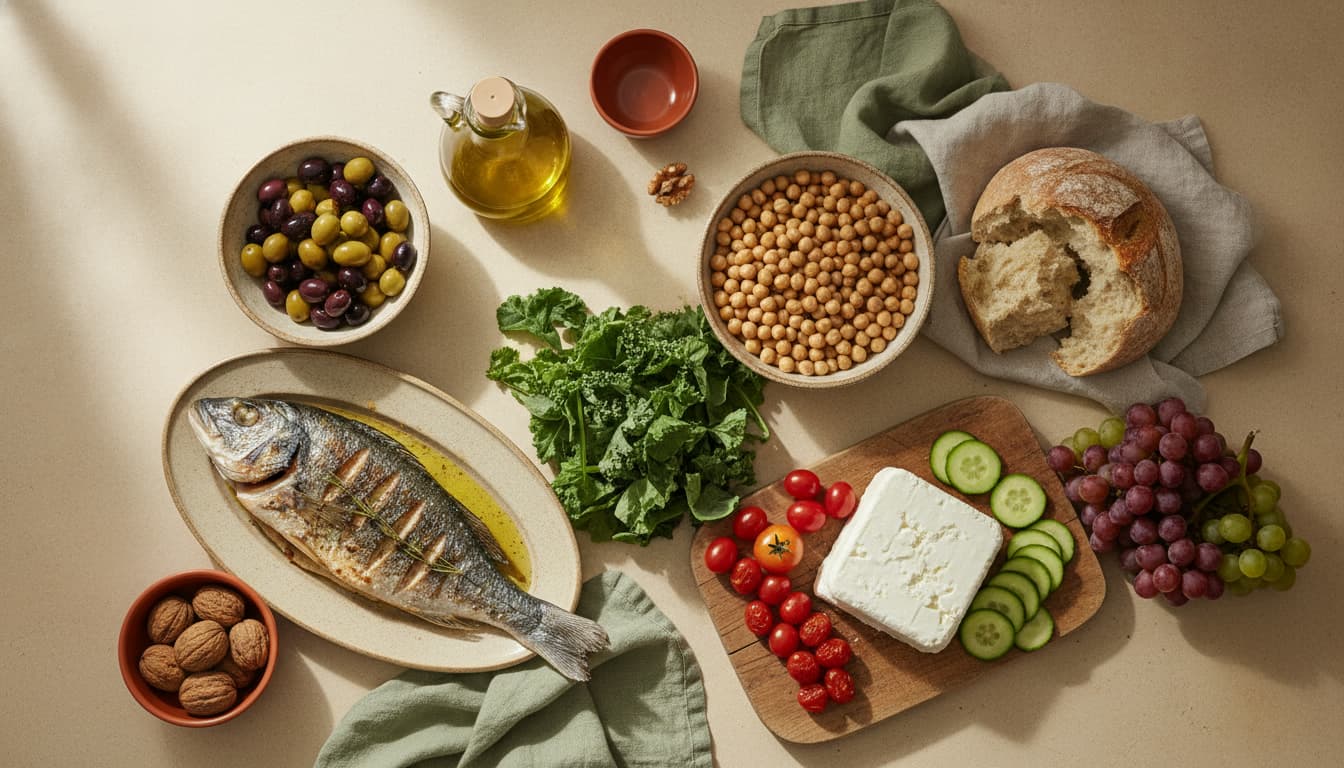
Von Die ThatCleanChef-Küche · Aktualisiert 24. August 2026 · 14 Min. Lesezeit
Not a pyramid diagram. The first two weeks as a cook experiences them: the six changes that do almost all of the work, the five dishes to learn first, what a week of dinners actually looks like, the three mistakes beginners make (too little olive oil, too little fish, treating it as low-fat), and how to tell in fourteen days whether it has taken.
Lieber beantworten wir die Frage, die Sie tatsächlich gestellt haben, schon im ersten Absatz, und gewinnen Ihr Vertrauen, indem wir die Küchennotizen zeigen.
Worauf es wirklich ankommt, der Reihe nach.
- 01
Change the fat first, and use more of it than feels right
Extra-virgin olive oil replaces butter, vegetable oil, and low-fat dressings, and the quantity is two to four tablespoons a day, which is the dose the PREDIMED trial actually used. Beginners coming from a low-fat mindset use a teaspoon and wonder why the vegetables taste of nothing. Buy two bottles, a cheaper one for cooking and a better one for finishing, and pour the finishing one over vegetables, beans, and soup at the table.
- 02
Put a vegetable on every plate, then add a second
Not a garnish, a real portion, and ideally two different ones. This is the mechanical change that moves fiber from the American average of around 15g a day to the 30g to 40g range the pattern runs on. Frozen counts, tinned tomatoes count. If you do nothing else in week one, roast a tray of vegetables twice and put some on every dinner plate.
- 03
Eat fish twice a week, and let one of them come from a tin
Salmon, mackerel, sardines, anchovies, cod, shrimp, mussels. Two servings a week is the target and the barrier is usually cost and confidence, both of which tinned fish solves. Sardines on toast is a fifteen-minute dinner. A fillet of salmon roasted on a tray with vegetables is a twenty-five-minute one. Fresh fish twice a week is not required, oily fish twice a week is.
- 04
Make legumes a meal three times a week, not a side
Lentil soup, chickpea stew, white beans with greens, a bean salad. Three legume-centered meals a week is the least American part of the pattern and the part that does the most for fiber and for the grocery bill. Tinned beans drained and rinsed are entirely legitimate. Dried are cheaper and better if you plan an hour ahead, and they freeze cooked.
- 05
Move red meat to the edges, not off the plate
A few times a month rather than a few times a week. Nothing is banned, the frequency changes. Chicken and eggs stay in the rotation a few times a week, fermented dairy stays daily if you like it. This is why the pattern sticks where stricter diets do not: there is no list of forbidden food, only a change in what is central and what is occasional.
- 06
Learn these five dishes and week two runs itself
A sheet-pan fish with vegetables. A lentil or bean soup. A grain bowl with a lemon dressing. A tray of roasted vegetables. A Greek-style chopped salad with feta. Five recipes cover about eleven meals a week once you allow for leftovers, and each one takes under forty minutes. Learning five dishes properly beats collecting fifty you never cook.
- 07
Week one: change dinner only
Do not overhaul breakfast, lunch, snacks, and dinner in the same week, which is how people quit on day nine. Week one is seven Mediterranean dinners and nothing else changes. Week two you add breakfast, which is the easiest meal to switch since yogurt with nuts or eggs with tomatoes takes no new skill. Lunch takes care of itself if you cook enough dinner.
- 08
Stock the cupboard once and the cooking gets easy
Olive oil, tinned tomatoes, tinned beans and lentils, tinned sardines, olives, capers, dried oregano, garlic, onions, lemons, a whole grain such as farro or bulgur, nuts, and tahini. About sixty dollars for the initial stock at mid-2026 US averages, and they drift by shop and season. After that the weekly shop is mostly produce, fish, and yogurt, and you can cook a decent dinner without shopping at all.
- 09
The three beginner mistakes
One, treating it as a low-fat diet and rationing the olive oil, which leaves the food dull. Two, skipping the fish and the legumes because they feel like effort, which removes most of the nutritional distinctiveness. Three, buying Mediterranean-labeled packaged products instead of cooking, since the pattern is defined by what you cook, not by a logo on a box. All three are avoidable in week one.
- 10
What two weeks actually tells you
Not weight. Two weeks is enough to notice steadier energy through the afternoon, better digestion from the fiber jump, and, for most people, that dinner became less of a decision because the pattern narrowed the options usefully. The cardiovascular evidence runs over years, not fortnights. Judge the fortnight on whether you enjoyed cooking it, because that is what determines whether year one happens.
Die Fragen, die Köche uns stellen.
- How do I start the Mediterranean diet as a beginner?
- Change dinner first and leave everything else alone for a week. Cook seven dinners built on vegetables, olive oil, and either fish or legumes, with red meat set aside for that week. Stock the cupboard with olive oil, tinned tomatoes, tinned beans, tinned fish, olives, oregano, lemons and a whole grain. In week two, switch breakfast to yogurt with nuts or eggs with tomatoes. Doing it in two stages is the difference between a pattern that lasts and a week that collapses.
- What can you not eat on the Mediterranean diet?
- Nothing is strictly forbidden, which is a feature rather than a loophole. What moves to the edges: red meat a few times a month, sweets as an occasional rather than daily thing, and butter replaced by olive oil. What you actively reduce: ultra-processed food, sugary drinks, refined white bread, and processed meats. Wine, if you drink, is a glass with a meal rather than an evening's project, and there is no reason to start if you do not already drink.
- Is the Mediterranean diet expensive?
- It runs cheaper than a meat-centered week for most households, because the expensive item, red meat, largely leaves the cart and is replaced by beans, lentils, grains and seasonal vegetables. The costs that go up are olive oil and fish. Buying tinned sardines and frozen fish rather than fresh fillets, and cooking dried pulses rather than tinned, keeps a week comfortably in normal grocery territory. Prices quoted anywhere on this site are mid-2026 US averages, and they drift by shop and season.
- How long before the Mediterranean diet makes a difference?
- Digestion and energy typically shift within one to two weeks, mostly as a consequence of the fiber increase and the drop in ultra-processed food. Blood lipids move over roughly two to three months if they are going to. The cardiovascular outcomes in the PREDIMED trial were measured over a median of nearly five years, so treat this as a long-term eating pattern rather than a protocol with a finish line.
Woher die Technik stammt
- Estruch R, et al. Primary prevention of cardiovascular disease with a Mediterranean diet supplemented with extra-virgin olive oil or nuts (PREDIMED). NEJM. 2018.
- Willett WC, et al. Mediterranean diet pyramid: a cultural model for healthy eating. Am J Clin Nutr. 1995.
- Dietary Guidelines for Americans 2020-2025, dietary fiber intake reference.
Über die ThatCleanChef-Küche
Ein kleines Team aus Rezeptentwicklerinnen und Foodfotografen, das Rezepte in Privatküchen mit haushaltsüblichem Equipment testet. Jede Nährwertkarte ist USDA-FoodData-Central-belegt und wird geprüft von Lena Marsh, RDN, MS. Wir geben nicht vor, ein einzelner Küchenchef zu sein, wir sind die Menschen hinter den Tellern. Das ganze Team kennenlernen →
Ähnliche Beiträge
Gazpacho: reife Tomaten, altes Brot, vier Stunden kalt
Gazpacho ist eine Emulsion, keine kalte Tomatensuppe. Warum eingeweichtes Brot und langsam eingegossenes Olivenöl die Textur machen, wie viel Sherryessig hineingehört und warum kalt immer nachgewürzt werden muss.
Tabouleh: ein Kräutersalat mit Bulgur, nicht umgekehrt
Echtes Tabouleh besteht zu drei Vierteln aus Petersilie. Warum der Bulgur nur eingeweicht und nicht gekocht wird, warum die Petersilie vollständig trocken sein muss und warum die Tomaten vor dem Mischen abtropfen müssen.
Carbonara: keine Sahne, Guanciale, Pfanne runter vom Herd
Rührei statt Sauce entsteht bei zu viel Hitze. Warum Guanciale und nicht Speck, warum Pecorino und nicht Parmesan, wie viel Nudelwasser in die Eier gehört und bei welcher Temperatur die Emulsion bindet statt zu stocken.
Das Clean-Chef-Starter-Kit.
Ein 14-Tage-Plan für entzündungshemmende Ernährung als PDF, Einkaufsliste nach Abteilungen, Makros pro Tag aufsummiert, Sonntags-Vorbereitung. Kostenlos.
Mit der Anmeldung stimmen Sie unserer Datenschutzerklärung zu. Eine ruhige E-Mail pro Woche. Jederzeit abbestellbar.