- Kalorien
- 2000
- Eiweiß
- 95g
- Ballaststoffe
- 32g
- Ges. Fett
- 13g
- Natrium
- 1500mg
- Zugesetzter Zucker
- 20g
Was dieses Rezept für Sie leistet.
DASH is the most studied eating pattern in cardiology and the worst explained. It is not a low-salt diet with a food list, it is a potassium, fiber and produce load that happens to displace sodium. Here is the pattern translated into a shopping cart, the five packaged foods worth auditing first, and how to rebuild flavor once the shaker comes off the table.
Warum das funktioniert
Jedes Rezept auf dieser Seite kommt mit einer Erklärung der Technik-Entscheidungen: warum erst anbraten, dann schmoren, warum die Säure zum Schluss kommt, warum das Fett vor den Aromaten ausgelassen wird. Die Methode unten besteht aus genau diesen Entscheidungen, der Reihe nach.
Zutaten
- Vollständige Zutatenliste folgt mit der Foto-Produktion
Methode
What DASH actually is, in one paragraph
Dietary Approaches to Stop Hypertension came out of a set of NIH-funded feeding trials in the 1990s. Participants ate what the kitchen handed them, which is why the results are unusually clean. The pattern is high in vegetables, fruit, low-fat dairy, whole grains, nuts and legumes, and low in red meat, sweets and sodium. Two things follow from that. First, it is a whole pattern rather than a single restriction. Second, most of the effect showed up within two weeks, which is faster than almost anything else you can do at the stove.
There are two sodium numbers, and you should know which one you are aiming at
The standard DASH target is 2,300mg of sodium a day, roughly a teaspoon of table salt across everything you eat. The lower arm of the trial ran at 1,500mg and produced a bigger drop in blood pressure, particularly in people who were already hypertensive. Average US intake sits around 3,400mg. Start at 2,300, which is achievable by cooking, and treat 1,500 as a second phase rather than a first week. Anyone on a diuretic or a potassium-sparing drug should get the number from their own clinician instead of from a website.
Your salt shaker is not the problem
Roughly seventy percent of the sodium in a US diet arrives already inside packaged and restaurant food, and only about ten to fifteen percent gets added while cooking or at the table. That ratio is the whole strategy. Salting your own pasta water and seasoning a chicken thigh properly costs you very little. A deli sandwich, a jarred pasta sauce and a bowl of canned soup can spend the entire day's budget before dinner. Cook more, and you can keep salting food like a cook.
The five packaged items worth auditing before anything else
Bread and rolls, because two slices can carry 300mg and nobody counts bread. Deli meat and cured pork, where four ounces of turkey breast can run 1,000mg. Canned soup and broth, routinely 700 to 900mg a cup unless you buy the unsalted version. Jarred sauces, dressings and marinades, where sodium and added sugar travel together. And cheese, which is worth keeping, just weighed. Swap those five and you have usually found 1,000mg without touching how you actually cook.
Potassium is the half of DASH that never gets mentioned
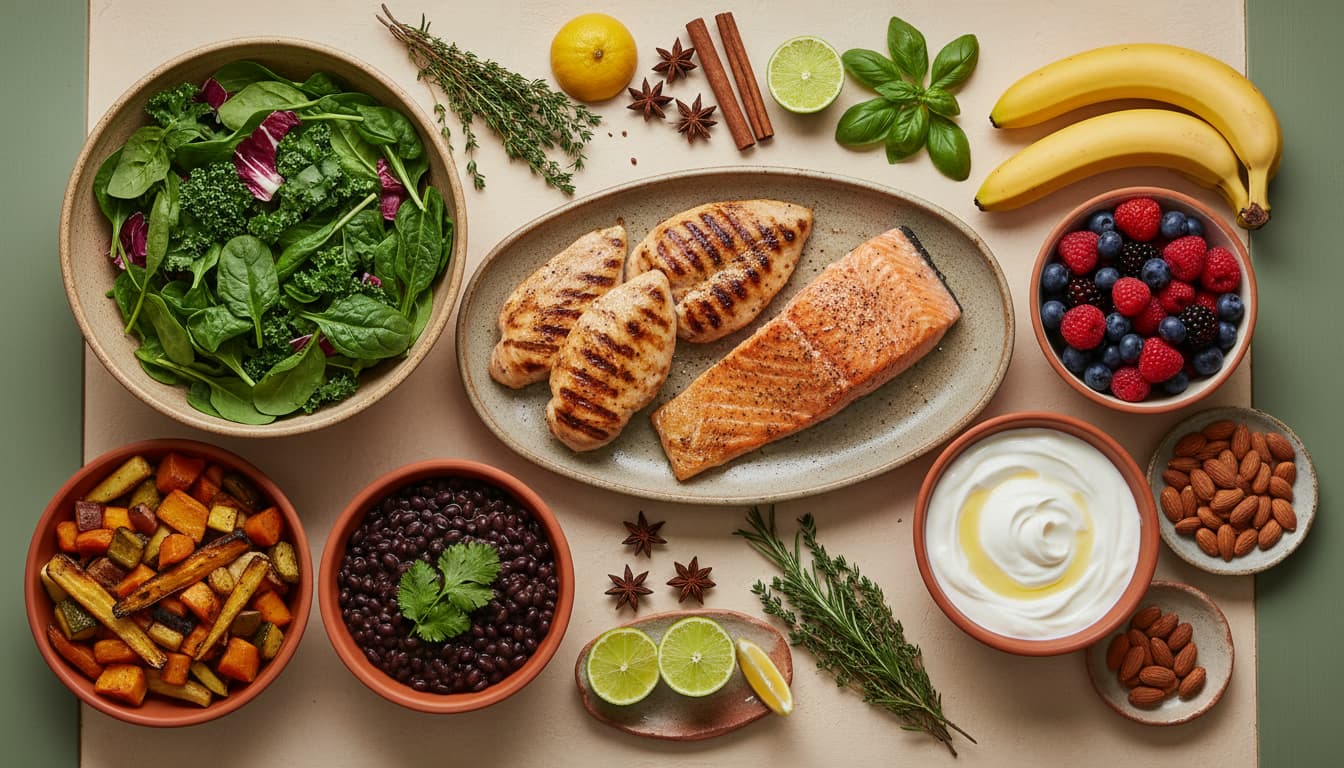
The trials did not simply remove sodium, they loaded potassium, magnesium and calcium through eight to ten servings of produce a day. Potassium relaxes vessel walls and helps the kidney clear sodium, so the ratio between the two matters more than either number alone. The reliable sources are not exotic: white potato with the skin, sweet potato, beans and lentils, spinach and chard, tomato paste and tinned tomatoes, banana, cantaloupe, orange, yogurt and salmon. If you are on an ACE inhibitor, an ARB or a potassium-sparing diuretic, ask before you load up.
How to rebuild flavor when the salt comes down
Salt does three jobs, and only one of them needs sodium. It suppresses bitterness, it carries aroma, and it makes food taste finished. Acid covers the third job better than anything else, so a squeeze of lemon or a splash of sherry vinegar at the end of a braise is not a garnish, it is the fix. Then: toast whole spices in dry fat before they hit liquid, brown your alliums properly, use unsalted or dried mushrooms, tomato paste and a parmesan rind for umami, and finish with fresh herbs off the heat. Add smoke through paprika or a charred pepper rather than through bacon.
A day that does not feel like a hospital tray
Breakfast: oats cooked in milk with banana, walnuts and cinnamon. Lunch: a lentil and roasted vegetable bowl with lemon tahini, or last night's chicken over greens with plenty of tomato. Snack: yogurt with berries, or a handful of unsalted almonds and an orange. Dinner: baked cod with cherry tomatoes and capers rinsed, a large tray of roasted vegetables, and potatoes with the skin on. That lands near 2,000 calories, over 30g of fiber, and comfortably under 1,600mg of sodium, and none of it reads as a restriction.
What to expect, and when
In the trials, systolic pressure moved within two weeks and most of the benefit was visible by week eight. The effect was larger in people who started higher, which is worth knowing if you are doing this on a borderline reading. Taste adaptation runs on a similar clock: food tastes flat for about ten days and then recalibrates, at which point restaurant soup starts tasting like brine. That adaptation is the point at which the pattern stops requiring willpower.
What it costs to run
The expensive parts of a DASH cart are the produce volume and the nuts. The cheap parts, dried beans and lentils, oats, potatoes, frozen vegetables, tinned tomatoes and eggs, are cheap enough to carry the rest. Buying unsalted tinned beans and unsalted stock costs the same as the salted version. Frozen spinach and frozen berries run well under fresh and lose almost nothing that matters here. These are mid-2026 US averages, and they drift by shop and season.
Variationen
Substitutionen und Anpassungen folgen mit der Foto-Produktion. Die Methode hält bei den meisten sinnvollen Austauschen.
Aufbewahrung
Kühlschrank: 3 bis 4 Tage, verschlossen. Gefrierfach: bis zu 3 Monate. Abgedeckt aufwärmen, um die Feuchtigkeit zu halten.
Häufige Fragen
- Is the DASH diet just a low-sodium diet?
- No, and treating it that way is why people fail at it. In the original feeding trials the DASH pattern lowered blood pressure even at the higher sodium level, because the produce, dairy, legume and whole-grain load was doing work on its own through potassium, magnesium, calcium and fiber. Cutting sodium on top of that pattern added more benefit. If you only remove salt and change nothing else, you get part of the effect and all of the misery.
- How much sodium is in a teaspoon of salt?
- About 2,300mg, which is the entire standard DASH allowance for a day. A quarter teaspoon is roughly 575mg. That is a useful number to hold, because it tells you that seasoning a four-serving braise with three quarters of a teaspoon costs each person about 430mg, which is affordable. One cup of standard canned soup costs about the same and gives you far less food.
- Can I use a potassium salt substitute?
- Often yes, and it genuinely helps, because it cuts sodium and raises potassium at once. But it is a medical question rather than a culinary one. Potassium chloride is a problem for anyone with reduced kidney function or on an ACE inhibitor, an ARB, spironolactone or another potassium-sparing drug. Ask your clinician first. On flavor: it works well stirred into finished dishes and poorly in baking, and it turns bitter if you use a heavy hand.
- Does DASH allow coffee and alcohol?
- Coffee, yes. The blood pressure effect of habitual coffee is small and short-lived in regular drinkers, so there is no reason to quit for this. Alcohol is the one worth looking at, because intake above roughly two drinks a day for men and one for women raises pressure in a dose-dependent way that shows up quickly. Cutting from four drinks to one is one of the higher-yield changes available, and it is separate from anything happening on the plate.
- How is DASH different from the Mediterranean diet?
- They overlap by about eighty percent and the differences are real but narrow. DASH keeps low-fat dairy in and names a sodium target. The Mediterranean pattern uses more olive oil, more fish and more legumes, allows moderate wine, is largely indifferent to dairy fat, and does not specify sodium at all. DASH has the better hypertension trial evidence. Mediterranean has the better long-term cardiovascular outcome data. Cooking either one properly gets you most of the way to the other.
Ähnliche Rezepte
Alle ansehen →- Diet-Specific
Magnesiumreiche Lebensmittel: Kürbiskerne schlagen Spinat
Eine Handvoll Kürbiskerne liefert rund 156 mg Magnesium, mehr als eine Tasse gekochter Spinat und etwa das Fünffache einer Banane. Etwa die Hälfte der Erwachsenen bleibt unter dem geschätzten Bedarf, und der größte einzelne Grund ist die Ausmahlung von Getreide, die dem Weizen rund achtzig Prozent seines Magnesiums nimmt.
- Diet-Specific
Kaliumreiche Lebensmittel: mehr als Bananen, mit echten Zahlen
Die Banane steht nicht einmal unter den ersten zwanzig. Welche Lebensmittel wirklich viel Kalium liefern, wie Kochen und Wässern den Gehalt senken, und warum Kalium ohne weniger Natrium nur die halbe Rechnung ist.
- Diet-Specific
Vegetarische Rezepte: Protein, Röstaromen und echte Abendessen
Vegetarisch kochen scheitert selten an Ideen und fast immer an zwei Dingen: zu wenig Protein und zu wenig Bräunung. Woher das Protein kommt, welche Nährstoffe wirklich Aufmerksamkeit brauchen und wie eine Woche Abendessen konkret aussieht.
Erhalten Sie jeden Sonntag ein getestetes Rezept und eine Nährwert-Notiz in Ihr Postfach.
Ein Rezept pro Woche, fotografiert am selben Dienstag, an dem es getestet wurde. Von einer Ernährungsberaterin geprüft. Keine Werbung, keine Pop-ups, kein Tracking.
Das Clean-Chef-Starter-Kit.
Ein 14-Tage-Plan für entzündungshemmende Ernährung als PDF, Einkaufsliste nach Abteilungen, Makros pro Tag aufsummiert, Sonntags-Vorbereitung. Kostenlos.
Mit der Anmeldung stimmen Sie unserer Datenschutzerklärung zu. Eine ruhige E-Mail pro Woche. Jederzeit abbestellbar.
Wir bauen einen Shop.
Kuratiertes Kochgeschirr, Vorratsbasics, die wir wirklich kaufen, Rezept-Bundle-PDFs. Erfahren Sie als Erste, wann er öffnet.
Wir schreiben Ihnen nur zur Shop-Eröffnung. In jeder E-Mail abbestellbar. Siehe unsere Datenschutzerklärung.