Halibut recipes
By The ThatCleanChef Kitchen · Updated September 2, 2026 · 10 min read
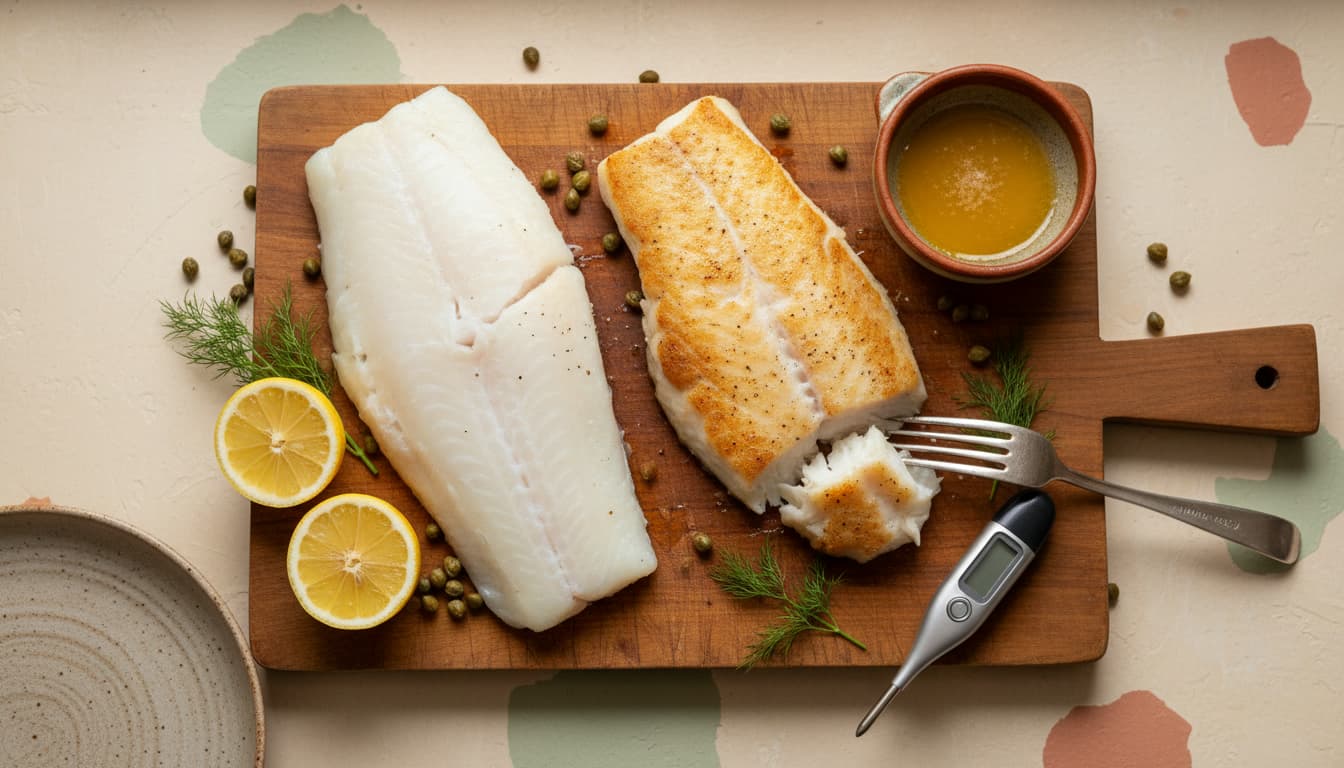
Halibut is the most expensive fish most home cooks buy and the easiest to ruin, because it carries almost no fat to buy you a margin of error. Five degrees past done and it goes from dense and sweet to cotton wool. How to buy it, the temperature that matters, and five methods that build in some forgiveness.
- 01
Buy by thickness, not by weight
A 6oz piece cut an inch thick and a 6oz piece cut half an inch thick are two different ingredients, and every timing you read assumes the first. Ask the counter for center-cut portions at least an inch thick, and refuse the thin tail-end pieces however good the price looks, because they overcook in the time it takes the pan to recover. If all you can get is thin, change the method to a fast sear or a poach rather than fighting it.
- 02
Frozen-at-sea usually beats what is in the fresh case
Pacific halibut is landed a long way from most kitchens, and a great deal of what sits on ice at the counter was frozen and thawed by the shop anyway. A vacuum-packed fillet frozen within hours of being caught is frequently the better fish and the better price. Thaw it overnight in the fridge in its bag, then open it, pat it dry and leave it uncovered on a rack for 20 minutes before cooking. Never thaw it in water, which waterlogs the flesh.
- 03
The number is 130F to 135F, and carryover is real
Halibut is done at 130F to 135F in the thickest part, where it flakes cleanly and still looks faintly translucent at the very center. Most guidance says 145F, which is a safety floor rather than a quality target, and at 145F this particular fish is dry. Pull it at 125F to 128F and let carryover finish the job over three or four minutes off the heat. An instant-read thermometer costs less than one halibut fillet and pays for itself immediately.
- 04
Pan-seared, the default, and the crust does the work
Dry the fish hard, salt it 15 minutes ahead and dry it again. Hot pan, high-smoke-point fat, presentation side down, and do not move it for three minutes. Turn once, drop the heat, add a knob of butter and thyme and baste for 90 seconds. Total time on the heat for a 1-inch piece is roughly five minutes. The crust is not decoration, it insulates the surface and slows the heat entering the flesh, which is why seared halibut is more forgiving than baked.
- 05
Sheet pan with tomatoes, olives and oregano
Roast a tray of cherry tomatoes, olives, sliced garlic and oregano in plenty of olive oil at 400F for 15 minutes, then nestle the halibut into the tray and give it 9 to 11 minutes more. The tomatoes release liquid that keeps the surrounding air humid, which is a slower and gentler heat than dry roasting and buys you a couple of minutes of margin. This one leans hard on the mediterranean diet template and is the easiest version to cook for four.
- 06
Olive-oil poached, which makes the least forgiving fish forgiving
Submerge the fillets in olive oil held at 130F to 140F with a thermometer in the pan, add lemon peel, garlic and a bay leaf, and leave them for 15 to 20 minutes. The fish cannot exceed the temperature of the oil, so it is essentially impossible to overcook, and the texture is silky rather than flaky. Use a small deep pan so you need less oil, and strain and keep the oil afterwards for dressings and for the next batch.
- 07
Grilled, and how to stop it sticking
Halibut sticks because it is lean and because the grates were not hot enough. Get the grill genuinely hot, scrub the grates, oil the fish rather than the grill, and leave it alone for four minutes so a crust forms and releases itself. Skin on if you can get it, skin side down first. A halibut steak on the bone is far easier to grill than a fillet, holds together better, and usually costs less per pound.
- 08
Cheeks and collar, the parts nobody prices properly
Halibut cheeks are small nuggets of the muscle that works the jaw, which means more connective tissue and considerably more forgiveness than the loin. They sear in three minutes and stay juicy. The collar is the same story with more fat. Both are usually a fraction of the price of center-cut fillet. At mid-2026 US averages a center-cut fillet runs several times the price of cheeks, and they drift by shop and season, so it is worth asking what the counter has.
- 09
Acid at the end, always, and what to serve with it
Halibut is sweet and mild and it goes flat without something sharp landing at the last moment. Lemon is the default, but a spoon of caper brine, a splash of sherry vinegar in the pan butter, or a salsa verde of parsley, capers and anchovy all work better than more salt. Serve it with something starchy that will absorb the pan juices: white beans, new potatoes crushed in olive oil, or bread. And if you did overcook it, flake it into a bowl with dressing rather than serving it as a fillet.
What people ask us next.
- What temperature should halibut be cooked to?
- For eating quality, pull it at 125F to 128F and let carryover take it to 130F to 135F, where it flakes cleanly and stays juicy. The USDA guideline of 145F is a safety floor written to cover every fish and every situation, and halibut is noticeably dry by then because it has so little fat. If you are cooking for someone pregnant, immunocompromised or very young, cook to the published 145F guideline and pick the olive-oil poach, which stays moist even there.
- Is halibut healthy?
- It is a lean, high-protein fish, roughly 30g of protein and under 200 calories in a 6oz portion, with useful selenium, magnesium and vitamin B12. It carries less omega-3 than salmon or sardines, so it is not the fish to rely on for an anti-inflammatory fat intake, but it is an excellent protein. Pacific halibut sits in the moderate-mercury group, and the FDA guidance is roughly one serving a week for people who are pregnant or breastfeeding.
- Should I buy fresh or frozen halibut?
- Frozen-at-sea, more often than people expect. Halibut is caught in cold, remote water and a great deal of the fish in a fresh case was previously frozen and defrosted in the shop, which is the worst of both. A vacuum-sealed fillet frozen on the boat within hours of landing is usually fresher in every way that matters. Thaw it slowly in the fridge overnight, still sealed, then dry it thoroughly before cooking.
- Why does my halibut fall apart in the pan?
- Two causes. It was turned too early, before a crust formed, so the flesh tore rather than releasing. Or it was already past done when it went in the second time, and overcooked halibut has nothing holding it together. Use a hot pan, leave the first side alone for a full three minutes, turn once with a fish slice rather than tongs, and treat the second side as a finish rather than a second sear.
- What can I use instead of halibut?
- Cod is the closest and the cheapest substitute, slightly softer and more delicate, and it works in every method here with about a minute less on the heat. Turbot and Chilean sea bass are richer and considerably more forgiving. Haddock and pollock are fine for the sheet-pan and poached versions but too soft to grill well. Swordfish and monkfish are the ones to reach for if you specifically wanted the dense, steak-like quality.
- How much halibut do I need per person?
- Six ounces of skinless fillet per person as a main course, which lands around 30g of protein and is the standard restaurant portion. Eight ounces if it is the only substantial thing on the plate and there is no starch. For halibut steaks on the bone, allow eight to ten ounces per person to account for the bone. Buy one extra portion when you are cooking for a group, because the thin pieces cook faster and someone always ends up with one.
Where the technique comes from
About the ThatCleanChef Kitchen
A small team of recipe developers and food photographers testing recipes in home kitchens on home equipment. Every Nutrition Ledger is USDA FoodData Central-sourced and reviewed by Lena Marsh, RDN, MS. We don't pretend to be a single chef, we're the people behind the plates. Meet the full team →
Related posts
Beef Bourguignon: Dry the Meat, Crowd Nothing, Wait a Day
This is a braise that fails at the first step or not at all. Wet beef in a crowded pot steams, and a stew built on steamed beef cannot be rescued later by wine, stock or time. Dry the cubes, brown them in three batches, cook the garnish separately, and give it three hours at 325F. Then, ideally, put it in the fridge overnight, because the second day is a different dish.
How to Cook Tofu: Press It, Coat It in Starch, Sauce It Last
Tofu is bland and soggy for two mechanical reasons, and both are fixable. It is packed in water, so the surface cannot brown until that water is gone, and it is a set protein gel with no internal channels, so marinade does not penetrate it no matter how long you wait. Press it, coat it in cornstarch, fry it hard, and sauce it after it is crisp. An hour, most of it pressing.
Enchiladas: Fry the Tortillas, Fry the Sauce, Bake Them Briefly
Nearly every bad enchilada is the same enchilada: a raw corn tortilla soaked in canned sauce and baked until the whole tray turns to porridge. Two steps fix it permanently. Pass each tortilla through hot oil for twenty seconds so it waterproofs, and fry the blended chile sauce in fat before it goes anywhere near the pan. Ninety minutes, most of it the sauce, and twenty of it in the oven.
The Clean Chef Starter Kit.
A 14-day anti-inflammatory meal plan PDF, grocery list by section, macros totaled per day, Sunday prep sequence. Free.
By subscribing, you agree to our Privacy Policy. One calm email a week. Unsubscribe anytime.