Mediterranean diet recipes
By The ThatCleanChef Kitchen · Updated June 28, 2026 · 17 min read
The Mediterranean diet is olive oil, legumes, fish, whole grains, and a vegetable on every plate, not a branded plan. Here is what the pattern actually is, the rules in plain English, what to eat and what to ease off, and the chef-tested recipes that make it dinner. Start with greek lemon chicken, the mediterranean bowl, or the sheet-pan Mediterranean chicken; the food list and the 7-day meal prep do the planning for you.
We'd rather answer the question you actually asked in the first paragraph, then earn your trust by showing the chef notes.
What actually matters, in order.
- 01
The pattern, not a plan: what 'Mediterranean' actually means
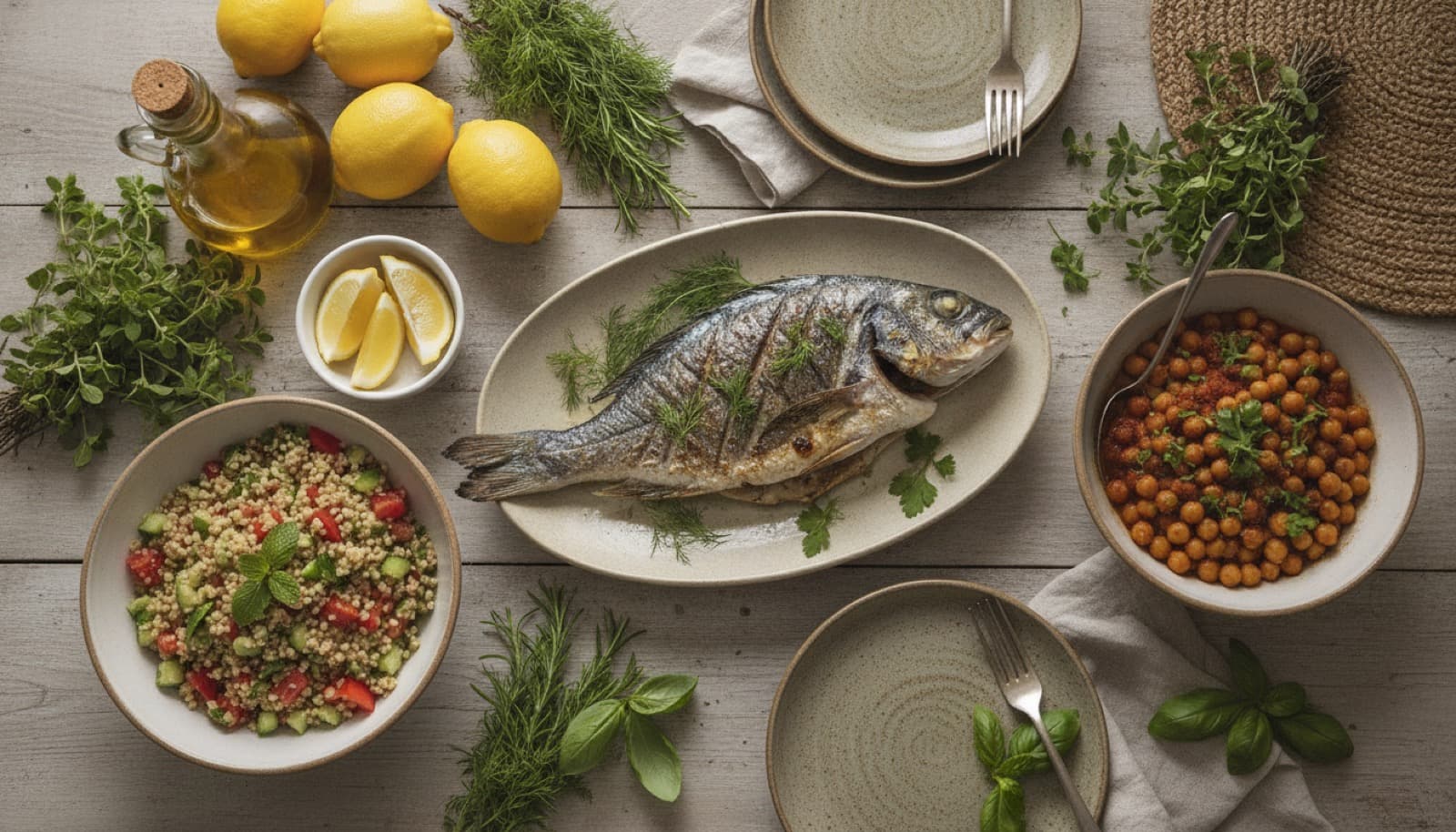
It is an eating pattern modeled on how people around the Mediterranean basin traditionally ate, codified by Willett's 1995 pyramid and tested hard by the PREDIMED trial (NEJM 2018). Olive oil as the everyday fat, vegetables and legumes at the base, fish a few times a week, whole grains, moderate dairy and wine, red meat occasional. It is the single most evidence-backed way of eating we have. There is no app and no phase.
- 02
Olive oil is the everyday fat, used in quantity
Two to four tablespoons a day is the dose the studied populations actually consume, and it is the lever PREDIMED isolated. Graza for finishing, California Olive Ranch for cooking. This is not a garnish, it is how the vegetables and grains get eaten happily.
- 03
Vegetables and legumes at the base of every meal
A vegetable on every plate, legumes three to four times a week. Lentils, chickpeas, white beans, drained and rinsed from a can on a weeknight. This is where the fiber comes from, 35-45g a day on a proper Mediterranean week, and fiber is the highlighted macro on our Mediterranean recipes.
- 04
Fish twice a week, the omega-3 anchor
Salmon, sardines, mackerel, cod. The sheet-pan Greek cod and the sardine pasta in our 7-day meal prep cover this without ceremony. Tinned sardines on sourdough are the weekday cheat. If you don't eat fish, lean on walnuts and flax and plan for it.
- 05
Whole grains, not refined: farro, bulgur, brown rice, good bread
Farro is the Mediterranean default, quinoa bumps the protein, bulgur is the fastest. Cook two cups in broth on a Sunday and they anchor grain bowls all week. The couscous salad and the Mediterranean bowl are the recipes that turn this into lunch.
- 06
Herbs, lemon, and garlic do the work salt would
Oregano, dill, parsley, mint, and a lot of lemon. The Greek-lemon marinade in our meal prep is the workhorse: olive oil, lemon, garlic, oregano, salt. It marinates the chicken, dresses the bowls, and finishes the cod. Build flavor with acid and herbs and you need far less salt.
- 07
Dairy in moderation, fermented where possible
Plain Greek yogurt, feta, a little aged cheese. Yogurt with honey and walnuts is the Mediterranean dessert. Feta is the finishing salt on a grain bowl. Full-fat and plain, not sweetened tubs.
- 08
Where to start: two changes this week
Fish twice, and a green on every dinner plate. That is the whole on-ramp. Cook the greek lemon chicken Monday, build the Mediterranean bowl Wednesday, sheet-pan the chicken Tuesday. The mediterranean diet food list and the 7-day mediterranean diet meal plan sequence the rest, grocery list and macros included.
The questions cooks bring us.
- Is the Mediterranean diet actually backed by evidence, or is it a trend?
- It is the most studied eating pattern there is. The PREDIMED trial (Estruch, NEJM 2018) showed a roughly 30% reduction in major cardiovascular events for a Mediterranean diet supplemented with olive oil or nuts versus a low-fat control. It is the pattern most cardiologists point to. It is not a branded weight-loss plan, and it won't cure anything; it is a durable, well-evidenced way of eating that happens to produce good dinners.
- What can I eat on the Mediterranean diet?
- Vegetables and legumes at every meal, olive oil as your fat, fish a few times a week, whole grains, plenty of herbs and lemon, moderate dairy (especially yogurt and feta), fruit for dessert, and red meat only occasionally. Our mediterranean diet food list breaks this into eat-freely, eat-weekly, and ease-off tiers with the actual brands and counts.
- Where do I start if I've never cooked this way?
- Two changes this first week: fish twice, and a vegetable on every dinner plate. Then cook three recipes, greek lemon chicken, the Mediterranean bowl, and the sheet-pan Mediterranean chicken, and you've got the rhythm. When you want the whole week planned, the Mediterranean meal prep week 1 page has the shopping list, the Sunday prep sequence, and the macros totaled.
- Is the Mediterranean diet good for weight loss?
- It is built for sustainable eating rather than fast loss, and that is its strength: high fiber and protein at each meal keeps you full, so people tend to eat less without counting. It is not a deficit plan by itself. Pair the pattern with a modest calorie deficit if weight loss is the goal, and lean on the higher-protein recipes (greek lemon chicken, the Mediterranean bowl) to protect muscle.
- Do I have to drink wine or eat fish to do this?
- No on both. Wine is optional and not a recommendation; the pattern works fully without it. If you don't eat fish, cover omega-3s with walnuts, ground flax, and chia, and consider an algae-based supplement. Swap the cod and sardine nights for the white-bean and chickpea recipes and you keep the pattern intact.
- How is this different from the anti-inflammatory diet?
- They overlap heavily, the Mediterranean pattern is the backbone of most anti-inflammatory eating advice. The anti-inflammatory framing emphasizes specific compounds (omega-3s, polyphenols, turmeric) and conditions; the Mediterranean framing emphasizes the whole cuisine and cardiovascular outcomes. Cook either and you're largely cooking the other. See the anti-inflammatory diet pillar for that lens.
Where the technique comes from
- Estruch R, et al. Primary prevention of cardiovascular disease with a Mediterranean diet (PREDIMED). NEJM. 2018.
- Willett W, et al. Mediterranean diet pyramid: a cultural model for healthy eating. Am J Clin Nutr. 1995.
- Sofi F, et al. Mediterranean diet and health status: meta-analysis. BMJ. 2008.
- USDA FoodData Central, reference database for nutrient values.
About the ThatCleanChef Kitchen
A small team of recipe developers and food photographers testing recipes in home kitchens on home equipment. Every Nutrition Ledger is USDA FoodData Central-sourced and reviewed by Lena Marsh, RDN, MS. We don't pretend to be a single chef, we're the people behind the plates. Meet the full team →
Related posts
DASH Diet Meal Plan: Seven Days, Sodium Counted
A week built to land near 1,500mg of sodium a day without tasting like a compromise. The Sunday shop, two breakfasts on rotation, lunches that survive a commute, seven dinners with the sodium tallied per plate, and the three places the plan usually breaks in real life.
Low-FODMAP Meal Plan: A Seven-Day Elimination Week
One week of elimination-phase cooking that tastes like food rather than deprivation. The safe pantry build, why portion size decides almost everything, seven dinners with no onion or garlic, breakfasts and packable lunches, the four places FODMAPs hide in shop-bought ingredients, and how to move into reintroduction without losing the thread.
Anti-Inflammatory Meal Plan: Seven Days, Cooked and Totaled
Seven days of dinners, breakfasts and lunches built on the four changes that carry almost all of the effect: fatty fish twice, olive oil daily, fiber above thirty grams, and a real reduction in ultra-processed food. Includes the Sunday prep block, the shopping list by aisle, the daily macro totals, and what to do on the night the plan falls apart.
The Clean Chef Starter Kit.
A 14-day anti-inflammatory meal plan PDF, grocery list by section, macros totaled per day, Sunday prep sequence. Free.
By subscribing, you agree to our Privacy Policy. One calm email a week. Unsubscribe anytime.