The anti-inflammatory diet
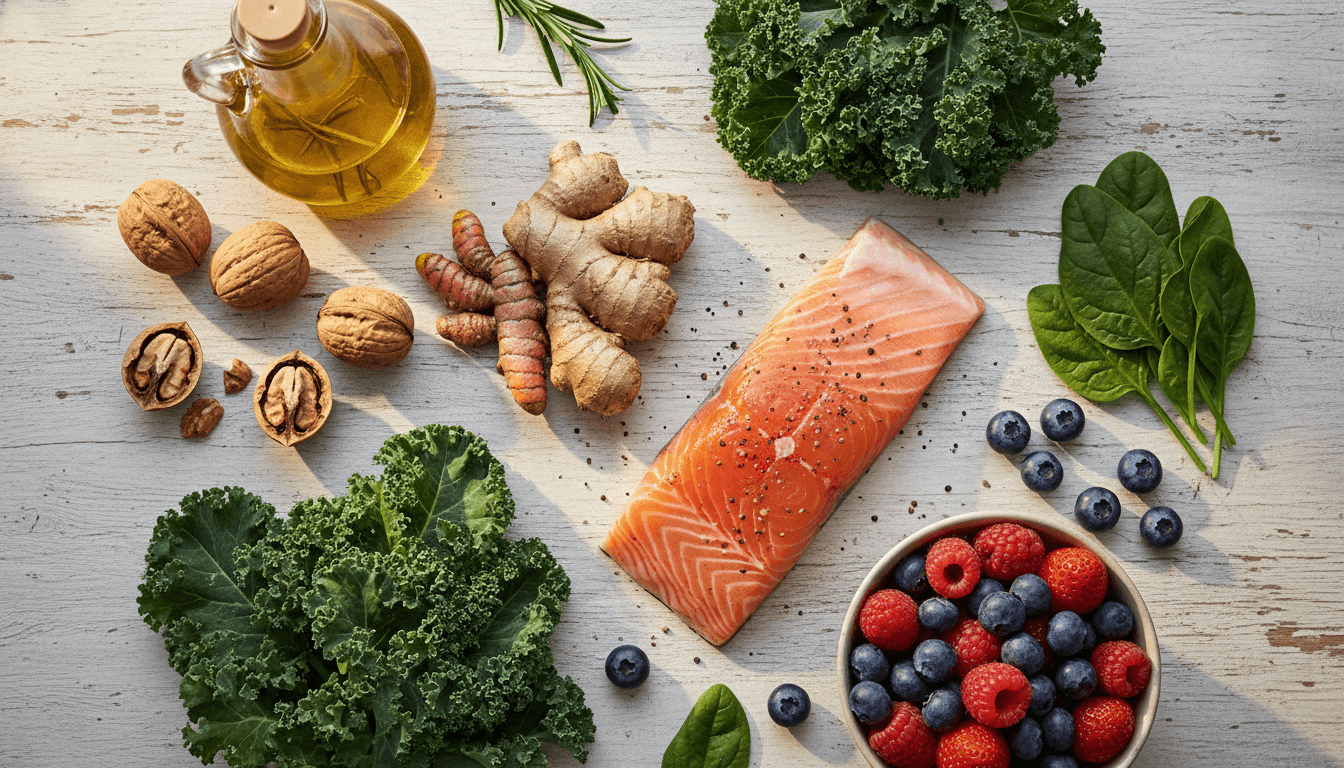
By The ThatCleanChef Kitchen · Updated April 21, 2026 · 16 min read
Evidence brief, ingredient inventory, weekly framework, and the 7-day meal plan. Pillar for the Anti-Inflammatory hub.
We'd rather answer the question you actually asked in the first paragraph, then earn your trust by showing the chef notes.
What actually matters, in order.
- 01
Fatty fish twice a week, the non-negotiable
Salmon, sardines, mackerel, trout. The EPA and DHA in fatty fish are the most studied anti-inflammatory nutrients we have (Calder 2010). Twice a week is the Mediterranean-pattern target. Vital Choice or wild-caught from the fish counter. Sardines are the weekday cheat, Wild Planet tin, olive oil, crusty sourdough, done.
- 02
Extra-virgin olive oil as your everyday fat
Oleocanthal in EVOO has genuine anti-inflammatory activity, at the dose Mediterranean populations actually consume, 2-4 tablespoons a day. Graza for drizzling, California Olive Ranch for cooking. Budget matters here; the difference is real on salad, less on seared fish.
- 03
Leafy greens every day, in quantity
Spinach, arugula, kale, chard. A big handful per meal is the target, not a garnish. Kate's version: prewashed baby spinach from the box, tossed into everything, eggs, soup, rice bowls, pasta. Don't overthink the variety, overthink the frequency.
- 04
Berries, the everyday fruit
Blueberries, strawberries, raspberries, blackberries. The polyphenol profile is the highest of any common fruit. Frozen is fine, the nutrition holds. Half a cup on oats, yogurt, cottage cheese. The trick is consistency, not volume.
- 05
Walnuts, flax, chia for plant omega-3s
A small handful of walnuts (ALA) and a tablespoon of ground flax or chia most days. Flax must be ground to be usable. Keep it in the freezer or it goes rancid, the oxidation cancels the benefit. Costco bulk walnuts are the unglamorous-correct answer.
- 06
Turmeric + black pepper, daily in small doses
Not supplements, culinary. A teaspoon in scrambled eggs, a tablespoon in a soup, a dash in a marinade. Always with black pepper (piperine multiplies curcumin absorption). Simply Organic turmeric is fine; Diaspora Co is better if you cook with it often.
- 07
Legumes 3-4 times a week
Lentils, chickpeas, black beans, white beans. Fiber + plant protein + polyphenols. Jovial or Bush's canned for speed, drain and rinse. Dried and cooked in a Dutch oven on a Sunday is better, but canned is not inferior for weeknight eating.
- 08
Green tea or matcha, most days
EGCG is the star compound. One to three cups is the studied range. Matcha once in the morning covers it. Bigelow, Harney & Sons, Ippodo if you're ceremonial. Coffee is fine too, polyphenol-rich and well-studied for its own benefits, it's not either-or.
- 09
Cruciferous vegetables 3+ times a week
Broccoli, cauliflower, Brussels sprouts, cabbage. Roasted at 425°F on a Nordic Ware sheet pan, olive oil and salt, charred edges. Sulforaphane (NIH ODS has a good summary) is the compound of interest. Twenty minutes, twice a week, standard side.
- 10
Dial back ultra-processed, not all processed
Ultra-processed food is what the literature consistently associates with inflammation, not cheese, not bread, not olive oil (those are processed but not ultra-processed). The NOVA classification is the useful frame. Less cookies, more real food. Don't get precious about it.
- 11
Watch refined omega-6 seed oils in quantity
The ratio of omega-6 to omega-3 matters more than the absolute omega-6. Cooking dinner at home in olive oil, using some canola in baking, eating restaurant food that uses soybean oil, this is fine. Where it adds up is ultra-processed snacks where the oil is the base. Same solution as #10.
- 12
Sleep and movement are diet, functionally
This is a cook's version, I'm not a doctor, but the literature is clear that inflammation markers move on sleep and exercise. A good plate of food is half of the answer. The rest is 7 hours of sleep and a walk after dinner. Worth saying out loud.
The questions cooks bring us.
- Is the anti-inflammatory diet a real diet or just a trend?
- It's a pattern, not a branded diet. The evidence supports a Mediterranean-style eating pattern with omega-3s and polyphenols as a way to modulate chronic inflammation markers, Calder's 2010 review is a good entry point. It won't cure anything. It's a lever, one of several, and it's a nice lever because the food is good.
- How long before I feel a difference?
- Honest answer: it depends, and inflammation is hard to self-report. Studies measure markers (CRP, IL-6) that you can't feel. If you have joint stiffness, energy slumps, or autoimmune flare patterns, 6-8 weeks of consistent eating is the typical window where people notice something. If you notice nothing, the long-game cardiovascular benefits are still real.
- Can I do this if I don't eat fish?
- Yes, but pay attention to omega-3s. Walnuts, flax, chia, and hemp seeds give you ALA; your body converts some of that to EPA/DHA, not a lot. An algae-based omega-3 supplement (Nordic Naturals makes one) is a reasonable backstop. Don't skip this step if you're fully plant-based.
- Do I need to go organic?
- Where it matters most: leafy greens, berries, and the outer layers of things you eat whole. The EWG Dirty Dozen list is a reasonable filter. Olive oil, yes, quality matters, not always the 'organic' label specifically. Meat and fish, grass-fed and wild-caught if you can. But organic-as-a-binary is not the lever; consistent whole-food eating is.
- Is gluten inflammatory?
- For people with celiac or diagnosed non-celiac gluten sensitivity, yes, meaningfully. For the general population, the evidence that gluten independently drives inflammation is weak. If you feel better without it, great. If you don't have a reason to avoid it, don't treat it as a flag.
- What about dairy?
- Fermented dairy (yogurt, kefir, aged cheese) is consistently neutral-to-positive in the literature. Full-fat dairy is not the problem it was framed as in the 90s. Where people get into trouble: sugary yogurts marketed as health food. Plain Greek yogurt (Fage, Icelandic Provisions) with berries, not strawberry-flavored sweetened yogurt.
- Where do I actually start?
- Two things this week: fish twice, and a green on every dinner plate. That's it. Build from there. The Clean Chef Starter Kit is a 14-day meal plan that sequences the rest, grocery list, prep, macros, if you want the whole frame on one page.
Where the technique comes from
- Calder PC. Omega-3 fatty acids and inflammatory processes. Nutrients. 2010.
- Willett W, et al. Food in the Anthropocene: the EAT-Lancet Commission. The Lancet. 2019.
- Galland L. Diet and inflammation. Nutrition in Clinical Practice. 2010.
- NIH Office of Dietary Supplements, Omega-3 Fatty Acids Fact Sheet.
- USDA FoodData Central, reference database for nutrient values.
- Hewlings SJ, Kalman DS. Curcumin: A review of its effects on human health. Foods. 2017.
About the ThatCleanChef Kitchen
A small team of recipe developers and food photographers testing recipes in home kitchens on home equipment. Every Nutrition Ledger is USDA FoodData Central-sourced and reviewed by Lena Marsh, RDN, MS. We don't pretend to be a single chef, we're the people behind the plates. Meet the full team →
Related posts
Magnesium-Rich Foods: Pumpkin Seeds Beat Spinach, and Bread Lost Most of Its
An ounce of pumpkin seeds carries about 156mg of magnesium, which is more than a cup of cooked spinach and roughly five times what a banana delivers. Around half of adults in national survey data take in less than the estimated requirement, and the largest single reason is grain refining, which strips about eighty percent of the magnesium out of wheat before it reaches a loaf.
Potassium-Rich Foods: The Banana Is Not Even in the Top Twenty
A medium banana has 422mg of potassium. A baked potato with the skin on has around 900mg, a cup of white beans about 1,000mg, and a cup of cooked spinach about 840mg. The banana became the symbol because it is portable, not because it is dense. What the number on the plate actually depends on is portion size, whether you cooked it in water, and how much sodium is sitting next to it.
Vegetarian Recipes: Protein, Browning, and Actual Dinners
Vegetarian cooking almost never fails for lack of ideas. It fails on two things: not enough protein on the plate, and not enough browning in the pan. Fix those and a meatless dinner stops reading as the version without the main thing. Where the protein comes from, the four nutrients worth attention, the techniques that make plants taste cooked-for, and a week of dinners.
The Clean Chef Starter Kit.
A 14-day anti-inflammatory meal plan PDF, grocery list by section, macros totaled per day, Sunday prep sequence. Free.
By subscribing, you agree to our Privacy Policy. One calm email a week. Unsubscribe anytime.