- Calories
- 280
- Protein
- 22g
- Fiber
- 6g
- Sat. fat
- 6g
- Sodium
- 560mg
- Added sugar
- 5g
What this recipe does for you.
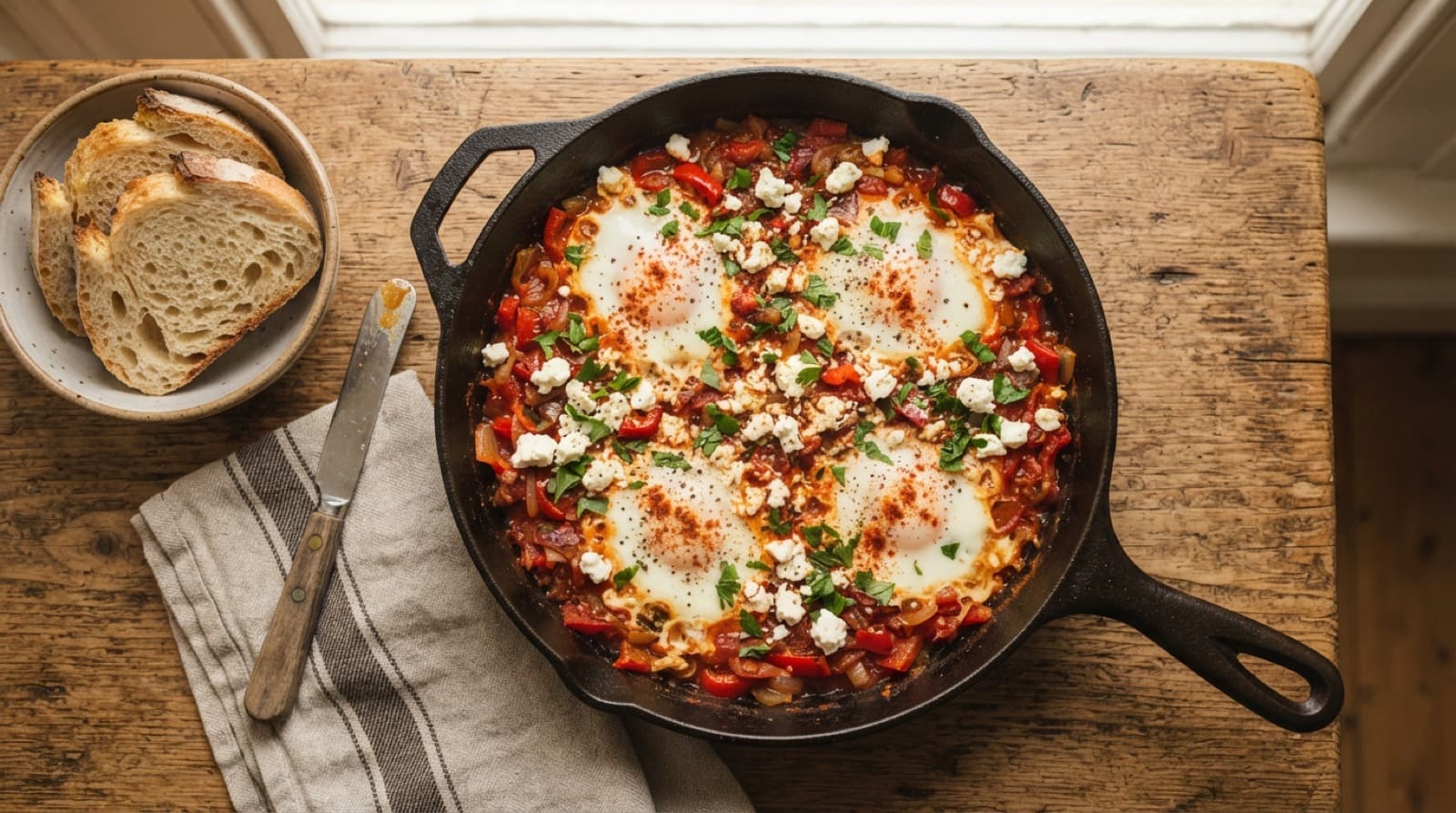
The one-pan shakshuka worth making properly: a slow-cooked pepper and tomato base, cumin and paprika, eggs poached in the sauce with the whites just set and the yolks runny. 22g protein per serving, dinner or a big weekend breakfast.
Why this works
Every recipe on this site ships with an explanation of the technique decisions, why sear then braise, why the acid goes in at the end, why the fat renders before the aromatics. The method below is those decisions, in order.
Mutti Polpa Finely Chopped Tomatoes
Shakshuka is mostly tomato, so a flat, watery tin drags the whole dish down. Mutti Polpa is a thick, sweet, low-acid chopped tomato that cooks down to a proper jammy sauce without needing sugar to fix it. Cheaper tins run thin and sharp, and you end up simmering forever to drive off water. A good San Marzano passata is the equal alternative. Whatever you use, taste it: the tin is the flavour of the finished dish more than any spice you add.
Ingredients
Serves 4- 3 tbspolive oil
- 1onion · sliced
- 2red bell peppers · chopped
- 3 clovesgarlic · minced
- 1 1/2 tspground cumin
- 1 tspsweet paprika
- 1/4 tspchili flakes · or 1 tsp harissa
- 1 canchopped tomatoes · 28 oz
- 8large eggs
- 4 ozfeta · crumbled
- 2 tbspfresh parsley or coriander · chopped, to finish
- salt and black pepper · to taste
Method
Cook the onion and peppers down slowly until soft and sweet
This is the base everything sits on, so do not rush it. Soften a sliced onion and a couple of chopped red peppers in olive oil over medium-low heat for a full ten minutes, until they collapse and sweeten. Peppers that are still crunchy leave the sauce tasting raw and thin. This slow start is the difference between a shakshuka with depth and one that tastes like eggs in pasta sauce.
Bloom the spices in the oil before the tomatoes go in
Cumin, sweet paprika, and a pinch of chilli or a spoon of harissa need thirty seconds in the hot oil with the softened vegetables and garlic. Toasting the spices in fat wakes up their oils and stops them tasting dusty. Add the tomatoes too early and the spices stay muted and one-dimensional. You should smell the cumin bloom before the tin goes in.
Simmer the tomato sauce until it is jammy, not soupy
Pour in the chopped tomatoes and let the sauce reduce over medium heat for ten to fifteen minutes until it thickens and a spoon dragged through leaves a brief trail. A watery sauce cannot hold the eggs, and they slide around and overcook. Reducing it properly concentrates the flavour and gives you defined wells to crack the eggs into. Season it fully now, before the eggs, because you cannot stir once they are in.
Make wells and crack the eggs in gently
Use the back of a spoon to make a shallow well in the sauce for each egg, then crack the eggs one at a time into a small cup and slide each into its well. Cracking straight into the pan risks shell and broken yolks. Spacing the eggs out means the whites set separately rather than fusing into one sheet, so everyone gets a clean portion with an intact yolk.
Cover and cook on low so the whites set before the yolks
Put a lid on and drop to low heat. The trapped steam sets the tops of the whites while the yolks stay runny, which is the whole point of shakshuka. Uncovered, the bottoms of the whites overcook while the tops are still raw and slimy. Check at five minutes: the whites should be opaque and just firm, the yolks still wobbling. Pull the pan the moment they hit that stage, since carryover heat keeps cooking them.
Crumble feta in during the last two minutes
Scatter a good handful of feta over the sauce around the eggs for the final couple of minutes so it warms and softens without fully melting. Feta adds salt, tang, and a chunk of the protein that makes this a real meal rather than a light one. Add it too early and it dissolves into the sauce and you lose the pockets of creamy cheese that make each bite.
Finish with fresh herbs and good olive oil off the heat
A generous shower of chopped parsley or coriander and a drizzle of your best olive oil right at the end lifts the whole pan and adds freshness against the rich sauce. Do this off the heat so the herbs stay bright green rather than wilting to khaki. This is not optional garnish; the raw herbs and grassy oil are what balance the deep cooked tomato.
Serve straight from the pan with bread to mop the sauce
Shakshuka is a communal, eat-from-the-skillet dish, and it waits for no one once the yolks are set. Bring the pan to the table with warm crusty bread, pita, or challah for scooping. For a lower-carb or gluten-free plate, serve it over a bed of wilted spinach or with a side salad instead. Eat it promptly, because the residual heat of the sauce keeps firming the yolks the longer it sits.
Variations
Substitutions and adaptations land with the photography shoot. The method holds across most reasonable swaps.
Storage
Refrigerator: 3 to 4 days, sealed. Freezer: up to 3 months. Reheat covered to retain moisture.
Frequently asked
- How much protein is in shakshuka?
- About 22g per serving as written, for a version with two eggs per person and a good amount of feta crumbled in. The eggs do most of the work at roughly 6g each, and the feta and the small amount of tomato and pepper make up the rest. That is enough to make shakshuka a genuine dinner rather than a light breakfast. Serve it with a slice of high-protein bread or a dollop of Greek yogurt on the side and you can push a plate past 30g.
- How do I get the eggs right, whites set but yolks runny?
- Two things: a thick sauce and a lid. Reduce the tomato base until it is jammy so the eggs sit in defined wells instead of sliding around, then crack them in, cover the pan, and cook on low. The trapped steam sets the tops of the whites while the yolks stay soft, which is the texture shakshuka is known for. Check at five minutes and pull the pan the instant the whites turn opaque, because the sauce keeps cooking the eggs even off the heat.
- Can I make the sauce ahead?
- Yes, and it is the smart way to serve it for a crowd. Make the pepper and tomato base through the jammy stage, cool it, and keep it in the fridge for up to four days or freeze it for up to three months. When you want to eat, reheat the sauce until it is bubbling, make the wells, and poach the eggs fresh; that part only takes a few minutes. Do not cook the eggs ahead, as reheated poached eggs turn rubbery.
- Is shakshuka healthy?
- It is one of the better one-pan meals you can build: mostly vegetables and eggs, high in protein, high in fibre from the peppers and tomatoes, and naturally gluten-free before you add bread. The main things to watch are the salt, since feta and tinned tomatoes both carry sodium, and the oil, which is heart-friendly olive oil but still worth measuring. Serve it with a vegetable side rather than a mountain of bread and it is a genuinely balanced plate.
- What can I serve it with besides bread?
- Warm pita, challah, or crusty sourdough are traditional for scooping, but shakshuka works over plenty of other bases. Spoon it over wilted spinach, sauteed greens, or roasted sweet potato for a lower-carb plate, or alongside a simple cucumber and herb salad. A spoon of thick Greek yogurt or labneh on the side cools the spice and adds more protein. For a bigger spread, add olives, sliced avocado, and pickles.
- Can I add meat or make it spicier?
- Both are easy. For meat, brown a little spiced lamb or beef mince, or sliced merguez sausage, with the onions before the tomatoes go in; it turns shakshuka into a heartier dinner and adds protein. For heat, stir in a spoonful of harissa or a chopped fresh chilli with the spices, and finish with a pinch of chilli flakes. Taste as you go, since the runny yolks and feta both temper the spice more than you expect.
Related recipes
See all →- Seasonal & Plans
DASH Diet Meal Plan: Seven Days, Sodium Counted
A week built to land near 1,500mg of sodium a day without tasting like a compromise. The Sunday shop, two breakfasts on rotation, lunches that survive a commute, seven dinners with the sodium tallied per plate, and the three places the plan usually breaks in real life.
98g Protein - Seasonal & Plans
Low-FODMAP Meal Plan: A Seven-Day Elimination Week
One week of elimination-phase cooking that tastes like food rather than deprivation. The safe pantry build, why portion size decides almost everything, seven dinners with no onion or garlic, breakfasts and packable lunches, the four places FODMAPs hide in shop-bought ingredients, and how to move into reintroduction without losing the thread.
105g Protein - Seasonal & Plans
Anti-Inflammatory Meal Plan: Seven Days, Cooked and Totaled
Seven days of dinners, breakfasts and lunches built on the four changes that carry almost all of the effect: fatty fish twice, olive oil daily, fiber above thirty grams, and a real reduction in ultra-processed food. Includes the Sunday prep block, the shopping list by aisle, the daily macro totals, and what to do on the night the plan falls apart.
105g Protein
Get a tested recipe + a nutritional note in your inbox each Sunday.
One recipe a week, photographed on the same Tuesday it tested. Reviewed by an RD. No promotions, no pop-ups, no tracking.
The Clean Chef Starter Kit.
A 14-day anti-inflammatory meal plan PDF, grocery list by section, macros totaled per day, Sunday prep sequence. Free.
By subscribing, you agree to our Privacy Policy. One calm email a week. Unsubscribe anytime.
We're building a shop.
Curated cookware, pantry staples we actually buy, recipe-bundle PDFs. Be the first to know when it opens.
We'll only email you about the shop opening. Unsubscribe in any email. See our Privacy Policy.