- Calories
- 1800
- Protein
- 105g
- Fiber
- 25g
- Sat. fat
- 15g
- Sodium
- 2000mg
- Added sugar
- 6g
What this recipe does for you.
One week of elimination-phase cooking that tastes like food rather than deprivation. The safe pantry build, why portion size decides almost everything, seven dinners with no onion or garlic, breakfasts and packable lunches, the four places FODMAPs hide in shop-bought ingredients, and how to move into reintroduction without losing the thread.
Why this works
Every recipe on this site ships with an explanation of the technique decisions, why sear then braise, why the acid goes in at the end, why the fat renders before the aromatics. The method below is those decisions, in order.
Ingredients
- Full ingredient list ships with photography
Method
Understand which phase you are in before you cook anything
Elimination runs two to six weeks and is not meant to be permanent. Reintroduction tests one FODMAP group at a time. Personalization is the version you actually live on, and it is almost always broader than elimination. This plan covers week one of elimination only. If you have been eating this way for three months without reintroducing, the plan you need is the reintroduction schedule, not another restricted week.
Portion size is the whole diet, not the food list
Very few foods are absolutely out. Most are fine below a threshold and a problem above it, which is why Monash publishes portions rather than a simple yes and no list. Half an avocado is high, an eighth is low. Three broccoli florets are fine, a whole head is not. Forty grams of tinned chickpeas rinsed is low, a full cup is not. Learning four or five of these thresholds does more for you than memorising any list.
The safe pantry build, and the two bottles that save the week
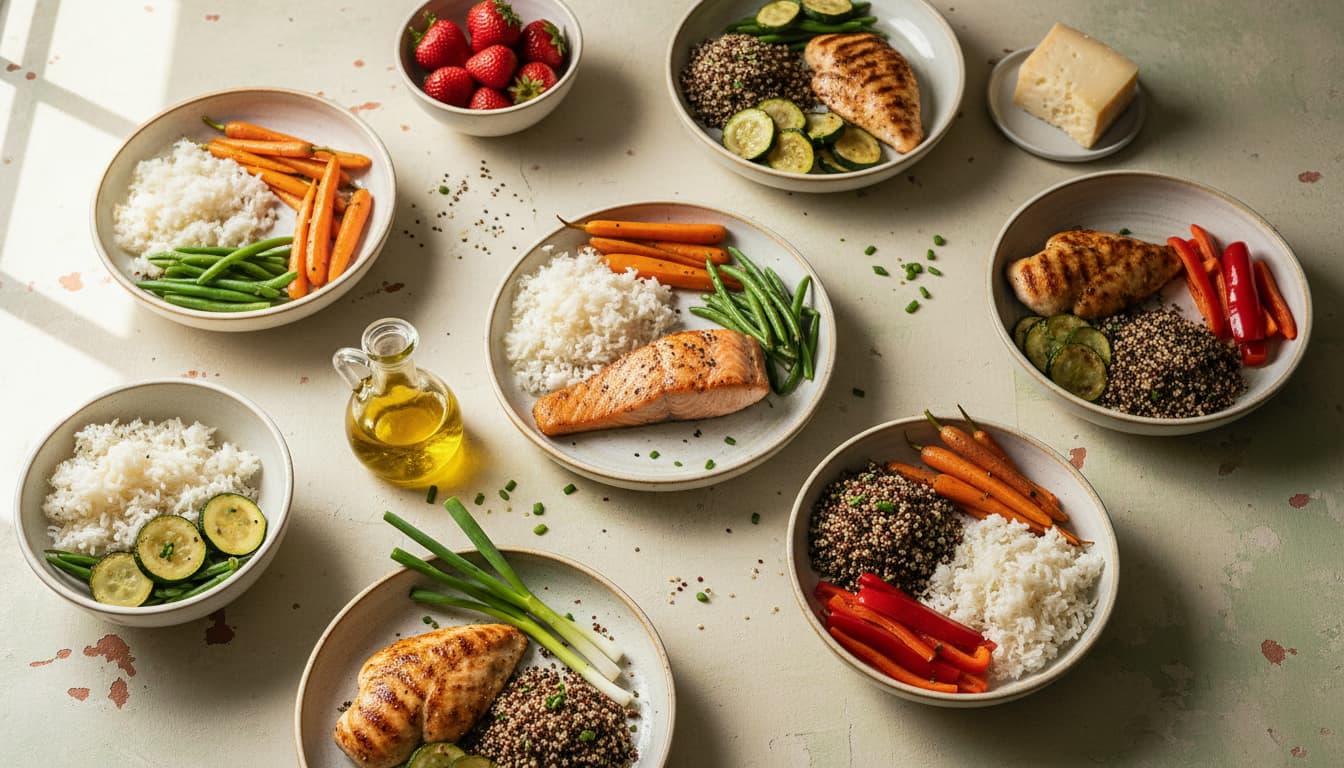
Garlic-infused olive oil and the green tops of spring onions are the two ingredients that make this diet taste like cooking. Fructans do not dissolve into oil, so infused oil carries garlic flavour without the FODMAP, and the green part of a spring onion is low while the white bulb is not. Add chives, ginger, lemon, hard cheeses, rice, oats, quinoa, potato, carrot, courgette, red pepper, and lactose-free dairy.
Seven dinners with no onion and no garlic bulb
Low-FODMAP pasta with garlic oil, courgette and parmesan. Roast chicken thighs with potato and carrot. A rice bowl with grilled prawns, cucumber and ginger dressing. Beef and green bean stir-fry with tamari and spring onion tops. Salmon with lemon and roasted red pepper. A frittata with courgette and hard cheese. And a lamb or beef mince bolognese built on plain tinned tomatoes, herbs, and garlic oil rather than a jarred sauce.
Breakfast is where most people relapse
Wheat toast, honey, most yogurts, apple, pear, mango and cashews all cause trouble, which removes a lot of standard breakfasts at once. What works: oats with lactose-free milk and blueberries, sourdough spelt toast with peanut butter, eggs with spinach and hard cheese, or lactose-free yogurt with strawberries and a few walnuts. Pick two and rotate them rather than trying to reinvent breakfast every morning.
Lunch travels if you build it around rice, not bread
Cook a pot of rice or quinoa on Sunday. Lunch is that plus last night's protein plus a low-FODMAP vegetable plus a dressing of garlic oil, lemon and salt. Rice-based lunches also sidestep the wheat question entirely, which matters because low-FODMAP is not a gluten-free diet but wheat is the biggest fructan source in most Western diets, so a lot of practical overlap ends up in the same place.
Four places FODMAPs hide in things you did not cook
Stock cubes and shop-bought broth are almost always onion and garlic. Anything labelled natural flavouring or spice mix frequently contains onion powder, which is concentrated fructan. Sugar-free gum, mints and protein bars carry polyols, sorbitol and mannitol and maltitol. And sausages, marinades and premade sauces carry all three. Read every label for the first fortnight, then you will know your shops.
Fiber drops on elimination, and you should plan for it
Removing onions, garlic, wheat, most pulses, apples and pears takes a lot of fiber out at once, and constipation is a common and entirely avoidable side effect of doing this carelessly. This plan lands near twenty-five grams a day, deliberately, using oats, kiwi, carrot, courgette, potato with skin, quinoa, chia, and small rinsed portions of tinned lentils. Two kiwifruit a day is the single most effective addition for most people.
Move into reintroduction on schedule, not when you feel like it
After two to six weeks with genuine symptom improvement, start testing groups one at a time: fructans, then lactose, then fructose, then sorbitol, then mannitol, then galacto-oligosaccharides. Small dose on day one, medium on day two, large on day three, then three days back on elimination before the next group. Do this with a dietitian if you can, and write it down, because six untracked tests tell you nothing.
Variations
Substitutions and adaptations land with the photography shoot. The method holds across most reasonable swaps.
Storage
Refrigerator: 3 to 4 days, sealed. Freezer: up to 3 months. Reheat covered to retain moisture.
Frequently asked
- How long should I stay in the elimination phase?
- Two to six weeks, and closer to two if your symptoms settle quickly. Elimination is a diagnostic phase, not a diet. Staying on it for months narrows your fiber intake and your gut microbial diversity for no additional benefit, and it makes reintroduction harder because you become nervous about foods you never actually tested. If six weeks bring no improvement at all, the trigger is likely not FODMAPs and it is worth going back to your clinician.
- Is low-FODMAP the same as gluten-free?
- No. Gluten is a protein, and the FODMAP in wheat is fructan, a carbohydrate. They travel together in bread and pasta, which is why the two diets overlap in the supermarket, but sourdough spelt bread is low-FODMAP while containing gluten, and plenty of gluten-free products are high-FODMAP because they are built on apple fibre, inulin, or chickpea flour. Read for the FODMAP, not for the gluten label.
- Can I have garlic at all?
- Not the bulb, in any amount that matters, and not garlic powder, which is worse because it is concentrated. Garlic-infused oil is the workaround and it is a genuine one: fructans are water-soluble and do not carry into the oil, so the flavour arrives and the FODMAP does not. Make your own by warming crushed cloves in oil, then straining them out completely, and store it in the fridge for about a week.
- Will I lose weight on a low-FODMAP meal plan?
- That is not what it is for, and unintended weight loss on it usually means the diet has become too narrow rather than that anything is working. The plan as written lands near 1,800 calories a day with 105g of protein. If you are losing weight without meaning to, you have most likely dropped a food group without replacing the calories, and that is worth fixing before it becomes a nutritional problem.
- Do I need a dietitian for this?
- Strongly recommended, particularly for reintroduction. The evidence base for low-FODMAP comes overwhelmingly from dietitian-led trials, and the two failure modes it prevents are staying in elimination indefinitely and running reintroduction so loosely that you end up with no usable information. It is also worth ruling out coeliac disease before you remove wheat, because removing it first makes coeliac testing unreliable.
Related recipes
See all →- Seasonal & Plans
DASH Diet Meal Plan: Seven Days, Sodium Counted
A week built to land near 1,500mg of sodium a day without tasting like a compromise. The Sunday shop, two breakfasts on rotation, lunches that survive a commute, seven dinners with the sodium tallied per plate, and the three places the plan usually breaks in real life.
98g Protein - Seasonal & Plans
Anti-Inflammatory Meal Plan: Seven Days, Cooked and Totaled
Seven days of dinners, breakfasts and lunches built on the four changes that carry almost all of the effect: fatty fish twice, olive oil daily, fiber above thirty grams, and a real reduction in ultra-processed food. Includes the Sunday prep block, the shopping list by aisle, the daily macro totals, and what to do on the night the plan falls apart.
105g Protein - Seasonal & Plans
Whole30 Meal Plan: Thirty Days, Week by Week
A month of compliant cooking laid out as four weeks rather than thirty separate decisions. The one big shop, the four sauces that carry the whole month, the dinner rotation, the two points where people quit, the compliance traps hiding in bacon and broth, and the reintroduction schedule that is the actual purpose of the thirty days.
120g Protein
Get a tested recipe + a nutritional note in your inbox each Sunday.
One recipe a week, photographed on the same Tuesday it tested. Reviewed by an RD. No promotions, no pop-ups, no tracking.
The Clean Chef Starter Kit.
A 14-day anti-inflammatory meal plan PDF, grocery list by section, macros totaled per day, Sunday prep sequence. Free.
By subscribing, you agree to our Privacy Policy. One calm email a week. Unsubscribe anytime.
We're building a shop.
Curated cookware, pantry staples we actually buy, recipe-bundle PDFs. Be the first to know when it opens.
We'll only email you about the shop opening. Unsubscribe in any email. See our Privacy Policy.