- Calories
- 410
- Protein
- 38g
- Fiber
- 2g
- Sat. fat
- 7g
- Sodium
- 540mg
- Added sugar
- 0g
What this recipe does for you.
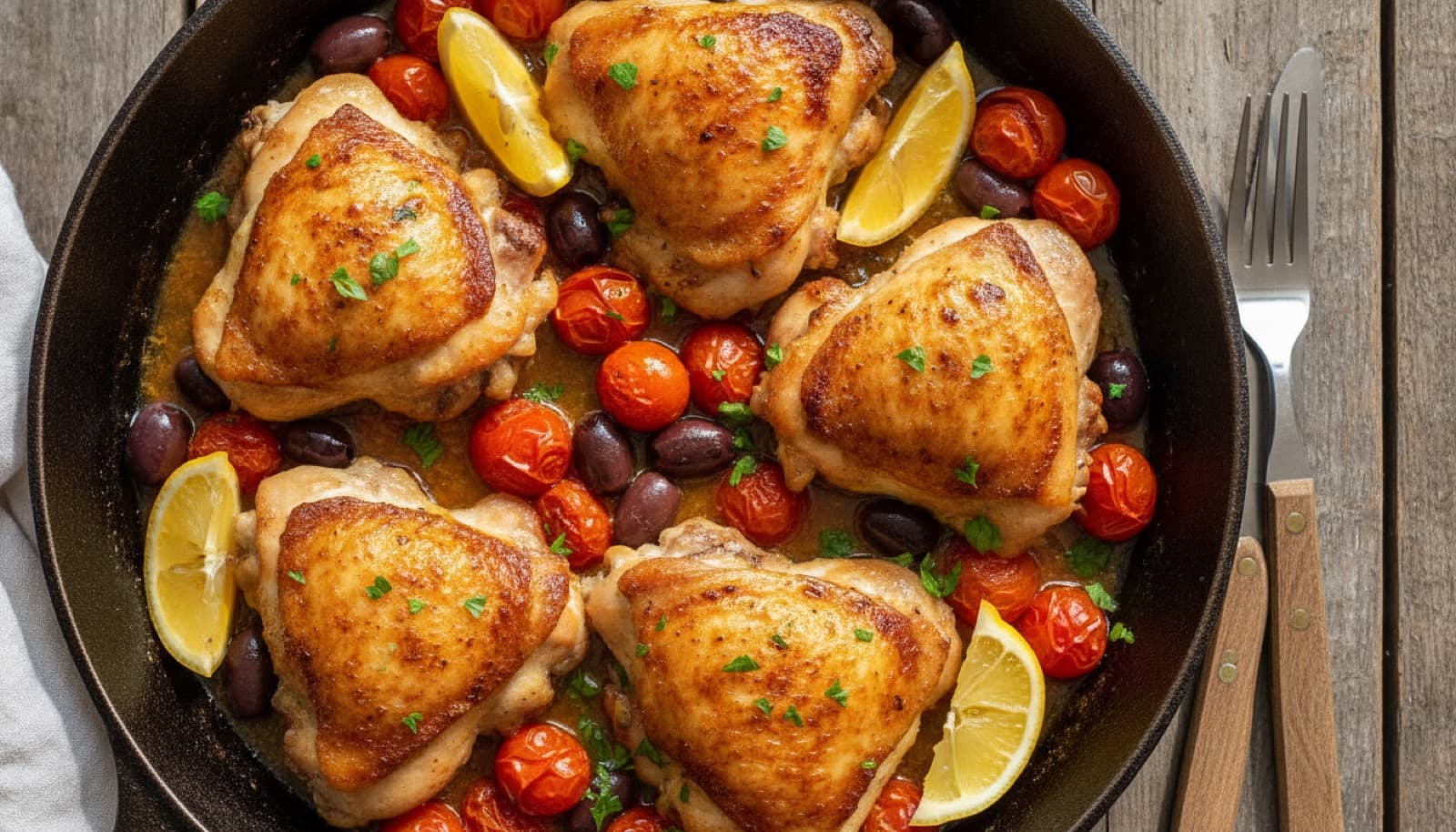
Bone-in chicken thighs marinated in lemon, garlic and oregano, seared crisp, then finished in one skillet with blistered tomatoes and olives. 40 minutes, 38g protein.
Why this works
Every recipe on this site ships with an explanation of the technique decisions, why sear then braise, why the acid goes in at the end, why the fat renders before the aromatics. The method below is those decisions, in order.
Bone-in, skin-on chicken thighs
Thighs are the right cut here, not breasts. The dark meat stays juicy past 165F, the skin crisps into the best part of the plate, and the bone keeps the meat from drying while the pan sauce reduces. Breasts overcook in the time it takes the tomatoes to blister. Buy bone-in, skin-on; air-chilled if your store carries it browns better because the skin starts drier.
Ingredients
Serves 4- 8chicken thighs · bone-in, skin-on
- 1/4 cupolive oil
- 1lemon · juice and zest, plus extra to finish
- 4 clovesgarlic · grated
- 1 tbspdried oregano
- 1 tspkosher salt
- 1 pintcherry tomatoes
- 1/2 cupKalamata olives · pitted
- fresh parsley or basil · torn, to finish
- 1/2 cupfeta · crumbled, optional (off Whole30)
Method
Marinate 15 minutes minimum, in the lemon-garlic-oregano
Quarter cup olive oil, juice and zest of one lemon, four grated garlic cloves, a tablespoon of dried oregano, a teaspoon of kosher salt. Coat the thighs and leave them 15 minutes on the counter while you prep the tomatoes. Longer is fine, up to overnight in the fridge, but 15 minutes already seasons the surface and lets the salt start working. This is the whole flavor base, do not skip it.
Pat the skin dry before it hits the pan
Marinade makes the skin wet, and wet skin steams instead of crisping. Lift each thigh out, scrape excess marinade back into the bowl, and blot the skin hard with a paper towel. Dry skin is the difference between crackling and rubber. Keep the marinade, it goes into the pan later.
Sear skin-side down in a cold oven-safe skillet, 8 minutes
Start the thighs skin-down in a cold 12-inch cast iron or stainless skillet, then turn the heat to medium. Starting cold renders the fat slowly so the skin browns evenly instead of seizing. Do not move them for 8 minutes. When the skin releases on its own and is deep golden, flip. This is the longest hands-off stretch, use it to pit the olives.
Build the pan sauce in the rendered fat
Flip the thighs, then add a pint of cherry tomatoes, a half-cup of pitted Kalamata olives, and the reserved marinade to the rendered chicken fat. The fat is flavor; do not pour it off. Scrape the browned bits up off the bottom. Tomatoes will start to slump in about 4 minutes.
Finish in a 425F oven, 12 to 15 minutes
Move the whole skillet to a 425F (220C) oven. The thighs finish cooking through while the tomatoes blister and burst into the sauce. Pull at 12 to 15 minutes when a thermometer in the thickest thigh reads 175F. Thighs are better at 175F than 165F, the connective tissue renders and the meat goes silky, not chewy.
175F for thighs, not 165F
165F is the safety floor for poultry, but dark meat tastes better with more time. At 175 to 185F the collagen in the thigh breaks down and the meat pulls cleanly off the bone. An instant-read thermometer in the thickest part, off the bone, is the only honest way to call it. Carryover adds a few degrees while it rests.
Rest 5 minutes, then add the fresh acid and herbs
Off the heat, scatter torn parsley or basil and a final squeeze of lemon over the skillet. The cooked lemon in the sauce is round and mellow; the raw squeeze at the end is bright and wakes the whole pan up. Rest the chicken 5 minutes so the juices set before you plate.
Crumble feta on top, off-Whole30 days
A handful of crumbled feta over the hot skillet melts slightly into the sauce and adds a salty, tangy counterpoint. It pushes the dish off Whole30 and dairy-free, so leave it off if you are tagging strict. The recipe stands without it; feta is a finish, not a structural ingredient.
Serve over what fits your pattern
The pan sauce wants a base. Over a grain (orzo, farro, or rice) for a full plate; over a tangle of wilted spinach or cauliflower rice for low-carb and Whole30; or with crusty bread to mop the skillet. The chicken and sauce stay the same, the base flexes to the day.
Meal prep: store chicken and sauce together, 4 days
This reheats well, which most crisp-skin dishes do not. Store the thighs in the sauce in a glass container, four days in the fridge. The skin softens in storage, that is the tradeoff, so re-crisp under the broiler for 2 minutes if it matters to you. The sauce keeps the meat moist either way.
Variations
Substitutions and adaptations land with the photography shoot. The method holds across most reasonable swaps.
Storage
Refrigerator: 3 to 4 days, sealed. Freezer: up to 3 months. Reheat covered to retain moisture.
Frequently asked
- Can I use boneless skinless chicken breasts instead?
- You can, but adjust. Breasts cook faster and dry out in the time the tomatoes need to blister, so sear them 3 minutes a side, pull them out, build the sauce, then return them for the last 6 to 8 minutes of the oven step and pull at 160F. You lose the crisp skin and the rendered fat that makes the sauce, so add an extra tablespoon of olive oil to the pan. Thighs are the better cut for this recipe.
- What makes a chicken dish Mediterranean rather than just roasted chicken?
- The pillars are olive oil as the main fat, lemon and herbs instead of heavy sauces, and vegetables and olives cooked in the same pan. This recipe leans on extra-virgin olive oil, fresh lemon, oregano, garlic, tomatoes, and Kalamata olives, the building blocks the Mediterranean diet is studied around. It is not a marketing label here; it is the actual ingredient list.
- How do I keep the chicken skin crispy?
- Three things. Pat the skin bone-dry after marinating, start the thighs skin-down in a cold pan so the fat renders slowly, and do not move them until they release on their own. If you are reheating leftovers, the skin will have softened in the sauce, so run it under the broiler for 2 minutes to bring the crackle back.
- Is this recipe actually Whole30 compliant?
- Yes, as written, without the optional feta. Olive oil, chicken, lemon, garlic, oregano, tomatoes, and olives are all Whole30. Check your olive jar for sulfites or additives some brands sneak in, and skip the grain base, serving it over cauliflower rice or greens instead. Add the feta and it is no longer Whole30 or dairy-free.
- Can I make this on the stovetop without an oven?
- Yes. After you flip the thighs and build the sauce, cover the skillet, drop the heat to medium-low, and simmer 15 to 18 minutes until the thighs hit 175F. You trade the blistered-tomato roast for a softer braised sauce, which is still good, just less concentrated. A splash of water if the pan looks dry before the chicken is done.
- What is the best way to serve four people from one skillet?
- Two bone-in thighs per person is generous; for four eaters use eight thighs and a 12-inch skillet, or split across two pans so the skin still crisps without crowding. Crowding steams the skin. If you only have one pan, sear the thighs in two batches, then combine everything for the oven step.
Related recipes
See all →- Seasonal & Plans
DASH Diet Meal Plan: Seven Days, Sodium Counted
A week built to land near 1,500mg of sodium a day without tasting like a compromise. The Sunday shop, two breakfasts on rotation, lunches that survive a commute, seven dinners with the sodium tallied per plate, and the three places the plan usually breaks in real life.
98g Protein - Seasonal & Plans
Low-FODMAP Meal Plan: A Seven-Day Elimination Week
One week of elimination-phase cooking that tastes like food rather than deprivation. The safe pantry build, why portion size decides almost everything, seven dinners with no onion or garlic, breakfasts and packable lunches, the four places FODMAPs hide in shop-bought ingredients, and how to move into reintroduction without losing the thread.
105g Protein - Seasonal & Plans
Anti-Inflammatory Meal Plan: Seven Days, Cooked and Totaled
Seven days of dinners, breakfasts and lunches built on the four changes that carry almost all of the effect: fatty fish twice, olive oil daily, fiber above thirty grams, and a real reduction in ultra-processed food. Includes the Sunday prep block, the shopping list by aisle, the daily macro totals, and what to do on the night the plan falls apart.
105g Protein
Get a tested recipe + a nutritional note in your inbox each Sunday.
One recipe a week, photographed on the same Tuesday it tested. Reviewed by an RD. No promotions, no pop-ups, no tracking.
The Clean Chef Starter Kit.
A 14-day anti-inflammatory meal plan PDF, grocery list by section, macros totaled per day, Sunday prep sequence. Free.
By subscribing, you agree to our Privacy Policy. One calm email a week. Unsubscribe anytime.
We're building a shop.
Curated cookware, pantry staples we actually buy, recipe-bundle PDFs. Be the first to know when it opens.
We'll only email you about the shop opening. Unsubscribe in any email. See our Privacy Policy.