- Calories
- 470
- Protein
- 16g
- Fiber
- 5g
- Sat. fat
- 8g
- Sodium
- 610mg
- Added sugar
- 0g
What this recipe does for you.
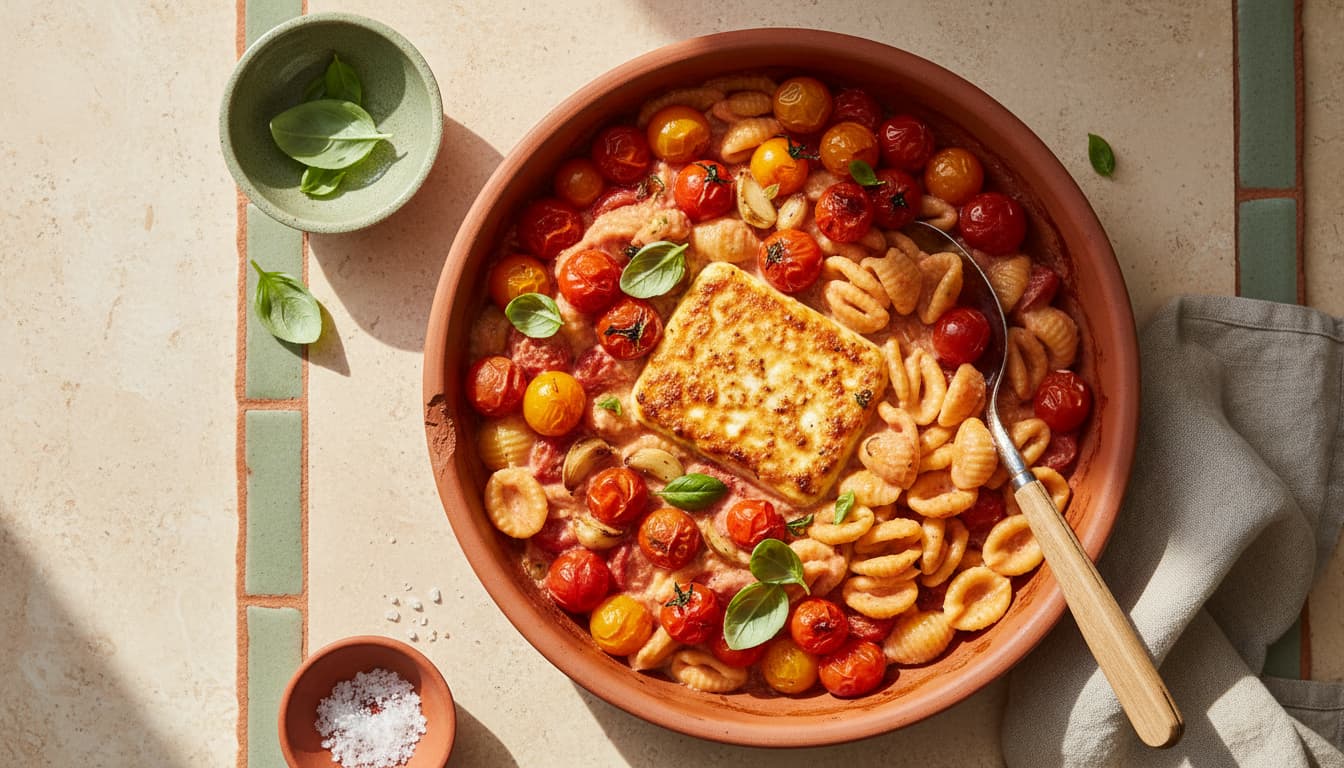
The viral baked feta pasta, built properly: a block of feta and two pints of cherry tomatoes roasted hard in olive oil until the tomatoes burst and the cheese goes soft and golden, then smashed into a creamy sauce with nothing but a splash of pasta water. Vegetarian, Mediterranean, and made in one dish while the pasta boils. Why you must use a block of feta in brine, and the one step that stops the sauce from splitting.
Why this works
Every recipe on this site ships with an explanation of the technique decisions, why sear then braise, why the acid goes in at the end, why the fat renders before the aromatics. The method below is those decisions, in order.
A block of feta in brine
This recipe lives or dies on the feta, so buy a proper block packed in brine, ideally a Greek sheep or sheep-and-goat feta, and never the pre-crumbled tubs. Pre-crumbled feta is coated with anti-caking starch that stops it melting, so it stays chalky and grainy exactly where you need it to go soft and creamy, and it is usually drier and blander. A brined block bakes down into the silky, tangy body of the sauce, which is the entire point of the dish. Full-fat is essential too, since low-fat feta seizes rather than softens. Spend the extra here and skimp nowhere else, because there is nowhere else to hide.
Ingredients
Serves 4- 1 block (7 oz / 200g)feta · in brine, not pre-crumbled
- 2 pints (about 600g)cherry tomatoes
- 4 clovesgarlic · peeled, left whole
- 1/3 cupextra-virgin olive oil
- 1/2 tspchili flakes · optional
- 12 oz (340g)short pasta · rigatoni, fusilli, or penne
- 1 handfulfresh basil · torn
- 1lemon · zest only, optional
- to tastesalt and black pepper
Method
Fill the dish with tomatoes and nestle the feta in the middle
Tip the cherry tomatoes into a baking dish that holds them in a snug single layer, then clear a space in the centre and set the whole block of feta into it. You want the tomatoes crowded, not spread thin across a huge tray, so they steam and burst rather than dry out. The feta sits proud in the middle so its top can brown while its base softens in the tomato juices. Leave it whole, do not crumble it, since the block is what melts into a creamy sauce later.
Be generous with the olive oil
Pour a good third of a cup of olive oil over everything, turning the tomatoes to coat them and spooning some over the feta. This is not the place to be shy: the oil is what carries the heat, roasts the tomatoes to jammy sweetness, and later emulsifies with the cheese and tomato juices into a glossy sauce instead of a watery one. Skimp on it and the dish bakes dry and the sauce never comes together. Season the tomatoes with salt and pepper now, but go easy on salt because the feta is already salty.
Add whole garlic and chili, not minced
Scatter whole peeled garlic cloves among the tomatoes and add chili flakes if you like heat. Left whole, the garlic roasts slowly into something sweet, soft, and mellow that you smash into the sauce at the end, whereas minced garlic would scorch and turn bitter at this temperature and time. The chili flakes bloom in the hot oil and give a gentle background warmth. You can also tuck in a sprig of thyme or oregano. These aromatics do their work quietly under the heat while you do nothing.
Roast hot until the tomatoes burst and the feta colours
Bake at 200C for around thirty to thirty-five minutes, until the tomatoes have collapsed and split and the top of the feta is soft with golden brown patches. This is the whole cook, and it needs proper heat and time: you are not warming the cheese, you are roasting the tomatoes until their liquid concentrates into something jammy and the feta caramelises on top. If your top is not colouring near the end, give it a few minutes under the grill. It should look burst, bubbling, and lightly charred, not pale and wet.
Boil the pasta while it roasts and save the water
About fifteen minutes before the dish comes out, boil your short pasta in well-salted water until just al dente. Rigatoni, fusilli, or penne all work because their ridges and hollows grab the sauce. The one thing you must not do is tip the water down the sink: scoop out a mug of the starchy cooking water before you drain, because that starch is what will loosen the roasted cheese and tomato into a sauce that clings. Drain the pasta a touch early, since it finishes in the sauce.
Smash everything into a sauce
Pull the dish out and, while it is hot, crush the softened garlic cloves and mash the feta into the burst tomatoes and oil with a fork until it turns into a rough, creamy pink-orange sauce. Do this the moment it comes out, because the feta smashes easily while hot and stiffens as it cools. You are looking for a loose, glossy sauce with some tomato skins and pieces still visible, not a smooth puree. This is the step where a tray of roasted vegetables becomes the dish everyone shared online.
Add pasta and loosen with the starchy water
Tip the drained pasta straight into the dish and fold it through the sauce, adding splashes of the reserved pasta water until it turns silky and coats every piece. The starchy water is the trick that stops the sauce from sitting greasy or splitting: it emulsifies the oil and cheese into a smooth coating that clings to the pasta rather than pooling at the bottom. Add it a little at a time, since you can always add more but cannot take it back. Toss until glossy.
Finish with basil, lemon, and a taste for salt
Tear in a good handful of fresh basil, add a little lemon zest if you have it, and taste before you serve. The basil goes in at the very end so it stays fragrant rather than stewing, and a hit of lemon zest cuts the richness of the cheese and oil and makes the whole dish taste brighter. Only now decide whether it needs salt, since the feta and pasta water have both seasoned it already. Serve straight from the dish while it is hot and glossy.
Variations
Substitutions and adaptations land with the photography shoot. The method holds across most reasonable swaps.
Storage
Refrigerator: 3 to 4 days, sealed. Freezer: up to 3 months. Reheat covered to retain moisture.
Frequently asked
- Why do I have to use a block of feta, not crumbled?
- Because pre-crumbled feta is coated in anti-caking starch to stop the pieces sticking together, and that same coating stops it melting. Instead of softening into a creamy sauce it stays chalky and grainy, which defeats the entire dish. A whole block of feta packed in brine has none of that coating, so it bakes down silky and smooth. It is also usually a better, moister cheese to begin with. Buy full-fat feta in brine, ideally Greek, and never the low-fat kind, which seizes rather than melts.
- What is the best pasta for baked feta pasta?
- Short, sturdy shapes with ridges or hollows: rigatoni, fusilli, penne, or cavatappi. The sauce here is loose and clingy rather than a thick coating, so you want a shape that traps it in grooves and tubes rather than a long strand that it slides off. Rigatoni is the classic choice because the wide tubes fill with the tomato and cheese sauce. Cook it a touch under al dente since it finishes in the hot sauce, and always save a mug of the cooking water to loosen everything at the end.
- Can I make baked feta pasta gluten-free or vegan?
- Gluten-free is easy: use a good gluten-free short pasta, ideally one based on corn and rice for texture, and cook it carefully to al dente since gluten-free shapes overcook fast. Everything else in the dish is naturally gluten-free. Vegan is harder because the melted feta is the whole point, but a firm block-style vegan feta made for melting can work, roasted the same way, with a little extra olive oil and a pinch of salt to make up for the milder flavour. The roasted-tomato base carries a lot of the dish either way.
- How do I stop the sauce from being oily or splitting?
- Use the starchy pasta water. The oil, cheese, and tomato juices will sit as a greasy layer if you just toss them with drained pasta, but a few splashes of the salty, starchy cooking water emulsify them into a smooth sauce that clings. Add it gradually while you fold the pasta through, and keep tossing until it turns glossy rather than slick. Mashing the hot feta thoroughly into the tomatoes before the pasta goes in also helps, since evenly broken-down cheese emulsifies far better than big lumps.
- Is baked feta pasta healthy?
- It is a reasonable Mediterranean-style dinner rather than a diet dish, and how healthy depends on portion and oil. Its backbone is roasted tomatoes and olive oil, both genuinely good for you, plus feta for protein and calcium. The two things to watch are the generous olive oil, which is heart-healthy but calorie-dense, and the salt, since feta and pasta water both add sodium, so you rarely need to add more. Round it out with a green salad and it becomes a balanced meal, and you can stretch the vegetables by roasting in courgette or peppers.
- Can I add extra vegetables or protein?
- Yes, and it takes the dish from a side to a full meal. Roast chunks of courgette, red pepper, or red onion in with the tomatoes, giving them the same oil and heat, and they collapse into the sauce beautifully. For protein beyond the feta, fold in a tin of drained white beans or chickpeas when you add the pasta, or top with grilled chicken or prawns. Keep the tomato-to-feta ratio roughly the same so the sauce still comes together, and add a little more olive oil and pasta water if you have bulked it out a lot.
Related recipes
See all →Gazpacho: An Emulsion, Not a Cold Tomato Soup
The Andalusian version is thick, orange-pink and creamy without any dairy in it, and the two things that get it there are stale bread and olive oil poured in slowly at the end. Watery red gazpacho is a blender-order problem. It needs genuinely ripe tomatoes, sherry vinegar rather than any other kind, and four hours in the fridge, which the time on this page includes.
270m4g ProteinTabbouleh: A Parsley Salad With Bulgur In It, Not the Reverse
Almost every tabbouleh sold outside the Levant has the ratio backwards: a bowl of wet bulgur with parsley stirred through. The Lebanese version is three quarters herbs by volume, with fine bulgur used the way you would use breadcrumbs, soaked in tomato juice rather than boiled. Forty-five minutes, no cooking at all, and most of the work is drying parsley and chopping it properly.
45m4g ProteinCarbonara: Four Ingredients, One Temperature, No Cream
Carbonara is not a cream sauce and it is not scrambled eggs. It is an emulsion of egg yolk, rendered pork fat, grated sheep cheese and starchy pasta water, held together by heat that stops just short of setting the egg. Everything that goes wrong goes wrong in the last ninety seconds. Thirty minutes, four ingredients, and a pan that comes off the burner before the eggs arrive.
30m27g Protein
Get a tested recipe + a nutritional note in your inbox each Sunday.
One recipe a week, photographed on the same Tuesday it tested. Reviewed by an RD. No promotions, no pop-ups, no tracking.
The Clean Chef Starter Kit.
A 14-day anti-inflammatory meal plan PDF, grocery list by section, macros totaled per day, Sunday prep sequence. Free.
By subscribing, you agree to our Privacy Policy. One calm email a week. Unsubscribe anytime.
We're building a shop.
Curated cookware, pantry staples we actually buy, recipe-bundle PDFs. Be the first to know when it opens.
We'll only email you about the shop opening. Unsubscribe in any email. See our Privacy Policy.