- Calories
- 290
- Protein
- 28g
- Fiber
- 1g
- Sat. fat
- 3g
- Sodium
- 500mg
- Added sugar
- 1g
What this recipe does for you.
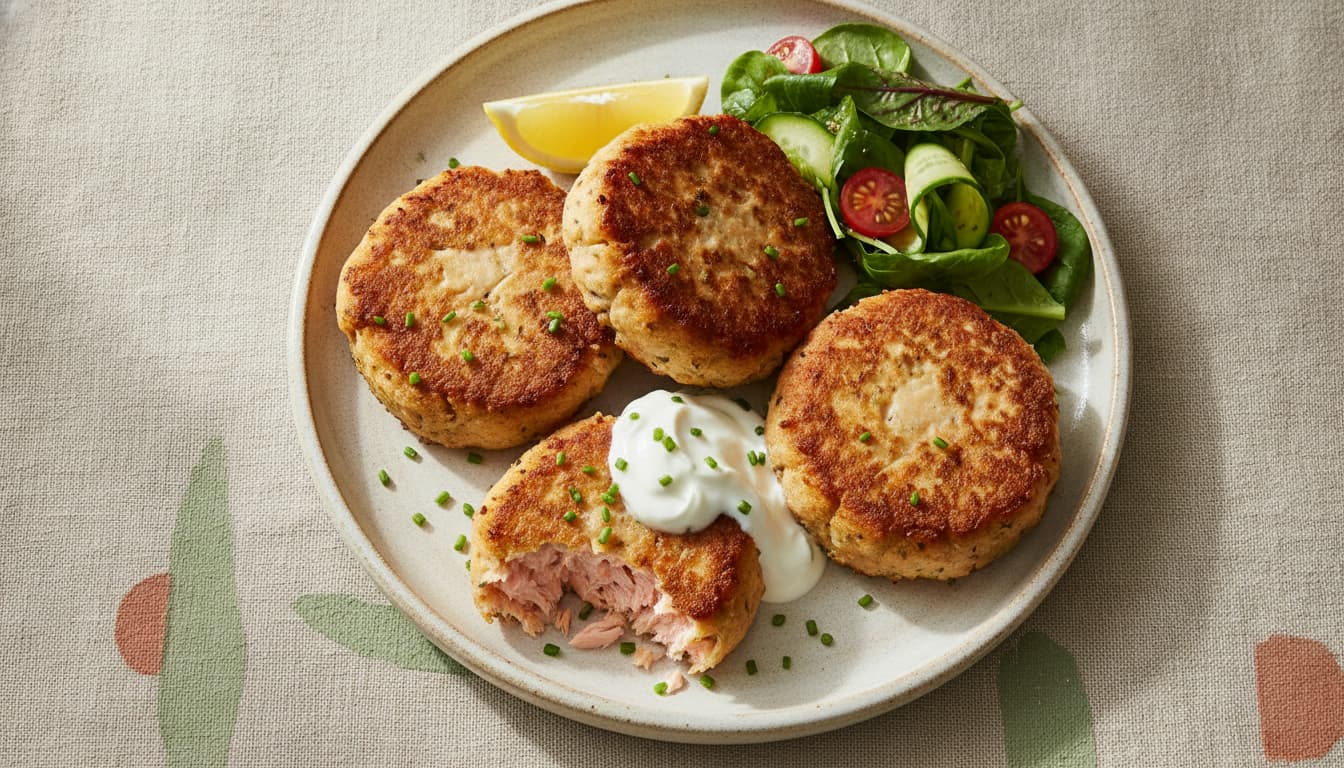
Salmon cakes that are crisp outside and tender inside instead of dry and crumbling: salmon bound with Dijon, egg, chives and minimal breadcrumb, pan-seared golden. 28g protein. Works with tinned or fresh salmon.
Why this works
Every recipe on this site ships with an explanation of the technique decisions, why sear then braise, why the acid goes in at the end, why the fat renders before the aromatics. The method below is those decisions, in order.
Ingredients
Serves 4- 1 lbcooked salmon · or two 7.5 oz tins, drained and flaked
- 1egg
- 1 tbspDijon mustard
- 1/3 cupbreadcrumbs · or almond flour for gluten-free
- 2 tbspchives · chopped
- 1lemon · zested, plus wedges to serve
- 2spring onions · finely sliced
- 1/4 tspblack pepper
- 1/4 tspkosher salt · to taste
- 2 tbspavocado oil · for frying
Method
Use just enough binder to hold, no more
One egg, a spoon of Dijon and a modest third of a cup of breadcrumbs is enough to hold the cakes without turning them into stodge. Too much filler and they taste of bread, not salmon. The salmon should be the majority of what you bite into.
Keep some texture in the salmon
Flake the salmon rather than mashing it to paste. Leaving some larger flakes gives the cakes a pleasant chunky texture and stops them being dense. A mash of uniform mush cooks up gummy.
Dijon, lemon zest and chives carry the flavour
Salmon cakes need brightness or they taste flat. Dijon adds a savoury tang, lemon zest lifts, and chives bring a fresh onion note. Season assertively, the mix should taste good before it hits the pan.
Chill the cakes before frying
Form the cakes and rest them in the fridge for ten minutes. Cold cakes hold their shape in the pan and are far less likely to fall apart when you flip them. This short chill is worth the wait.
Sear in a thin film of oil, flip once
Medium-high heat, a couple of spoons of oil, three to four minutes a side until deep golden. Flip only once, and gently, with a thin spatula. Flipping early or often is how salmon cakes break. Let the crust set before you turn them.
Serve with something acidic
A squeeze of lemon, a dollop of yogurt-dill sauce, or a simple green salad cuts the richness. Salmon is oily and the cakes are savoury, so the plate wants an acidic, fresh counterpoint.
Variations
Substitutions and adaptations land with the photography shoot. The method holds across most reasonable swaps.
Storage
Refrigerator: 3 to 4 days, sealed. Freezer: up to 3 months. Reheat covered to retain moisture.
Frequently asked
- Tinned or fresh salmon, which is better?
- Both work. Tinned salmon is convenient, affordable and already cooked, making these a genuine pantry dinner. Fresh cooked or leftover roast salmon gives a slightly cleaner flavour and firmer flake. Whichever you use, drain it well and keep some texture rather than mashing it smooth.
- Why do my salmon cakes fall apart?
- Usually too little binder, skipping the chill, or flipping too soon and too often. Use an egg and a modest amount of breadcrumb, chill the formed cakes for ten minutes, let a crust form before turning, and flip only once with a thin spatula.
- How do I make them gluten-free?
- Swap the breadcrumbs for almond flour or gluten-free breadcrumbs. The egg and Dijon still bind well, so the cakes hold together the same way. Serve with a naturally gluten-free lemon-yogurt sauce.
- Can I bake them instead of frying?
- Yes. Bake at 220C for about eighteen to twenty minutes, flipping halfway, until golden. Brush them with a little oil first so they colour. Baked cakes are slightly less crisp than pan-fried but need no attention.
Related recipes
See all →- High-Protein
Beef Bourguignon: Dry the Meat, Crowd Nothing, Wait a Day
This is a braise that fails at the first step or not at all. Wet beef in a crowded pot steams, and a stew built on steamed beef cannot be rescued later by wine, stock or time. Dry the cubes, brown them in three batches, cook the garnish separately, and give it three hours at 325F. Then, ideally, put it in the fridge overnight, because the second day is a different dish.
240m42g Protein - High-Protein
How to Cook Tofu: Press It, Coat It in Starch, Sauce It Last
Tofu is bland and soggy for two mechanical reasons, and both are fixable. It is packed in water, so the surface cannot brown until that water is gone, and it is a set protein gel with no internal channels, so marinade does not penetrate it no matter how long you wait. Press it, coat it in cornstarch, fry it hard, and sauce it after it is crisp. An hour, most of it pressing.
60m20g Protein - High-Protein
Enchiladas: Fry the Tortillas, Fry the Sauce, Bake Them Briefly
Nearly every bad enchilada is the same enchilada: a raw corn tortilla soaked in canned sauce and baked until the whole tray turns to porridge. Two steps fix it permanently. Pass each tortilla through hot oil for twenty seconds so it waterproofs, and fry the blended chile sauce in fat before it goes anywhere near the pan. Ninety minutes, most of it the sauce, and twenty of it in the oven.
95m34g Protein
Get a tested recipe + a nutritional note in your inbox each Sunday.
One recipe a week, photographed on the same Tuesday it tested. Reviewed by an RD. No promotions, no pop-ups, no tracking.
The Clean Chef Starter Kit.
A 14-day anti-inflammatory meal plan PDF, grocery list by section, macros totaled per day, Sunday prep sequence. Free.
By subscribing, you agree to our Privacy Policy. One calm email a week. Unsubscribe anytime.
We're building a shop.
Curated cookware, pantry staples we actually buy, recipe-bundle PDFs. Be the first to know when it opens.
We'll only email you about the shop opening. Unsubscribe in any email. See our Privacy Policy.