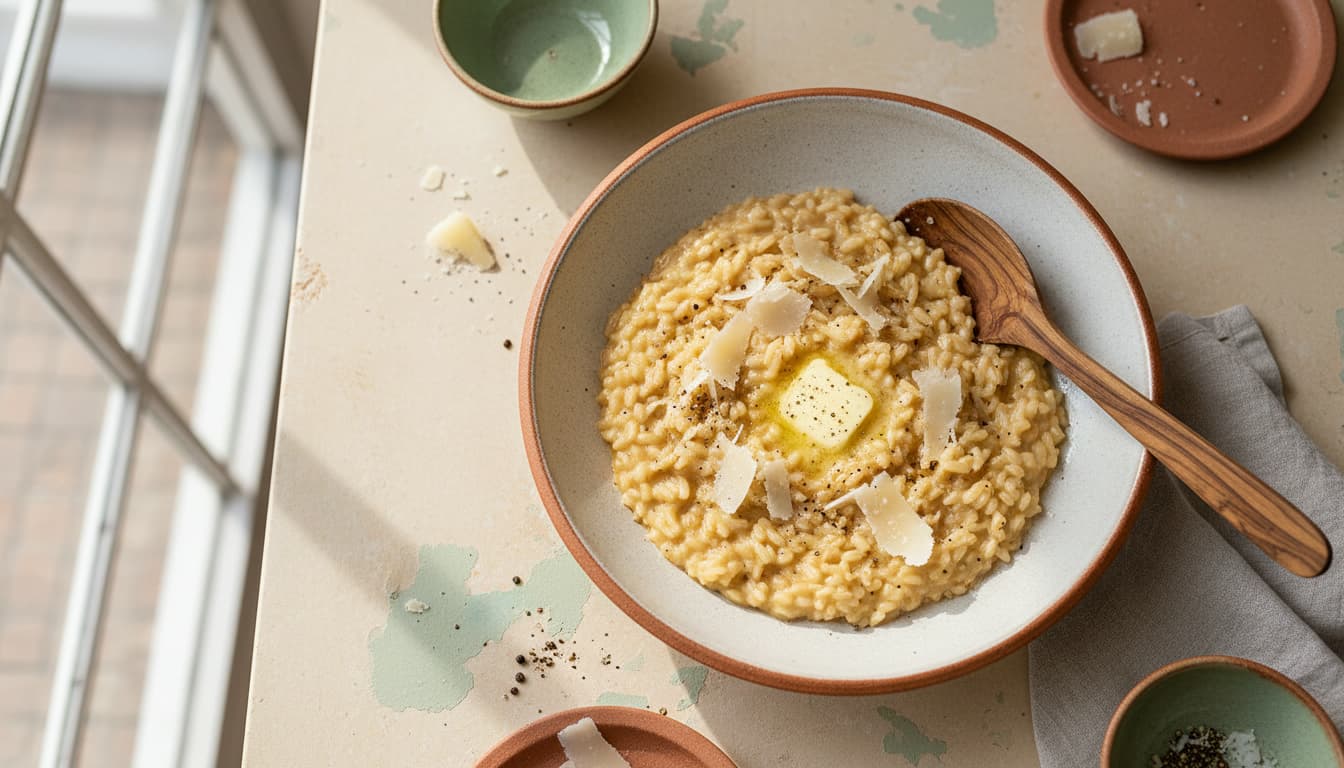
- Calories
- 480
- Protein
- 15g
- Fiber
- 3g
- Sat. fat
- 9g
- Sodium
- 620mg
- Added sugar
- 0g
What this recipe does for you.
The creaminess is starch released from the rice, which means the grain you buy matters more than anything you do to it. Carnaroli holds its shape twenty minutes past the point where arborio collapses. Hot stock, a properly toasted grain, and the two minutes off the heat at the end that most recipes treat as an afterthought and that are actually the whole texture.
Why this works
Every recipe on this site ships with an explanation of the technique decisions, why sear then braise, why the acid goes in at the end, why the fat renders before the aromatics. The method below is those decisions, in order.
Ingredients
Serves 4- 1 1/2 cupscarnaroli rice · or vialone nano, arborio works but collapses sooner
- 6 cupsvegetable stock · held at a bare simmer in a pan beside you, never cold
- 10 ozmixed mushrooms · cremini and oyster, torn by hand rather than sliced
- 1 largeshallot · diced as finely as you can manage, almost to a paste
- 2 clovesgarlic · minced
- 3/4 cupdry white wine · something you would drink, at room temperature
- 3 tbspextra-virgin olive oil
- 3 tbspcold unsalted butter · cubed and kept in the fridge until the very last minute
- 2 ozParmigiano-Reggiano · grated fine, plus more at the table
- 4 sprigsthyme · leaves picked
- 1 wholelemon · zest only, no juice
- 1 1/4 tspkosher salt · adjust down if your stock is already salted
- 1/2 tspblack pepper · coarsely ground, added at the end
Method
Buy carnaroli, and the rest of this gets much easier
Risotto rice is chosen for a high amylopectin starch content that leaches into the liquid and thickens it. Carnaroli has a firmer amylose core than arborio, which means it releases the creaminess without the grain itself going to mush, and it gives you a window of two or three forgiving minutes rather than thirty forgiving seconds. Vialone nano is the third option and cooks faster. Do not use long-grain, basmati or any pre-rinsed rice, because you would be washing away the entire mechanism.
Brown the mushrooms separately, in a dry pan, and set them aside
Mushrooms are mostly water and they will not brown in a crowded pan with oil already in it. Tear them, put them in a wide dry pan over high heat, and leave them alone until the water they release has evaporated and they start to squeak and colour, about eight minutes. Only then add oil, thyme and salt. Cooking them in the risotto itself gives you grey, boiled mushrooms and a watery base. They go back in at the end.
The tostatura: toast the rice until the edges go glassy
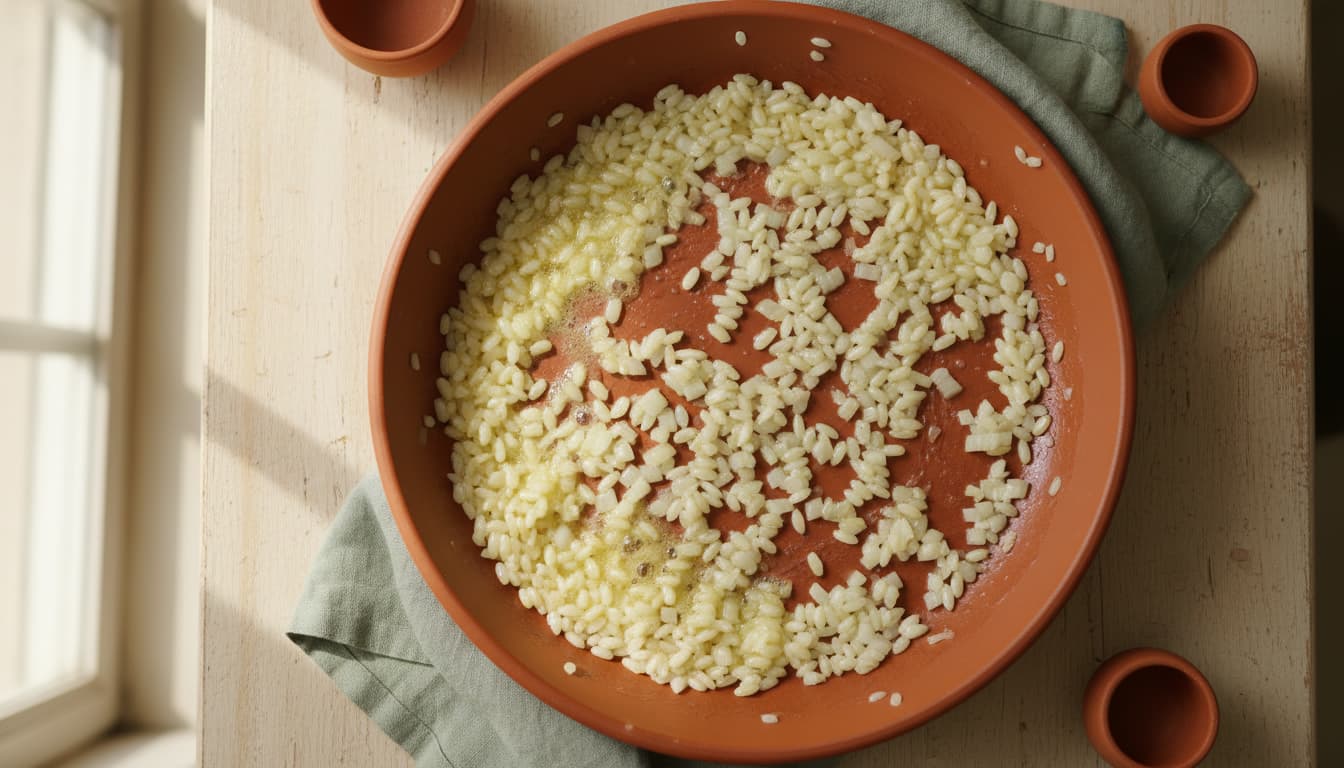
Sweat the shallot in olive oil until soft and not coloured, add the garlic for thirty seconds, then add the dry rice and stir it in the fat over medium heat for two to three minutes. The grains should feel hot to a fingertip and the outer edge should turn translucent while the center stays chalky white. This step firms the outside of each grain so it survives the stirring, and skipping it is why some risotto turns to porridge at minute twelve.
Wine first, and let it disappear completely
Pour in the wine and keep stirring until the pan is almost dry and you can drag a spoon through and see the base for a second. If you add stock while there is still raw wine in the pan, the finished dish tastes sharp and thin in a way you cannot correct later. This takes about two minutes on a decent heat. Room-temperature wine rather than fridge-cold, so you are not repeatedly stalling the pan.
Hot stock, a ladle at a time, and stirring is agitation not devotion
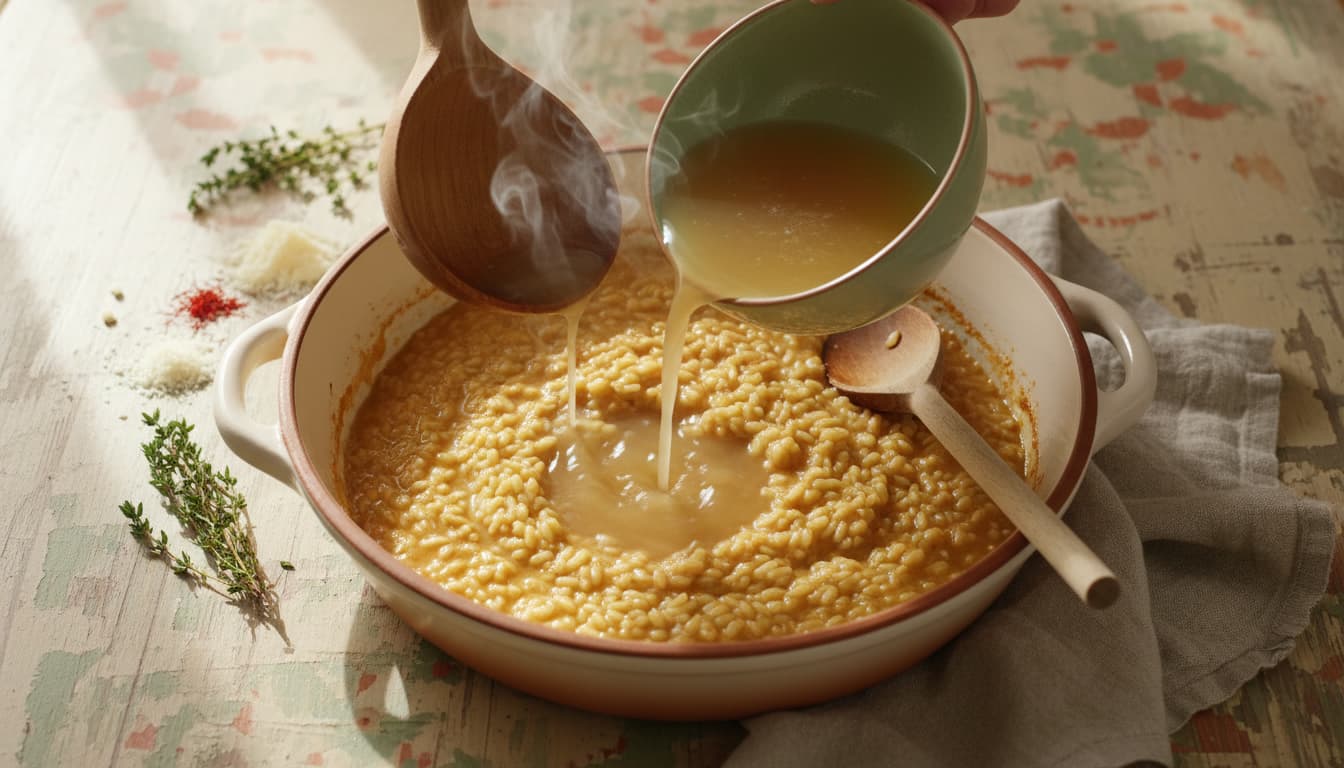
Cold stock drops the pan temperature every time you add it and stretches the cook by ten minutes. Keep it at a bare simmer in a pan beside you. Add a ladleful, stir until it is mostly absorbed, add the next. You do not have to stir without stopping, and the folklore about it is wrong: what you actually need is enough agitation to knock starch off the grains and stop the base catching, so a good stir every thirty to forty seconds is plenty.
Start tasting at eighteen minutes, not at the time on the packet
Rice varies by harvest and age, and the pan you are using changes the evaporation rate, so the printed time is a suggestion. From eighteen minutes onward, bite a grain every couple of minutes. You are looking for tender with a definite firm point at the center, no chalk. That is usually somewhere between twenty and twenty-four minutes with carnaroli. Stop adding stock a minute before you think you are done, because the next step loosens it again.
The mantecatura happens off the heat, and it is the entire texture
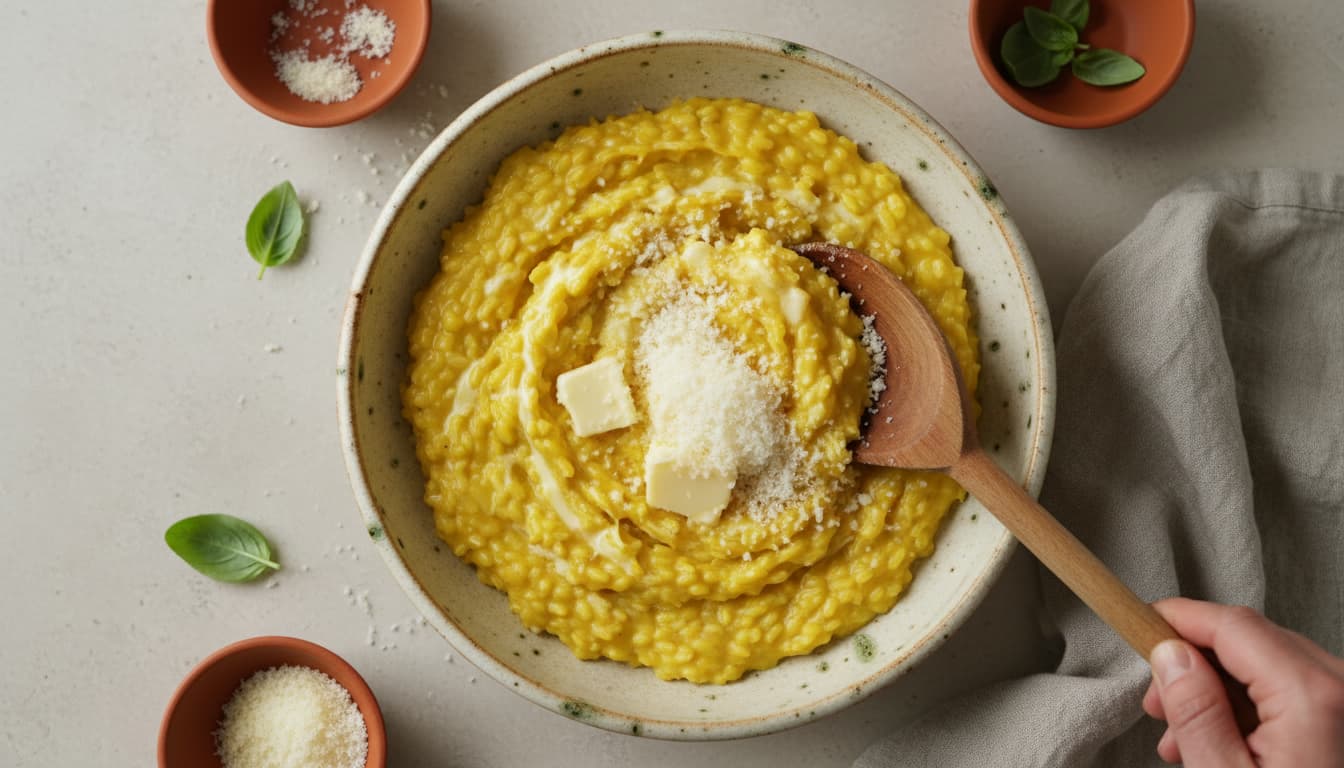
Pull the pan off the burner and wait thirty seconds so it stops bubbling. Then beat in the cold cubed butter and the grated Parmigiano hard, with a wooden spoon, until the whole thing turns glossy and looks like it has cream in it. Cold butter and no heat is what emulsifies the fat into the starch instead of splitting it into a greasy pool. On the heat, this step produces an oily risotto every time. Beat for a full minute.
All onda: it should move on the plate
Correctly finished risotto is loose enough to spread into a slow wave when you tap the side of the plate, which is where the Italian phrase all onda comes from. If it holds a mound, it is too thick, and a splash of hot stock beaten in fixes it in ten seconds. Fold the mushrooms back in, add the lemon zest and the black pepper, and serve immediately in warm shallow bowls, because it stiffens as it cools and there is no rescuing it at the table.
In pictures
Variations
Substitutions and adaptations land with the photography shoot. The method holds across most reasonable swaps.
Storage
Refrigerator: 3 to 4 days, sealed. Freezer: up to 3 months. Reheat covered to retain moisture.
Frequently asked
- Do you really have to stir risotto constantly?
- No. The stirring exists to knock starch off the grains and to stop the base catching, and a firm stir every thirty to forty seconds achieves both. Constant stirring is a myth that has put more people off the dish than any other piece of cooking advice, and it can actually work against you by breaking the grains up. What you cannot walk away from is the pan itself, because you are adding stock and tasting, so budget the twenty-five minutes and stay in the kitchen.
- Can I use arborio instead of carnaroli?
- Yes, and it is what most shops stock. Arborio releases plenty of starch but has a softer core, so the window between done and mushy is much narrower, perhaps thirty seconds rather than three minutes. Start tasting at sixteen minutes instead of eighteen and be ready to pull it off. If you can find carnaroli or vialone nano, buy them, because the extra forgiveness is worth considerably more than the small price difference.
- Why is my risotto gluey, or still crunchy in the middle?
- Gluey usually means the rice was overcooked, over-stirred, or the heat was too low so it sat in liquid rather than absorbing it briskly. Crunchy in the middle with soft outsides means the heat was too high, so the outside broke down while the center stayed raw. Keep the pan at a lively simmer rather than a boil or a sulk, add hot stock in modest amounts, and taste rather than trusting a clock.
- Can I make risotto ahead of time?
- Restaurants do, and the method is straightforward. Cook it to about two-thirds done, roughly fifteen minutes, then spread it thin on a tray to stop the cooking and refrigerate. To finish, put it back in a pan with hot stock and cook out the last seven or eight minutes, then do the mantecatura fresh. What does not work is cooking it fully and reheating, which gives you the porridge texture. Leftovers are better turned into arancini than reheated.
- Can I make risotto without wine?
- Yes. Replace it with an equal volume of stock plus two teaspoons of white wine vinegar or lemon juice, added at the same point and cooked down the same way. You are after the acidity rather than the alcohol, and without something sharp the dish tastes flat and heavy against all that butter and cheese. Add the acid at the wine stage rather than at the end, where it would taste raw.
- Is risotto gluten-free?
- As written here, yes. Rice, stock, wine, butter, cheese and mushrooms contain no gluten. The two places it sneaks in are stock, where many cubes and concentrates contain wheat, and pre-grated cheese, where anti-caking agents occasionally do. Check the stock label once and grate your own Parmigiano and the dish is safely gluten-free. If you are cooking for someone coeliac, also confirm the wine, since a small number of producers use wheat-based finings.
Related recipes
See all →Gazpacho: An Emulsion, Not a Cold Tomato Soup
The Andalusian version is thick, orange-pink and creamy without any dairy in it, and the two things that get it there are stale bread and olive oil poured in slowly at the end. Watery red gazpacho is a blender-order problem. It needs genuinely ripe tomatoes, sherry vinegar rather than any other kind, and four hours in the fridge, which the time on this page includes.
270m4g ProteinTabbouleh: A Parsley Salad With Bulgur In It, Not the Reverse
Almost every tabbouleh sold outside the Levant has the ratio backwards: a bowl of wet bulgur with parsley stirred through. The Lebanese version is three quarters herbs by volume, with fine bulgur used the way you would use breadcrumbs, soaked in tomato juice rather than boiled. Forty-five minutes, no cooking at all, and most of the work is drying parsley and chopping it properly.
45m4g ProteinCarbonara: Four Ingredients, One Temperature, No Cream
Carbonara is not a cream sauce and it is not scrambled eggs. It is an emulsion of egg yolk, rendered pork fat, grated sheep cheese and starchy pasta water, held together by heat that stops just short of setting the egg. Everything that goes wrong goes wrong in the last ninety seconds. Thirty minutes, four ingredients, and a pan that comes off the burner before the eggs arrive.
30m27g Protein
Get a tested recipe + a nutritional note in your inbox each Sunday.
One recipe a week, photographed on the same Tuesday it tested. Reviewed by an RD. No promotions, no pop-ups, no tracking.
The Clean Chef Starter Kit.
A 14-day anti-inflammatory meal plan PDF, grocery list by section, macros totaled per day, Sunday prep sequence. Free.
By subscribing, you agree to our Privacy Policy. One calm email a week. Unsubscribe anytime.
We're building a shop.
Curated cookware, pantry staples we actually buy, recipe-bundle PDFs. Be the first to know when it opens.
We'll only email you about the shop opening. Unsubscribe in any email. See our Privacy Policy.