- Calories
- 190
- Protein
- 12g
- Fiber
- 3g
- Sat. fat
- 2g
- Sodium
- 180mg
- Added sugar
- 8g
What this recipe does for you.
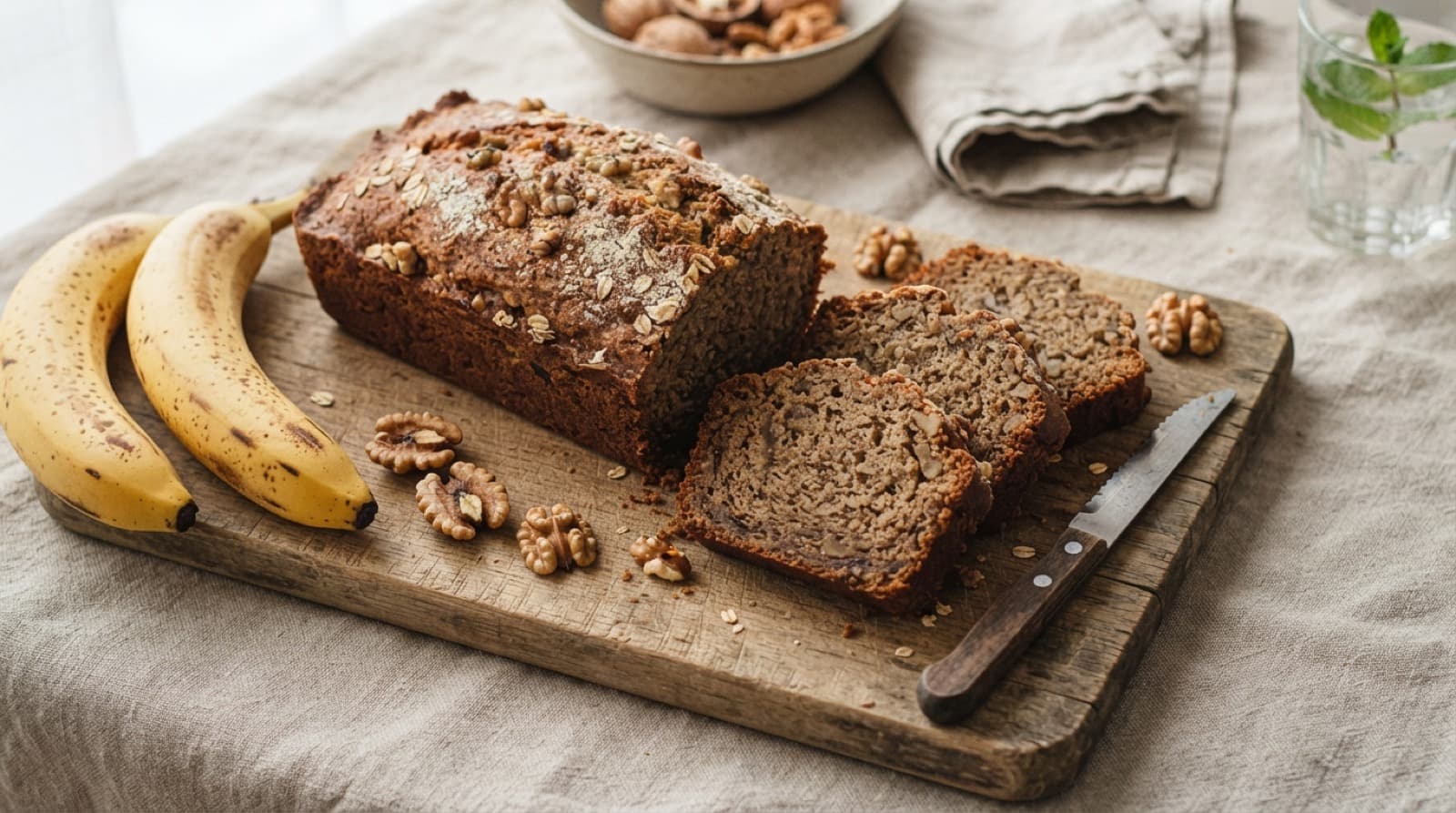
The high-protein banana bread that stays moist instead of turning into a rubbery brick: real bananas, Greek yogurt, and a measured amount of protein powder. 12g protein per slice, one bowl, one loaf tin.
Why this works
Every recipe on this site ships with an explanation of the technique decisions, why sear then braise, why the acid goes in at the end, why the fat renders before the aromatics. The method below is those decisions, in order.
Naked Whey Unflavored Protein Powder
Protein powder is what wrecks most high-protein banana bread, either drying it to a sponge or leaving a chalky aftertaste. Unflavored whey is the safest choice because it adds no competing sweetener or gum, so the banana still reads as banana. Naked Whey is a single-ingredient powder that blends smoothly and does not overwhelm the crumb. Casein or a whey-casein blend bakes even softer if you have it. Avoid heavily flavored powders here, since baking concentrates their artificial notes.
Ingredients
Serves 10- 3 mediumripe bananas · about 300g, mashed
- 1 scoopunflavored whey protein powder · about 25g
- 1 1/2 cupsall-purpose flour
- 1/2 cupGreek yogurt
- 2large eggs
- 1/3 cupmaple syrup
- 1 tbspneutral oil
- 1 tspbaking soda
- 1/2 tspbaking powder
- 1/2 tspsalt
- 1 tspvanilla extract
- 1 tspground cinnamon
Method
Use very ripe, heavily spotted bananas and weigh them
The bananas are your sugar, moisture, and flavor all at once, so they need to be soft and covered in brown spots. Underripe bananas taste starchy and leave the loaf bland, which tempts you to add more sugar. Weigh them: you want about 300g of peeled banana, roughly three medium, mashed until only a few small lumps remain. This is the single biggest lever on how moist the finished loaf is.
Cap the protein powder at a quarter of the flour, or the loaf turns to rubber
Protein powder is thirsty and it sets firm, so too much is exactly why high-protein bakes go dry and bouncy. Keep it to no more than a quarter of the total dry weight, here one scoop against a cup and a half of flour. Beyond that ratio you are baking a sponge, not a bread. If you want more protein per slice, add it through Greek yogurt and eggs rather than more powder.
Greek yogurt is the moisture that protein powder takes away
Half a cup of thick full-fat or 2% Greek yogurt does two jobs: it adds around 5g of protein to the loaf and it puts back the moisture the powder pulls out. It also lends a faint tang that keeps the bread from tasting flat. Stir it into the wet ingredients, not the dry, so it distributes evenly and does not leave pale streaks in the crumb.
Do not overmix once the flour goes in
Overmixing develops gluten and gives you a tough, tunnelled loaf, and protein powder makes that worse because it tightens the batter further. Fold the dry into the wet with a spatula just until you no longer see dry flour, lumps are fine. Stop the moment it comes together. This is a quick-bread, so treat it like muffins, not like kneaded dough.
Sweeten lightly, because the bananas already carry it
Ripe bananas plus any sweetened protein powder mean you need far less added sugar than a standard banana bread. A third of a cup of maple syrup or honey is plenty, and it also adds moisture. If your protein powder is already flavored and sweetened, drop the added sugar by half and taste the batter. Restraint here is what keeps it a breakfast bread rather than a cake.
One tablespoon of oil keeps the crumb tender
It is tempting to make this fat-free, but a single tablespoon of neutral oil or melted butter coats the flour and stops the loaf from baking dense and dry. It is a small amount for a big textural payoff, adding barely any calories per slice. Skip it entirely and the protein powder and yogurt cannot fully compensate; you get a bread that is edible on day one and cardboard by day two.
Bake at 175C/350F and pull it at 91C/195F internal
Protein-enriched batters set faster and overbake into dryness quickly, so an instant-read thermometer is your best insurance. Bake at a moderate 175C/350F for 45 to 55 minutes and start checking early. The centre is done at about 91C/195F, or when a skewer comes out with a few moist crumbs, not wet batter. Tent the top with foil at the 35-minute mark if it is browning too fast.
Cool completely before slicing, or it crumbles
High-protein loaves are more fragile hot than regular banana bread because the protein network is still firming up. Let it sit in the tin ten minutes, then turn it out onto a rack and cool fully before you cut it. Slice it warm and it tears and gums up on the knife. Cooled, it slices cleanly and the crumb reads moist rather than raw. It also keeps better once fully cooled before storing.
Variations
Substitutions and adaptations land with the photography shoot. The method holds across most reasonable swaps.
Storage
Refrigerator: 3 to 4 days, sealed. Freezer: up to 3 months. Reheat covered to retain moisture.
Frequently asked
- How is this banana bread actually high in protein?
- The protein comes from three places, not just powder: one scoop of protein powder, half a cup of Greek yogurt, and two eggs together push each slice to about 12g. Spreading the protein across whole-food sources is deliberate, because leaning on powder alone is what makes high-protein bakes dry and rubbery. Cut into ten slices, that is roughly triple a standard slice of banana bread, and enough to make a slice with a coffee a genuine breakfast rather than a snack.
- Why did my high-protein banana bread come out dry and rubbery?
- Almost always too much protein powder or overbaking. Protein powder is absorbent and sets firm, so if it makes up more than about a quarter of your dry weight the loaf turns spongy no matter what else you do. The fix is to keep the powder capped and add protein through yogurt and eggs instead. The second culprit is oven time: protein batters overbake fast, so pull the loaf at 91C/195F internal or when a skewer shows a few moist crumbs, not a clean dry one.
- Can I make it without protein powder?
- Yes, and it is still a respectably high-protein loaf. Drop the powder and lean on a full cup of Greek yogurt, three eggs, and a couple of tablespoons of ground flax or a handful of chopped walnuts, and you land around 8 to 9g of protein per slice from whole foods alone. The crumb is actually more forgiving without powder because there is nothing pulling moisture out. Reduce the flour by a couple of tablespoons to account for the extra yogurt.
- What protein powder works best for baking?
- An unflavored or lightly vanilla whey, casein, or whey-casein blend. Unflavored is safest because baking concentrates artificial sweeteners and any gums in flavored powders, and off-notes get louder in the oven. Casein bakes softer than whey and holds moisture slightly better, so a blend is ideal if you have one. Avoid plant proteins that are heavy on pea unless the recipe is built for them, as they can turn gritty and beany in a sweet loaf.
- How should I store it and does it freeze?
- Cool it completely, then wrap it well and keep it at room temperature for two days or in the fridge for up to five; the fridge firms it, so a few seconds in the microwave brings back the soft crumb. It freezes very well: slice the fully cooled loaf, layer the slices with parchment, and freeze for up to three months. Toast a frozen slice straight from the freezer for a fast high-protein breakfast.
- Can I make these as muffins instead of a loaf?
- Yes. Divide the batter between twelve lined muffin cups and bake at the same 175C/350F for 18 to 22 minutes, until a skewer shows moist crumbs. Muffins are the better call for grab-and-go breakfasts and portion control, and they freeze and reheat even more cleanly than a loaf. Fill the cups only about three-quarters full, since protein batters rise a touch more abruptly than standard ones.
Related recipes
See all →- High-Protein
Beef Bourguignon: Dry the Meat, Crowd Nothing, Wait a Day
This is a braise that fails at the first step or not at all. Wet beef in a crowded pot steams, and a stew built on steamed beef cannot be rescued later by wine, stock or time. Dry the cubes, brown them in three batches, cook the garnish separately, and give it three hours at 325F. Then, ideally, put it in the fridge overnight, because the second day is a different dish.
240m42g Protein - High-Protein
How to Cook Tofu: Press It, Coat It in Starch, Sauce It Last
Tofu is bland and soggy for two mechanical reasons, and both are fixable. It is packed in water, so the surface cannot brown until that water is gone, and it is a set protein gel with no internal channels, so marinade does not penetrate it no matter how long you wait. Press it, coat it in cornstarch, fry it hard, and sauce it after it is crisp. An hour, most of it pressing.
60m20g Protein - High-Protein
Enchiladas: Fry the Tortillas, Fry the Sauce, Bake Them Briefly
Nearly every bad enchilada is the same enchilada: a raw corn tortilla soaked in canned sauce and baked until the whole tray turns to porridge. Two steps fix it permanently. Pass each tortilla through hot oil for twenty seconds so it waterproofs, and fry the blended chile sauce in fat before it goes anywhere near the pan. Ninety minutes, most of it the sauce, and twenty of it in the oven.
95m34g Protein
Get a tested recipe + a nutritional note in your inbox each Sunday.
One recipe a week, photographed on the same Tuesday it tested. Reviewed by an RD. No promotions, no pop-ups, no tracking.
The Clean Chef Starter Kit.
A 14-day anti-inflammatory meal plan PDF, grocery list by section, macros totaled per day, Sunday prep sequence. Free.
By subscribing, you agree to our Privacy Policy. One calm email a week. Unsubscribe anytime.
We're building a shop.
Curated cookware, pantry staples we actually buy, recipe-bundle PDFs. Be the first to know when it opens.
We'll only email you about the shop opening. Unsubscribe in any email. See our Privacy Policy.