High-fiber diet
By The ThatCleanChef Kitchen · Updated September 2, 2026 · 13 min read
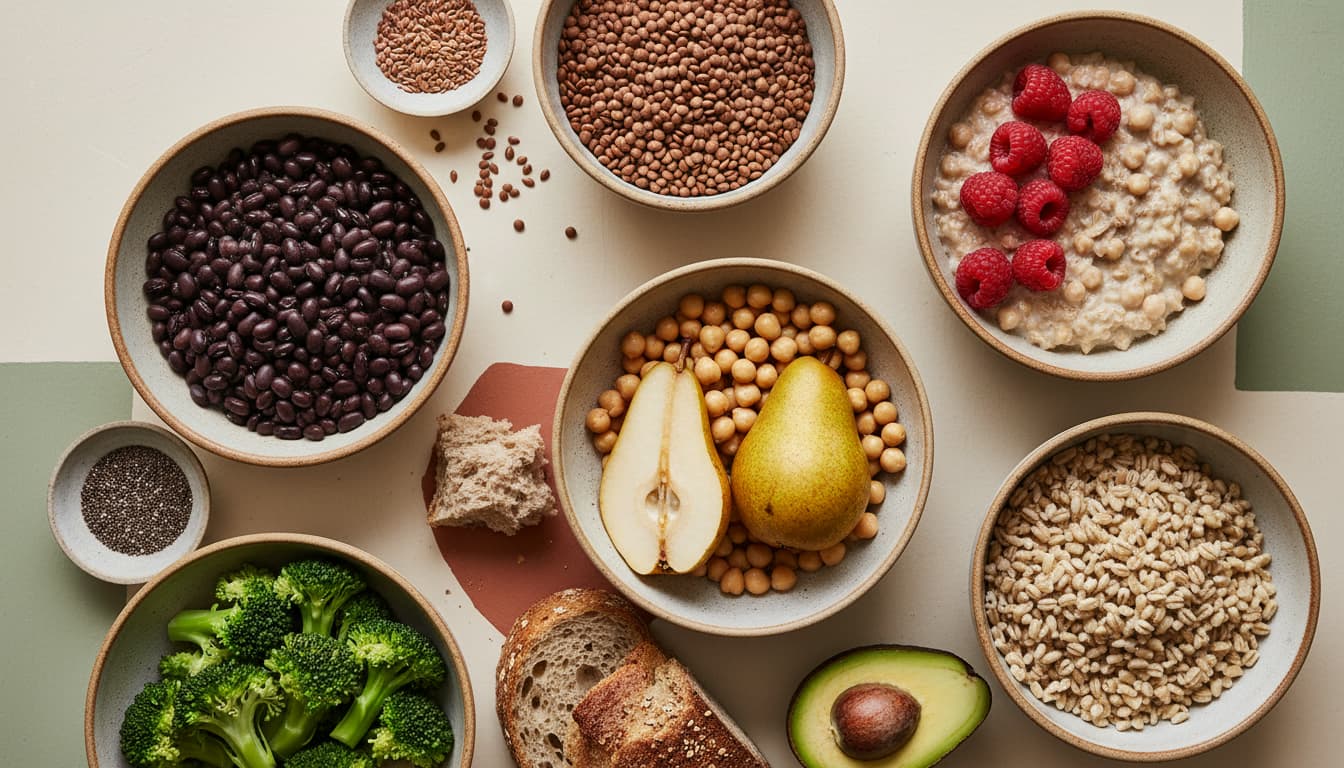
The average American eats about 15g of fiber a day against a target of 25 to 38g, and the gap is almost never closed by eating more salad. It is closed by legumes, intact grains and fruit with the skin on. Where fiber actually lives, why soluble and insoluble do different jobs, how to ramp without a week of bloating, and the five swaps that do most of the work.
We'd rather answer the question you actually asked in the first paragraph, then earn your trust by showing the chef notes.
What actually matters, in order.
- 01
The gap is 15g, and salad will not close it
Adequate intake is set at 25g a day for adult women and 38g for adult men, and average intake in the US sits near 15g. That is a shortfall of roughly half. The reason people fail to close it with vegetables is arithmetic: a large bowl of leaves and cucumber carries about 3g. A cup of cooked lentils carries 15g on its own. If you are serious about the number, the shopping list changes before the plate does, and it changes in the dried goods aisle.
- 02
Soluble and insoluble do different jobs, and you want both
Soluble fiber dissolves into a gel: oats, barley, legumes, apples, citrus, psyllium. It slows gastric emptying, blunts the glucose curve after a meal, and binds bile acids, which is the mechanism behind the modest cholesterol reduction seen in trials of oat beta-glucan. Insoluble fiber does not dissolve: wheat bran, vegetable skins, nuts, seeds. It adds bulk and speeds transit. Whole foods carry both in the same package, which is the argument for eating food rather than powder.
- 03
Legumes are the whole game
One cup of cooked lentils is about 15g of fiber. Black beans, 15g. Chickpeas, 12g. Split peas, 16g. Nothing else on a normal shopping list comes close, and each of those also carries 15 to 18g of protein for well under a dollar a serving at mid-2026 US averages, and those prices drift by shop and season. A single cup of legumes a day takes most people from 15g to 30g without touching anything else. Tinned is fine, rinsed, and no-salt-added versions save you several hundred milligrams of sodium.
- 04
Eat the skin, and stop peeling things
A medium apple with skin is 4.4g of fiber and about 2g peeled. A baked potato with skin is 4g and the flesh alone is 2g. Pears, carrots, courgette, cucumber, aubergine and sweet potato all lose between a third and a half of their fiber to a peeler. The habit costs nothing and adds several grams a day across a normal week of cooking. Scrub rather than peel, and keep the skins on when you roast a tray of vegetables.
- 05
Intact grains beat flour, even wholemeal flour
Whole grains that are still whole, so oat groats, farro, barley, wheat berries, brown rice and quinoa, are digested more slowly than the same grain milled into flour, because the physical structure of the cell walls survives cooking and slows enzyme access. That is why steel-cut oats behave differently from instant oats made from the identical grain, and why wholemeal bread produces a bigger glucose response than a bowl of barley. Wholemeal flour is better than white. Intact grain is better than both.
- 06
Ramp over three weeks and drink more water, or you will quit
Going from 15g to 30g overnight produces gas, bloating and cramps, and that is the single most common reason people abandon a high-fiber pattern in the first ten days. Add about 5g a week instead, which is one extra serving of legumes or one swapped grain. Increase fluid at the same time, because soluble fiber pulls water into the gut and without it you get the opposite of the intended effect. Most of the discomfort settles within two to three weeks as the gut microbiome adapts.
- 07
Supplements sit below food, with two real exceptions
A psyllium or inulin powder does not carry the protein, potassium, magnesium or polyphenols that come attached to a cup of beans, and the cardiovascular and mortality associations in the cohort literature are for dietary fiber rather than for supplements. Two situations where a supplement earns its place: a clinician has recommended psyllium for a specific bowel or cholesterol reason, or you are travelling and genuinely cannot access the food. Otherwise, spend the money on lentils.
- 08
Where this collides with low-FODMAP, keto and a vegan pattern
The low-FODMAP elimination phase deliberately restricts several of the highest-fiber foods, so fiber typically falls during those weeks and is rebuilt during reintroduction using tolerated sources such as oats, chia, kiwi and firm bananas. A strict keto diet can reach 25g through avocado, chia, flax, nuts and non-starchy vegetables, but it takes deliberate planning rather than luck. A vegan pattern usually overshoots the target without effort, and there the issue is ramping speed rather than quantity.
- 09
Five swaps that close half the gap by Tuesday
Add a cup of tinned lentils or black beans to whatever you were already cooking for dinner, plus 12 to 15g. Swap the breakfast cereal for oats with chia and berries, plus 8g. Keep the skin on the potato and the apple, plus 4g. Move from white to intact grain at one meal a day, plus 4g. And keep a bowl of roasted chickpeas or a bag of almonds where the crisps used to be, plus 4g. That is roughly 30g of movement from five decisions, none of which is a diet.
The questions cooks bring us.
- How much fiber do I actually need in a day?
- The Institute of Medicine adequate intake is 25g a day for adult women and 38g for adult men, or about 14g per 1,000 calories eaten, which is the more useful version of the number if you eat considerably more or less than average. Most large cohort studies show the association with lower cardiovascular and colorectal risk continuing to improve up to roughly 30g and flattening after that, so 30g is a sensible practical target for most adults.
- Why does more fiber make me bloated?
- Because gut bacteria ferment the fiber you are not able to digest, and that fermentation produces gas. It is a sign the fiber is doing what it does rather than a sign of intolerance. The fix is pace: add about 5g a week rather than doubling in a day, drink more water, and spread fiber across meals instead of eating 25g at dinner. If bloating is severe, persistent past three weeks, or comes with pain or a change in bowel habit, that is a conversation with a clinician rather than a tolerance problem.
- Is a fiber supplement as good as food?
- For the narrow job of adding bulk and softening stool, psyllium works well and is the best-evidenced supplement. For everything else fiber is associated with, food wins, because the cohort data linking fiber to lower cardiovascular risk and lower colorectal cancer risk is for fiber eaten as food, alongside the potassium, magnesium, protein and polyphenols in the same bean or grain. Treat a supplement as a bridge for a specific problem, not as a substitute for the shopping list.
- Can I hit a fiber target on a low-carb diet?
- Yes, but only deliberately. Avocado at 10g each, chia at 10g per ounce, ground flaxseed at 8g per two tablespoons, almonds at 4g per ounce, and a large volume of non-starchy vegetables will get a low-carb eater to 25g. What it will not survive is a low-carb pattern built on meat, cheese and eggs with a token side salad, which routinely lands under 10g. If you are doing keto, plan the fiber first and fit the rest around it.
- Does fiber actually lower cholesterol and blood sugar?
- Soluble fiber does, modestly and reproducibly. Around 3g a day of oat beta-glucan lowers LDL cholesterol by roughly 5 to 10 percent in controlled trials, which is meaningful but is not a statin. Soluble fiber also blunts the post-meal glucose rise by slowing gastric emptying, which is why the same bread eaten with beans produces a flatter curve than eaten alone. Neither effect is dramatic on its own, and both stack with everything else you are doing.
- What is the single highest-fiber food I can buy?
- Per serving as you would actually eat it, split peas and lentils at 15 to 16g a cooked cup, and chia seeds at 10g an ounce. Per 100g of dry weight, wheat bran and psyllium husk are higher but nobody eats them by the bowl. The genuinely useful answer is a cooked cup of any legume, because it delivers 12 to 16g of fiber and 15 to 18g of protein in the same spoonful, which no vegetable and no grain manages.
Where the technique comes from
About the ThatCleanChef Kitchen
A small team of recipe developers and food photographers testing recipes in home kitchens on home equipment. Every Nutrition Ledger is USDA FoodData Central-sourced and reviewed by Lena Marsh, RDN, MS. We don't pretend to be a single chef, we're the people behind the plates. Meet the full team →
Related posts
Magnesium-Rich Foods: Pumpkin Seeds Beat Spinach, and Bread Lost Most of Its
An ounce of pumpkin seeds carries about 156mg of magnesium, which is more than a cup of cooked spinach and roughly five times what a banana delivers. Around half of adults in national survey data take in less than the estimated requirement, and the largest single reason is grain refining, which strips about eighty percent of the magnesium out of wheat before it reaches a loaf.
Potassium-Rich Foods: The Banana Is Not Even in the Top Twenty
A medium banana has 422mg of potassium. A baked potato with the skin on has around 900mg, a cup of white beans about 1,000mg, and a cup of cooked spinach about 840mg. The banana became the symbol because it is portable, not because it is dense. What the number on the plate actually depends on is portion size, whether you cooked it in water, and how much sodium is sitting next to it.
Vegetarian Recipes: Protein, Browning, and Actual Dinners
Vegetarian cooking almost never fails for lack of ideas. It fails on two things: not enough protein on the plate, and not enough browning in the pan. Fix those and a meatless dinner stops reading as the version without the main thing. Where the protein comes from, the four nutrients worth attention, the techniques that make plants taste cooked-for, and a week of dinners.
The Clean Chef Starter Kit.
A 14-day anti-inflammatory meal plan PDF, grocery list by section, macros totaled per day, Sunday prep sequence. Free.
By subscribing, you agree to our Privacy Policy. One calm email a week. Unsubscribe anytime.