Cottage cheese recipes
By The ThatCleanChef Kitchen · Updated June 29, 2026 · 10 min read
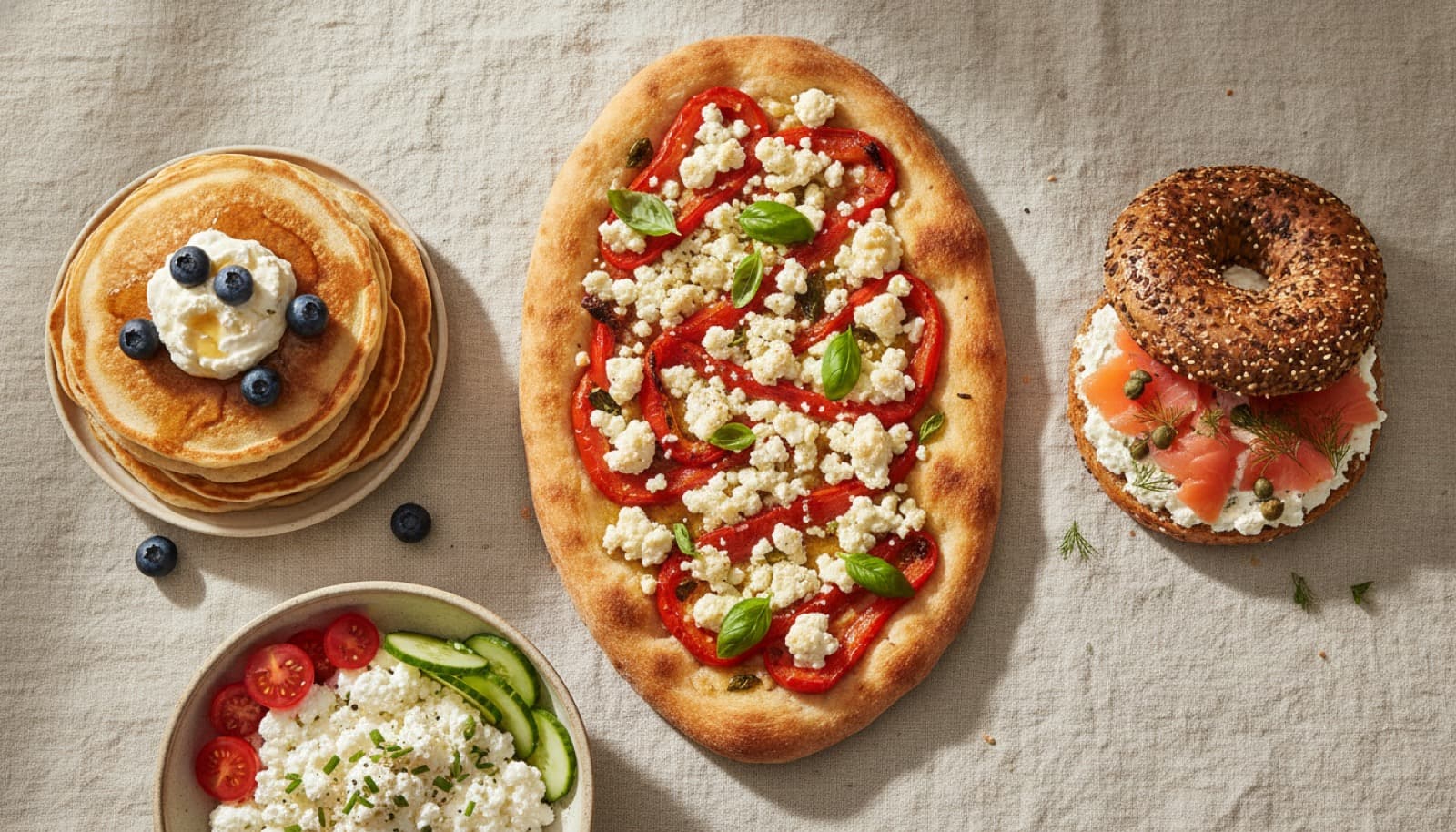
Cottage cheese is the highest-leverage protein in the dairy aisle, roughly 25g a cup for a couple of dollars, and it disappears into flatbread, pancakes, bagels, dips, and even ice cream. Here are the chef-tested ways we use it, each with the real protein number and the one technique that makes it work. Part of the high-protein recipes hub; start with the cottage cheese flatbread.
- 01
Cottage cheese flatbread, 25g per round
Blend a cup of cottage cheese with an egg, spread thin, and bake until it sets into a pliable high-protein base for pizza or wraps. This is the recipe that turned cottage cheese into a trend, and it's the deepest single page in this cluster. The one move that matters: blend until completely smooth or the curds bake into rubbery pockets. The cottage cheese flatbread is the place to start.
- 02
Cottage cheese pancakes, 30g per stack
Blended cottage cheese, eggs, oats, and a little baking powder make a pancake that's genuinely fluffy instead of the dense protein-pancake stereotype. The blend is non-negotiable here too. A full stack clears 30g, which makes this one of the few breakfasts that hits the per-meal protein floor without a powder scoop. See the cottage cheese pancakes for the batter ratio.
- 03
Cottage cheese bagels, 18g each
Two-ingredient-dough bagels (self-rising flour plus blended cottage cheese) bake up chewy and clock about 18g of protein each, several times what a standard bagel delivers. They're the easiest way to make a high-protein breakfast feel normal. Egg-wash and seed them for the crust. The cottage cheese bagels recipe has the shaping method.
- 04
Savory cottage cheese bowl, 28g
No cooking, no blending: a bowl of cottage cheese topped with cucumber, tomato, everything-bagel seasoning, olive oil, and cracked pepper. This is the five-minute lunch that proves cottage cheese doesn't need to be hidden. Use 4% (full-fat); the low-fat version weeps water and tastes thin. The savory cottage cheese bowl is the template.
- 05
Cottage cheese chips, 20g per batch
Spoon small mounds of cottage cheese onto parchment, season, and bake until crisp, a salty, crunchy snack with real protein and no seed-oil fryer involved. They go from leathery to crisp in the last two minutes, so watch the oven. The cottage cheese chips page has the timing and seasoning combinations.
- 06
Cottage cheese cookie dough, 22g
Blended cottage cheese, a little maple, and oat flour fold into a no-bake cookie dough with chocolate chips that tastes like dessert and lands 22g of protein. This is the one to reach for when the craving is for something sweet, not savory. The cottage cheese cookie dough recipe is honest about which sweeteners work.
- 07
Cottage cheese ice cream, 20g per pint
Blend cottage cheese with a sweetener and flavor, freeze, and you get a soft-serve-texture protein ice cream that doesn't taste like cottage cheese at all. The whole pint carries the protein of a small meal. The trick is blending until perfectly smooth and not over-freezing. The vanilla cottage cheese ice cream is the base recipe to riff on.
- 08
Buy the 4%, blend it smooth, and don't fear the curds
The two rules that make every recipe here work: use full-fat 4% cottage cheese (the low-fat versions are watery and bake poorly), and blend it completely smooth whenever the recipe is cooked or baked. Blended, cottage cheese reads as a tangy, creamy base, not curds. That single step is why these recipes don't taste like the snack your grandmother ate.
Where the technique comes from
About the ThatCleanChef Kitchen
A small team of recipe developers and food photographers testing recipes in home kitchens on home equipment. Every Nutrition Ledger is USDA FoodData Central-sourced and reviewed by Lena Marsh, RDN, MS. We don't pretend to be a single chef, we're the people behind the plates. Meet the full team →
Related posts
Beef Bourguignon: Dry the Meat, Crowd Nothing, Wait a Day
This is a braise that fails at the first step or not at all. Wet beef in a crowded pot steams, and a stew built on steamed beef cannot be rescued later by wine, stock or time. Dry the cubes, brown them in three batches, cook the garnish separately, and give it three hours at 325F. Then, ideally, put it in the fridge overnight, because the second day is a different dish.
How to Cook Tofu: Press It, Coat It in Starch, Sauce It Last
Tofu is bland and soggy for two mechanical reasons, and both are fixable. It is packed in water, so the surface cannot brown until that water is gone, and it is a set protein gel with no internal channels, so marinade does not penetrate it no matter how long you wait. Press it, coat it in cornstarch, fry it hard, and sauce it after it is crisp. An hour, most of it pressing.
Enchiladas: Fry the Tortillas, Fry the Sauce, Bake Them Briefly
Nearly every bad enchilada is the same enchilada: a raw corn tortilla soaked in canned sauce and baked until the whole tray turns to porridge. Two steps fix it permanently. Pass each tortilla through hot oil for twenty seconds so it waterproofs, and fry the blended chile sauce in fat before it goes anywhere near the pan. Ninety minutes, most of it the sauce, and twenty of it in the oven.
The Clean Chef Starter Kit.
A 14-day anti-inflammatory meal plan PDF, grocery list by section, macros totaled per day, Sunday prep sequence. Free.
By subscribing, you agree to our Privacy Policy. One calm email a week. Unsubscribe anytime.