- Calories
- 430
- Protein
- 32g
- Fiber
- 4g
- Sat. fat
- 7g
- Sodium
- 620mg
- Added sugar
- 3g
What this recipe does for you.
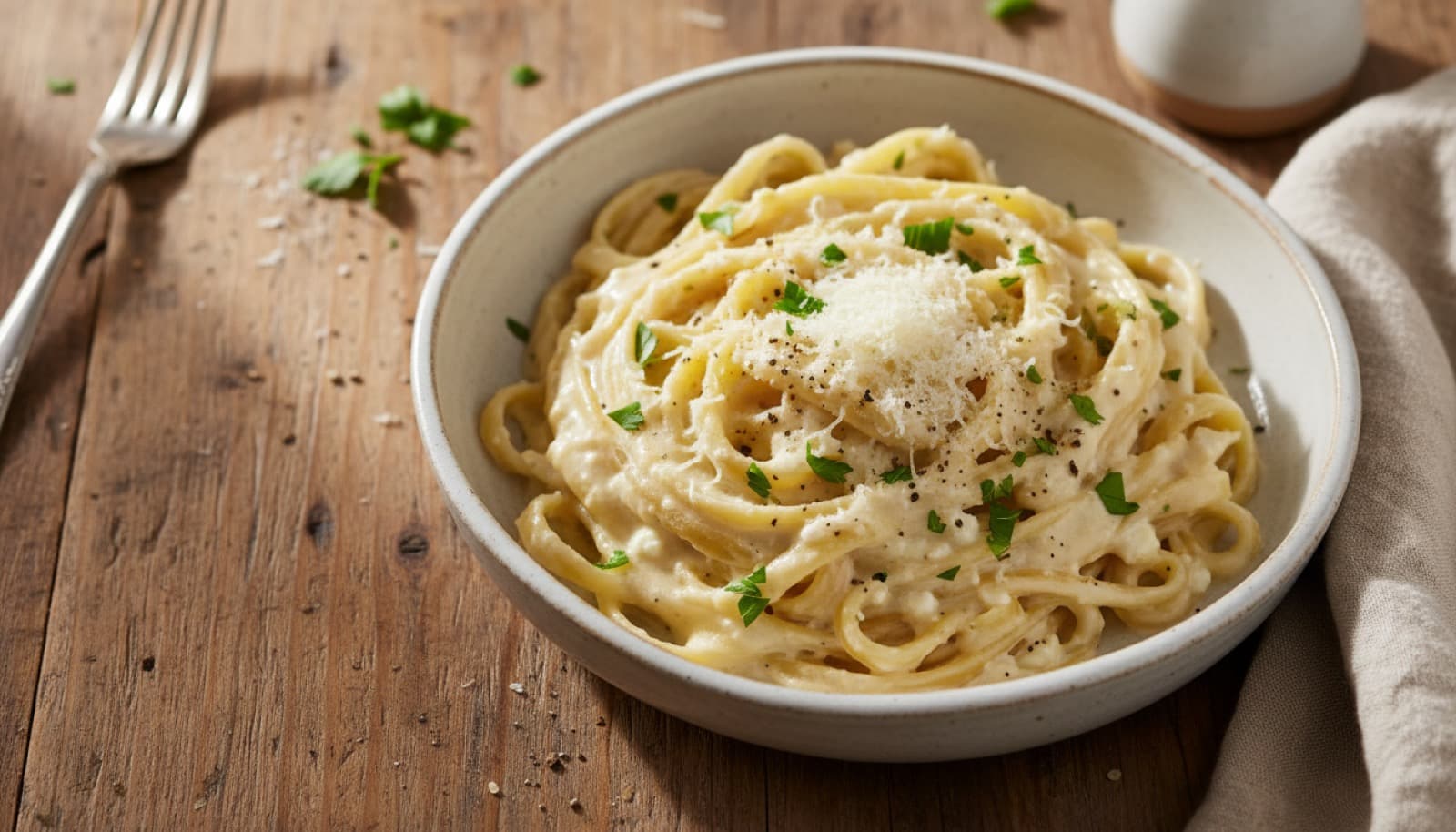
The blended cottage cheese alfredo that eats like the real thing: silky, garlicky, 32g protein per serving, no heavy cream. Ready in the time it takes the pasta to boil.
Why this works
Every recipe on this site ships with an explanation of the technique decisions, why sear then braise, why the acid goes in at the end, why the fat renders before the aromatics. The method below is those decisions, in order.
Good Culture 4% Cottage Cheese
The whole sauce is blended cottage cheese, so the tub is the recipe. Good Culture 4% blends to a genuinely silky, clean-tasting sauce without the sour edge cheaper brands bring. Full-fat is the point here: blended 4% is what mimics cream, while fat-free blends thin and slightly gritty. Nancy's Organic is the solid second. UK readers: Longley Farm is the closest equivalent.
Ingredients
Serves 3- 9 ozfettuccine or pasta
- 1 cupcottage cheese · 4%; Good Culture
- 1 tbspbutter
- 2 clovesgarlic · minced
- 1/2 cupParmigiano-Reggiano · finely grated
- 1 cupreserved pasta water
- nutmeg · a small grating
- black pepper · to taste
- 2 handfulsbaby spinach · optional, stirred in
- kosher salt · to taste
Method
Blend the cottage cheese completely smooth first
Everything rides on this step. Blend a full cup of 4% cottage cheese for a solid 60 seconds, until there is not a single curd left and it looks like pourable cream. Under-blend it and the sauce stays grainy no matter what you do next. A high-power blender or an immersion blender in a tall cup both work.
Bloom the garlic in butter or olive oil before the sauce goes in
Raw blended garlic tastes harsh and one-note. Melt a tablespoon of butter, cook two minced cloves gently for a minute until fragrant but not browned, then pull the pan off the heat before adding the cottage cheese. This one minute is the difference between a sauce that tastes cooked and one that tastes like blended dairy.
Add real parmesan off the heat, and grate it yourself
Half a cup of finely grated Parmigiano or Grana Padano is what makes this read as alfredo rather than a protein hack. Grate it from a block, the pre-shredded stuff has anti-caking starch that stops it melting smoothly. Stir it in off direct heat so it melts into the sauce instead of seizing into strings.
Never let the sauce boil, or the cottage cheese will split
Blended cottage cheese is still a fresh cheese and it curdles at a hard boil. Keep the pan on low, warm the sauce through gently, and finish it with the residual heat of the pasta rather than cranking the burner. If you see it starting to look grainy, pull it off the heat immediately and whisk in a splash of pasta water.
Save a mug of starchy pasta water before you drain
This is the trick that makes it cling. Reserve a cup of the salty, starchy cooking water and use a few tablespoons to loosen the sauce to a glossy, coating consistency. The starch emulsifies the sauce onto the noodles so it clings instead of pooling. Add it a splash at a time, you can always add more.
Toss the pasta in the sauce, do not pour sauce on the plate
Drain the pasta a minute shy of the package time, add it straight to the warm sauce with a splash of pasta water, and toss over low heat for a minute so the noodles finish cooking in the sauce and absorb it. Pasta dressed in the pan tastes seasoned all the way through; sauce ladled over a bowl slides off.
Season with nutmeg, pepper, and enough salt
A tiny grating of nutmeg is the classic alfredo note most people miss, and plenty of black pepper cuts the richness. Cottage cheese is already salty, so taste before adding more salt, but do taste, an under-seasoned cream sauce is flat. A squeeze of lemon at the end brightens it if it feels heavy.
Stretch it to a meal with a green vegetable stirred in
Fold a couple of handfuls of baby spinach, roasted broccoli, or blanched peas into the finished pasta. The vegetable adds fiber and color and turns a rich sauce into a balanced plate. Wilt spinach directly in the hot pasta; add sturdier vegetables already cooked so they do not water down the sauce.
Variations
Substitutions and adaptations land with the photography shoot. The method holds across most reasonable swaps.
Storage
Refrigerator: 3 to 4 days, sealed. Freezer: up to 3 months. Reheat covered to retain moisture.
Frequently asked
- Does cottage cheese alfredo actually taste like alfredo?
- It tastes like a lighter, tangier alfredo, genuinely creamy and garlicky and satisfying, rather than an exact clone of a butter-and-cream restaurant version. The parmesan, garlic, and nutmeg do most of the flavor work, and blended 4% cottage cheese carries a subtle tang that a lot of people actually prefer. If you go in expecting Olive Garden it reads as its own thing; if you want a silky, high-protein cream sauce that satisfies the craving, it delivers.
- How do I keep the sauce from being grainy?
- Two rules. First, blend the cottage cheese completely smooth, a full 60 seconds until there is no curd left at all, because any curd you leave will stay in the finished sauce. Use full-fat 4%, since fat-free blends thinner and grittier. Second, never let it boil: blended cottage cheese is a fresh cheese and it splits at a hard simmer, so keep the heat low and finish the sauce with the residual heat of the pasta and a splash of starchy water.
- How much protein is in cottage cheese alfredo?
- About 32g per serving as written, which is roughly triple a traditional cream-and-butter alfredo. Most of it comes from the cup of 4% cottage cheese in the sauce (about 25g on its own) plus the parmesan and the pasta. Use a higher-protein or chickpea pasta and you can push it past 35g. That protein is also why it is far more filling than classic alfredo, which is mostly fat and refined carbs.
- Can I make it without a blender?
- You can, but the texture suffers. A blender or immersion blender is what turns the curds into a smooth, cream-like sauce; without one you are left with a lumpy sauce even after cooking. If you truly have no blender, buy whipped or smooth cottage cheese (several brands now sell it) and whisk it hard, or push regular cottage cheese through a fine sieve first. An immersion blender in a tall cup is the cheapest fix and the one I would buy for this.
- Can I meal-prep or reheat cottage cheese alfredo?
- It is best fresh, but it reheats acceptably if you are gentle. Store the sauced pasta in the fridge up to three days, and reheat low and slow on the stovetop with a good splash of milk or pasta water whisked in to bring the sauce back together, since it tightens as it cools. Avoid the microwave on high, which can overheat the cottage cheese and make it grainy. Do not freeze it, the sauce splits on thawing.
- What pasta works best?
- A shape that holds sauce: fettuccine is traditional, but rigatoni, penne, and shells all catch the creamy sauce well. For even more protein, a chickpea or lentil pasta (Banza) or a high-protein wheat pasta pushes the bowl past 35g and adds fiber, at the cost of a slightly firmer bite. Whatever you use, cook it a minute short and finish it in the sauce so it absorbs the flavor rather than sitting in it.
Related recipes
See all →- High-Protein
Beef Bourguignon: Dry the Meat, Crowd Nothing, Wait a Day
This is a braise that fails at the first step or not at all. Wet beef in a crowded pot steams, and a stew built on steamed beef cannot be rescued later by wine, stock or time. Dry the cubes, brown them in three batches, cook the garnish separately, and give it three hours at 325F. Then, ideally, put it in the fridge overnight, because the second day is a different dish.
240m42g Protein - High-Protein
How to Cook Tofu: Press It, Coat It in Starch, Sauce It Last
Tofu is bland and soggy for two mechanical reasons, and both are fixable. It is packed in water, so the surface cannot brown until that water is gone, and it is a set protein gel with no internal channels, so marinade does not penetrate it no matter how long you wait. Press it, coat it in cornstarch, fry it hard, and sauce it after it is crisp. An hour, most of it pressing.
60m20g Protein - High-Protein
Enchiladas: Fry the Tortillas, Fry the Sauce, Bake Them Briefly
Nearly every bad enchilada is the same enchilada: a raw corn tortilla soaked in canned sauce and baked until the whole tray turns to porridge. Two steps fix it permanently. Pass each tortilla through hot oil for twenty seconds so it waterproofs, and fry the blended chile sauce in fat before it goes anywhere near the pan. Ninety minutes, most of it the sauce, and twenty of it in the oven.
95m34g Protein
Get a tested recipe + a nutritional note in your inbox each Sunday.
One recipe a week, photographed on the same Tuesday it tested. Reviewed by an RD. No promotions, no pop-ups, no tracking.
The Clean Chef Starter Kit.
A 14-day anti-inflammatory meal plan PDF, grocery list by section, macros totaled per day, Sunday prep sequence. Free.
By subscribing, you agree to our Privacy Policy. One calm email a week. Unsubscribe anytime.
We're building a shop.
Curated cookware, pantry staples we actually buy, recipe-bundle PDFs. Be the first to know when it opens.
We'll only email you about the shop opening. Unsubscribe in any email. See our Privacy Policy.