- Calories
- 410
- Protein
- 16g
- Fiber
- 11g
- Sat. fat
- 9g
- Sodium
- 480mg
- Added sugar
- 3g
What this recipe does for you.
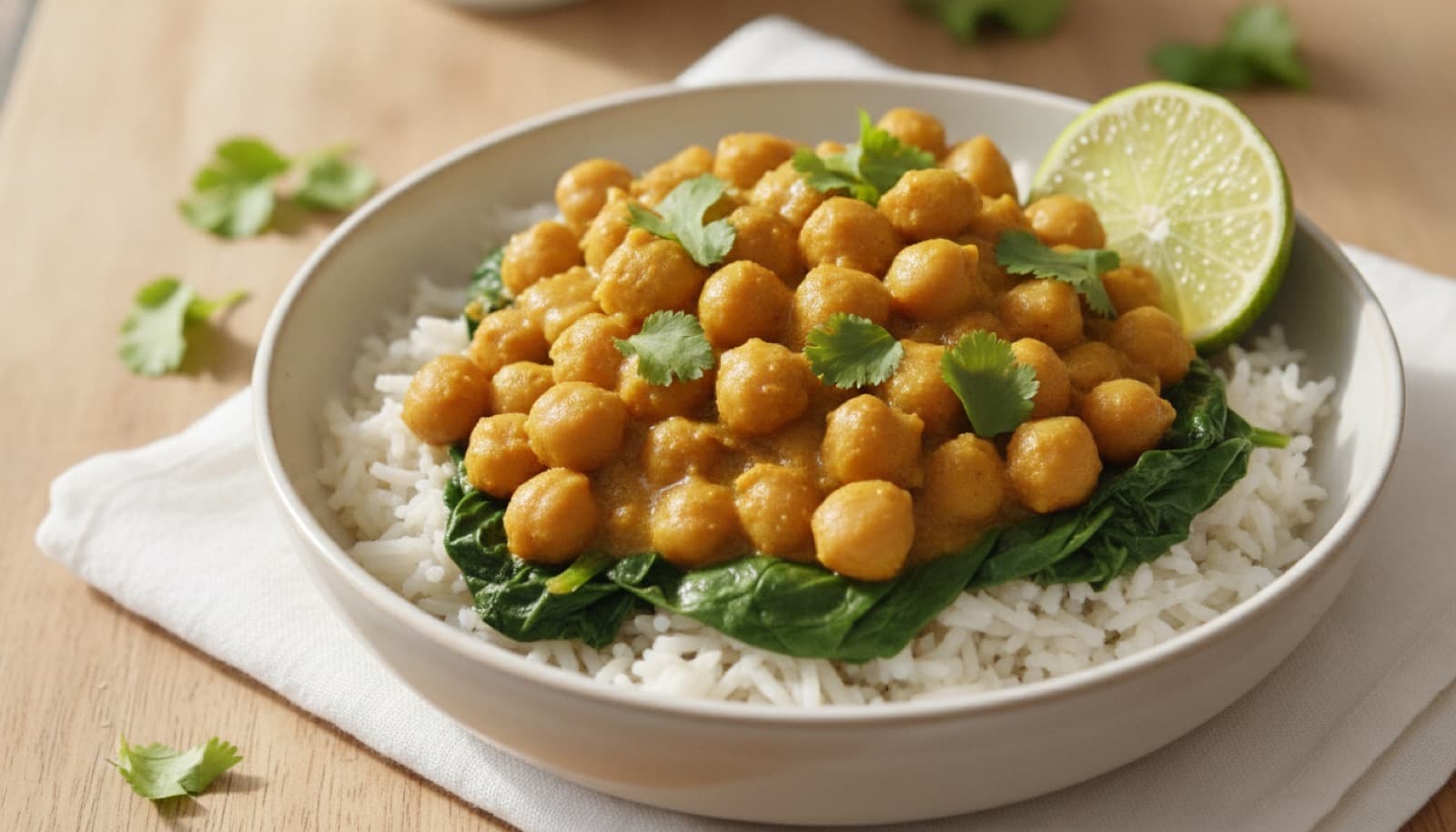
A weeknight chickpea curry built on a bloomed spice base and canned chickpeas, finished with coconut milk and lime. Anti-inflammatory turmeric and ginger, real depth in 35 minutes. 16g plant protein, no specialty ingredients.
Why this works
Every recipe on this site ships with an explanation of the technique decisions, why sear then braise, why the acid goes in at the end, why the fat renders before the aromatics. The method below is those decisions, in order.
Canned chickpeas and full-fat coconut milk
You do not need to soak dried chickpeas for a weeknight curry, and you should not use light coconut milk. Two cans of chickpeas, drained and rinsed, give you the body and 16g of plant protein per bowl with zero overnight planning. Full-fat coconut milk is what makes the sauce taste rich and carries the fat-soluble curcumin in the turmeric; light coconut milk gives you a thin, watery curry that tastes of nothing. Buy a coconut milk whose only ingredients are coconut and water (Aroy-D and Thai Kitchen are reliable), shake the can, and use the whole thing.
Ingredients
Serves 4- 2 tbspcoconut or vegetable oil
- 1onion · diced
- 4 clovesgarlic · grated
- 1 tbspfresh ginger · grated
- 1 tbspcurry powder or garam masala
- 2 tspground turmeric
- 1 tspground cumin
- 1/4 tspblack pepper
- chili flakes · a pinch
- 2 tbsptomato paste
- 1 canfull-fat coconut milk · Aroy-D
- 2 canschickpeas · drained, rinsed
- 2 handfulsspinach or kale
- 1/2lime · juiced at the end
- kosher salt · to taste
- fresh cilantro · optional, torn over
Method
Build the aromatic base: onion, then garlic and ginger
Soften a diced onion in oil over medium heat for 5 minutes until translucent and just starting to color, then add four grated garlic cloves and a tablespoon of grated fresh ginger for the last 30 seconds. Grate, do not slice, the ginger so it disappears into the sauce instead of leaving fibrous bites. This base is the foundation; rushing the onion gives you a curry that tastes raw and sharp.
Bloom the ground spices in the oil before any liquid
Push the aromatics aside, add a glug more oil, and toast a tablespoon of curry powder or garam masala, two teaspoons of ground turmeric, a teaspoon of cumin, and a pinch of chili for 30 to 45 seconds until they smell toasted and fragrant. Ground spices are fat-soluble; blooming them in hot oil is the single step that separates a deep curry from a flat one. It will smell like a spice market when it is ready.
A pinch of black pepper makes the turmeric work harder
Crack a generous quarter teaspoon of black pepper in with the spices. Piperine increases curcumin absorption roughly twentyfold (Shoba 1998), which is why turmeric and pepper turn up together across so many cuisines. It also just tastes good in the spice base. Bloom it with the turmeric, not at the end.
Toast the tomato paste until it darkens
Stir in two tablespoons of tomato paste and cook it for a full minute until it deepens from bright red to brick and starts to stick. This caramelizes the sugars in the paste and removes the raw, tinny edge. It is a 60-second step that adds a savory depth most quick curries skip, and it builds the fond the coconut milk will deglaze.
Coconut milk and chickpeas in, then simmer to thicken
Pour in a full can of full-fat coconut milk and two drained, rinsed cans of chickpeas, scraping the bottom to lift the spiced fond. Bring to a gentle simmer and cook 12 to 15 minutes uncovered. The sauce reduces and thickens, the chickpeas absorb the spice, and a few of them break down to give the curry body. Do not boil hard or the coconut milk can split.
Wilt greens in at the end for color and fiber
Stir two big handfuls of spinach or chopped kale into the hot curry in the last 2 minutes, just until wilted. Spinach goes in raw and collapses fast; kale wants the full 2 minutes. This adds fiber, color, and a vegetable without changing the cooking time, and keeps the greens bright instead of stewing them gray.
Salt at the end, finish with lime, not before
Coconut milk and canned chickpeas both bring sodium, so salt at the very end after the sauce has reduced, then taste. Off the heat, squeeze in the juice of half a lime. Acid always goes in last because heat dulls it, and that final brightness is what lifts a rich coconut curry from heavy to balanced. Cilantro torn over the top if you are a cilantro person.
Serve over rice, or push the protein higher
A scoop of basmati or brown rice underneath soaks up the sauce and makes it a full meal at 16g plant protein. To push past 30g, stir in cubed paneer or pan-seared tofu, or serve it alongside grilled chicken for non-vegetarians. The curry itself stays vegan and anti-inflammatory; the protein add is what flexes by the eater.
Variations
Substitutions and adaptations land with the photography shoot. The method holds across most reasonable swaps.
Storage
Refrigerator: 3 to 4 days, sealed. Freezer: up to 3 months. Reheat covered to retain moisture.
Frequently asked
- Do I have to use dried chickpeas, or are canned fine?
- Canned chickpeas are not a compromise here, they are the right call for a weeknight curry. Two cans, drained and rinsed, give you 16g of plant protein per bowl and the same texture after a 15-minute simmer that soaked-and-boiled chickpeas would. Dried chickpeas need an overnight soak and an hour-plus of cooking for no meaningful flavor gain in a sauce this assertive. Rinse the canned ones well to cut the sodium and the tinny liquid, and you are set.
- Can I use light coconut milk to cut the calories?
- I would not. Light coconut milk is mostly water and gives you a thin, watery curry that tastes washed out, and the fat in full-fat coconut milk is what carries the fat-soluble curcumin in the turmeric and makes the sauce cling to the chickpeas. If calories are the concern, eat a smaller portion of the full-fat version or stretch the same can across more vegetables rather than buying the light can. At 410 calories per generous serving over rice, it is already a reasonable plate.
- What actually makes this anti-inflammatory?
- The turmeric, ginger, and the fiber-plus-legume base. The evidence for curcumin, the active compound in turmeric, on inflammation markers is reasonable (Hewlings and Kalman 2017), and it absorbs far better alongside the black pepper and the fat in the coconut milk, which is why this recipe includes both. Chickpeas add 11g of fiber per serving, and a higher-fiber, legume-forward pattern is consistently linked with lower inflammation. None of this is a cure; it is a pattern that looks helpful over time, and it happens to taste good.
- How do I get more protein into a chickpea curry?
- As written each bowl is about 16g of plant protein from two cans of chickpeas. To push it higher without breaking the vegetarian tag, stir in cubed paneer or a block of pan-seared firm tofu in the last few minutes, either of which adds 10 to 15g. Serving it over a protein-enriched grain or alongside a dollop of Greek yogurt helps too. For non-vegetarians, grilled chicken on the side is the simplest add; keep it out of the pot so the curry stays vegan for anyone who wants it that way.
- Can I make this ahead, and does it freeze?
- Curry is one of the best make-ahead dishes because the flavors deepen overnight as the spices settle into the sauce, so making it a day early is an upgrade, not a compromise. It keeps 4 to 5 days in the fridge in a glass container and freezes well for 3 months. Add the greens fresh when you reheat rather than freezing them in, since they go slack, and loosen the reheated curry with a splash of water or coconut milk because it thickens as it sits.
- My curry tastes flat. What did I miss?
- Almost always one of three things: you did not bloom the spices in oil, you used light coconut milk, or you skipped the acid at the end. Blooming the ground spices in hot fat for 30 to 45 seconds before any liquid goes in is the step that builds depth, and dumping them into the simmering sauce instead leaves them dusty and raw-tasting. If the base was right, a squeeze of lime and a final pinch of salt off the heat will usually wake the whole pot up.
Related recipes
See all →- Diet-Specific
Magnesium-Rich Foods: Pumpkin Seeds Beat Spinach, and Bread Lost Most of Its
An ounce of pumpkin seeds carries about 156mg of magnesium, which is more than a cup of cooked spinach and roughly five times what a banana delivers. Around half of adults in national survey data take in less than the estimated requirement, and the largest single reason is grain refining, which strips about eighty percent of the magnesium out of wheat before it reaches a loaf.
- Diet-Specific
Potassium-Rich Foods: The Banana Is Not Even in the Top Twenty
A medium banana has 422mg of potassium. A baked potato with the skin on has around 900mg, a cup of white beans about 1,000mg, and a cup of cooked spinach about 840mg. The banana became the symbol because it is portable, not because it is dense. What the number on the plate actually depends on is portion size, whether you cooked it in water, and how much sodium is sitting next to it.
- Diet-Specific
Vegetarian Recipes: Protein, Browning, and Actual Dinners
Vegetarian cooking almost never fails for lack of ideas. It fails on two things: not enough protein on the plate, and not enough browning in the pan. Fix those and a meatless dinner stops reading as the version without the main thing. Where the protein comes from, the four nutrients worth attention, the techniques that make plants taste cooked-for, and a week of dinners.
Get a tested recipe + a nutritional note in your inbox each Sunday.
One recipe a week, photographed on the same Tuesday it tested. Reviewed by an RD. No promotions, no pop-ups, no tracking.
The Clean Chef Starter Kit.
A 14-day anti-inflammatory meal plan PDF, grocery list by section, macros totaled per day, Sunday prep sequence. Free.
By subscribing, you agree to our Privacy Policy. One calm email a week. Unsubscribe anytime.
We're building a shop.
Curated cookware, pantry staples we actually buy, recipe-bundle PDFs. Be the first to know when it opens.
We'll only email you about the shop opening. Unsubscribe in any email. See our Privacy Policy.