- Calories
- 125
- Protein
- 8g
- Fiber
- 1g
- Sat. fat
- 3g
- Sodium
- 220mg
- Added sugar
- 0g
What this recipe does for you.
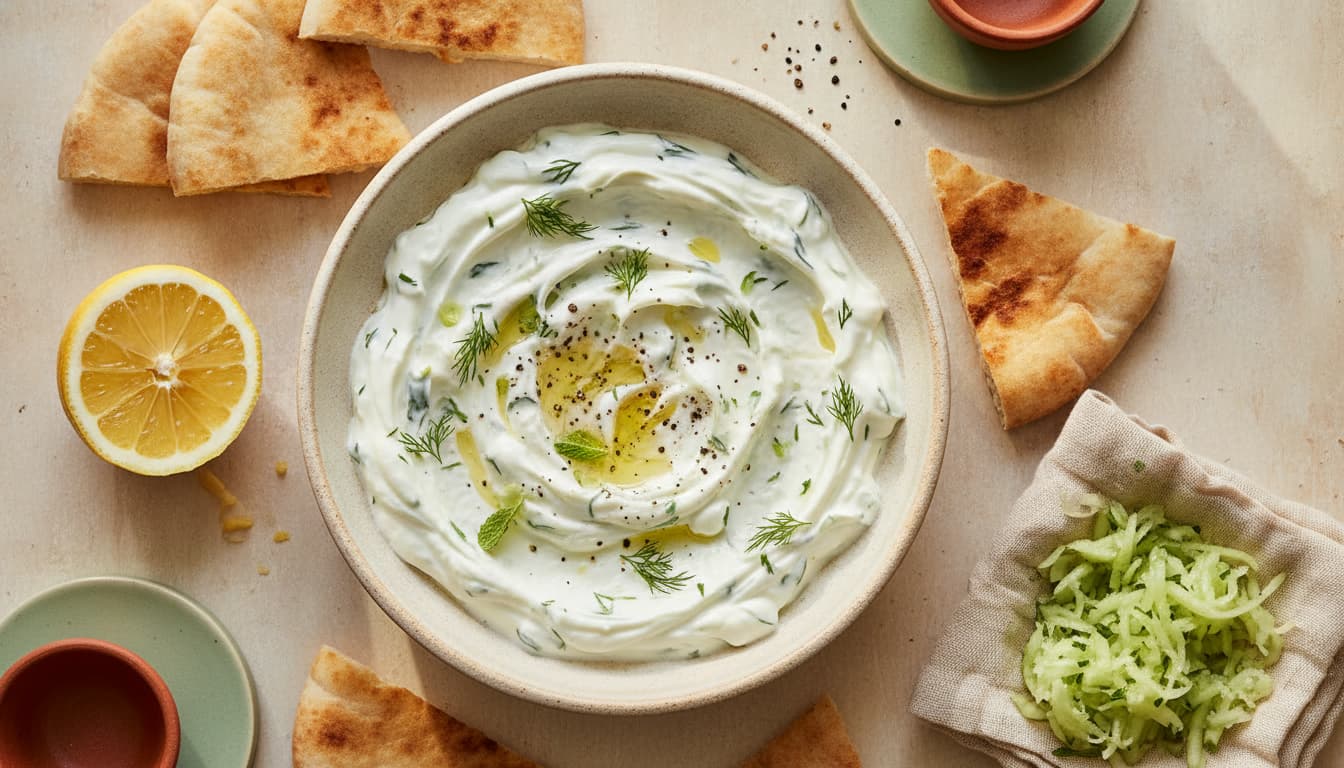
Watery tzatziki is a drainage problem, not a recipe problem. Grate the cucumber, salt it, let it sit thirty minutes, then squeeze out what will genuinely surprise you. Full-fat Greek yogurt, garlic grated to a paste rather than chopped, dill and mint, and acid from both lemon and vinegar. Fifteen minutes of work, forty-five minutes start to table.
Why this works
Every recipe on this site ships with an explanation of the technique decisions, why sear then braise, why the acid goes in at the end, why the fat renders before the aromatics. The method below is those decisions, in order.
Ingredients
Serves 6- 2 cupsfull-fat plain Greek yogurt · strained, not regular yogurt
- 1 largeEnglish cucumber · about 12 oz, coarsely grated
- 3/4 tspkosher salt · for the cucumber, most of it drains away
- 1/2 tspkosher salt · for the yogurt, to taste
- 2 clovesgarlic · grated on a microplane to a paste
- 2 tbspfresh dill · finely chopped
- 1 tbspfresh mint · finely chopped
- 1 tbsplemon juice
- 2 tspred wine vinegar
- 2 tbspextra-virgin olive oil · one in, one on top
- 1/4 tspblack pepper · cracked
Method
Salt the grated cucumber and walk away for thirty minutes
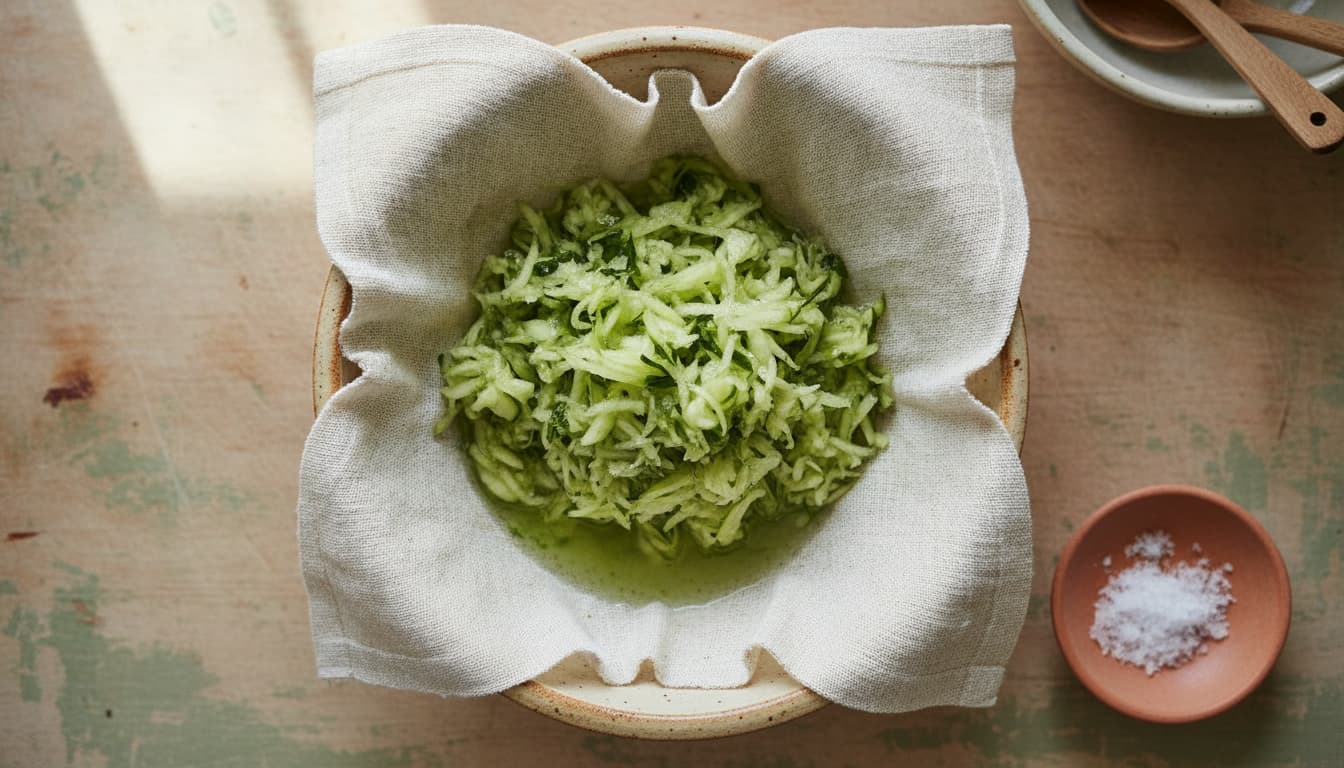
A cucumber is about ninety-six percent water and all of that water is going somewhere. Grate it on the coarse side of a box grater, toss it with three quarters of a teaspoon of salt, and leave it in a colander over a bowl for thirty minutes. You will pour off a surprising amount of liquid, and every millilitre of it is liquid that would otherwise have thinned your tzatziki in the fridge overnight.
Then squeeze it properly, harder than feels reasonable
Draining is not enough. Gather the cucumber in a clean tea towel or a double layer of cheesecloth and wring it out over the sink until nothing more comes. Twelve ounces of cucumber should come down to something that looks like a small handful of damp shreds. This single step is the difference between tzatziki you can stand a spoon in and a sauce that separates by dinner.
Use full-fat Greek yogurt, and do not substitute
Greek yogurt is already strained, which is why it can hold cucumber at all. Regular plain yogurt has too much whey and will thin out no matter how well you drained. Full-fat rather than nonfat matters for the same reason it matters in every sauce, it carries flavour and it does not taste sour and thin. Skyr works. Labneh works and is even thicker. Sour cream is a different dip.
Grate the garlic to a paste, never chop it
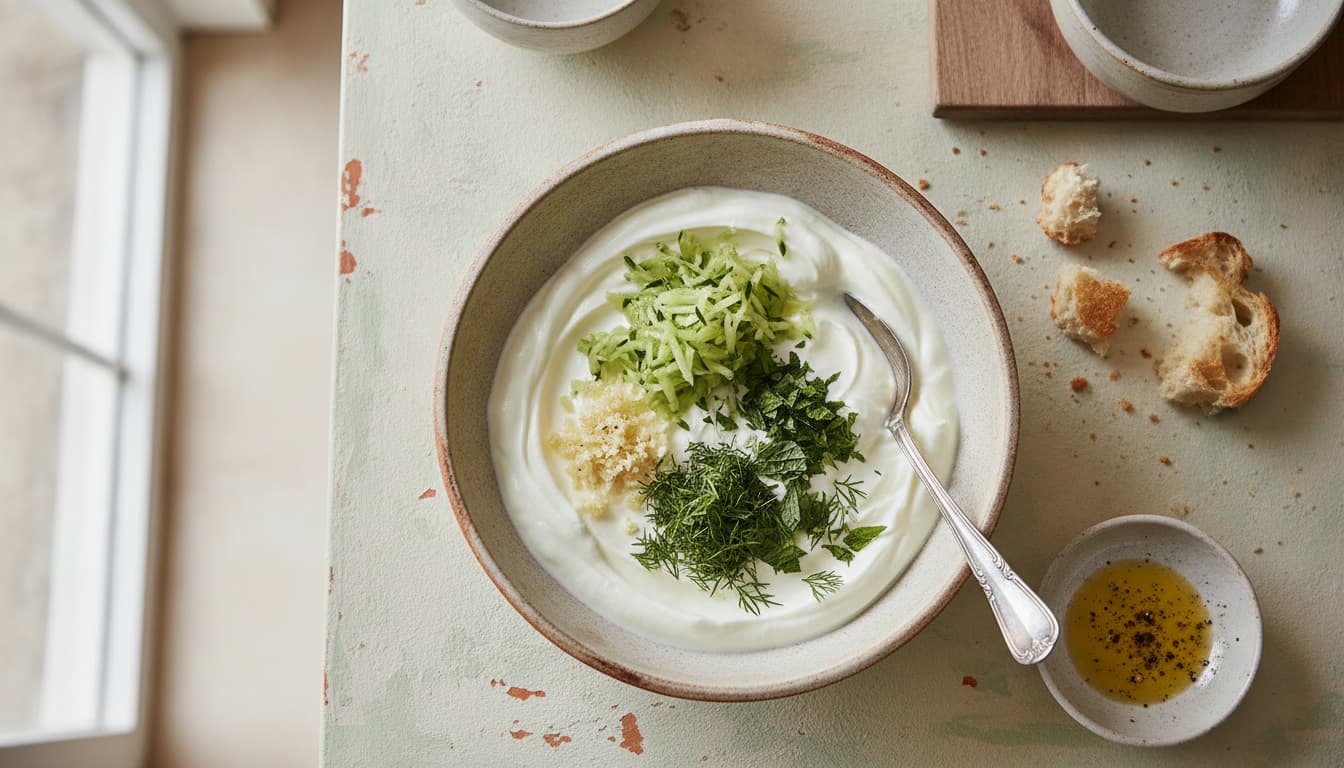
Chopped garlic sits in raw pieces that hit hot in the mouth and unevenly across the bowl. Grated on a microplane, or crushed with the flat of a knife and a pinch of salt until it is a smear, it disperses completely and reads as a background heat instead of an ambush. Two cloves is right for this quantity. Three if the tzatziki is going next to grilled lamb.
Acid from two places, lemon and vinegar
Lemon alone tastes bright but flat, and red wine vinegar alone tastes sharp without the perfume. A tablespoon of lemon plus two teaspoons of vinegar gives you both the lift and the tang, and it is closer to what you get in Greece than the lemon-only version most recipes print. Add both at the end and taste before adjusting, because the yogurt is already slightly acidic.
Dill and mint, both, and chop them finely
Dill is the signature and mint is what makes people ask what is in it. Two to one in favour of dill. Chop both very finely with a sharp knife rather than bruising them with a dull one, and stir them in at the end so they stay green. Dried dill is not a substitute here in any meaningful sense; if you only have dried, make a different sauce.
Let it sit an hour before you serve it, then taste again
The garlic needs time to move through the yogurt and the salt needs time to find its level. Straight after mixing it tastes disjointed, garlic on top, salt underneath. An hour in the fridge and it comes together. Taste and correct the salt then, not before, because cold dulls perceived salt and a bowl seasoned to taste at room temperature will read as bland from the fridge.
How to use it, and how long it keeps
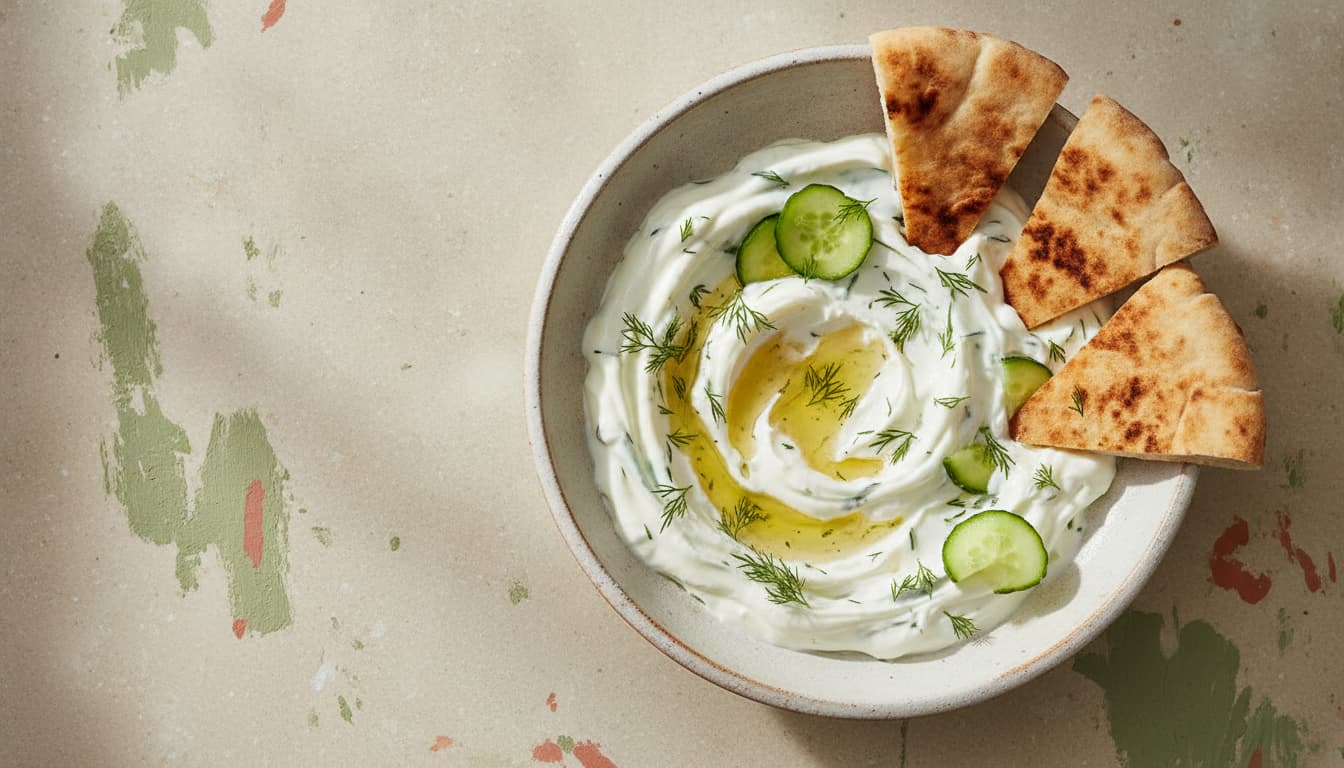
Three days in the fridge in a sealed container, and it will be at its best on day one and day two. Any liquid that pools on top can be poured off or stirred back in. Serve it with grilled chicken or lamb, on a Greek chicken bowl, alongside roasted vegetables, with warm pita, or thinned with a spoon of water into a salad dressing. Finish the bowl with the second tablespoon of olive oil and a crack of pepper.
In pictures
Variations
Substitutions and adaptations land with the photography shoot. The method holds across most reasonable swaps.
Storage
Refrigerator: 3 to 4 days, sealed. Freezer: up to 3 months. Reheat covered to retain moisture.
Frequently asked
- Why is my tzatziki watery?
- The cucumber was not drained and squeezed hard enough, or you used regular yogurt instead of strained Greek yogurt. Those two causes account for nearly every watery batch. Salt the grated cucumber, leave it thirty minutes, then wring it out in a tea towel until it stops giving liquid. If a finished batch has already gone thin, strain the whole thing through cheesecloth for an hour and it will mostly recover.
- Do I have to peel the cucumber?
- Not if it is an English or Persian cucumber, where the skin is thin and adds a little colour and fiber. Standard field cucumbers have thicker, waxier, sometimes bitter skin, so peel those. Always remove the seeds from a large watery cucumber by halving it and running a spoon down the centre, since the seed core is the wettest part and contributes almost nothing.
- How long does homemade tzatziki last?
- Three days refrigerated in a sealed container, with day one and day two being noticeably better than day three. The garlic gets stronger as it sits and the herbs fade, so by day three it is more pungent and less fresh. It does not freeze, because the yogurt splits on thawing and the cucumber turns to mush. Make it in the quantity you will eat.
- Is tzatziki healthy?
- It is one of the better things you can put next to grilled food. A third of a cup carries around eight grams of protein for about 125 calories, no added sugar, and a modest amount of sodium, most of which drains off with the cucumber liquid. Compared with a mayonnaise or sour-cream based dip it delivers roughly triple the protein for less than half the fat. The olive oil is not the problem.
- Can I make it dairy-free?
- A thick unsweetened coconut yogurt or a cashew-based yogurt both work, though you should strain either through cheesecloth for an hour first because neither is as thick as Greek yogurt out of the tub. Add an extra half teaspoon of vinegar to compensate for the missing dairy tang. Protein drops to around two grams a serving, so treat it as a sauce rather than a protein contribution.
Related recipes
See all →Gazpacho: An Emulsion, Not a Cold Tomato Soup
The Andalusian version is thick, orange-pink and creamy without any dairy in it, and the two things that get it there are stale bread and olive oil poured in slowly at the end. Watery red gazpacho is a blender-order problem. It needs genuinely ripe tomatoes, sherry vinegar rather than any other kind, and four hours in the fridge, which the time on this page includes.
270m4g ProteinTabbouleh: A Parsley Salad With Bulgur In It, Not the Reverse
Almost every tabbouleh sold outside the Levant has the ratio backwards: a bowl of wet bulgur with parsley stirred through. The Lebanese version is three quarters herbs by volume, with fine bulgur used the way you would use breadcrumbs, soaked in tomato juice rather than boiled. Forty-five minutes, no cooking at all, and most of the work is drying parsley and chopping it properly.
45m4g ProteinCarbonara: Four Ingredients, One Temperature, No Cream
Carbonara is not a cream sauce and it is not scrambled eggs. It is an emulsion of egg yolk, rendered pork fat, grated sheep cheese and starchy pasta water, held together by heat that stops just short of setting the egg. Everything that goes wrong goes wrong in the last ninety seconds. Thirty minutes, four ingredients, and a pan that comes off the burner before the eggs arrive.
30m27g Protein
Get a tested recipe + a nutritional note in your inbox each Sunday.
One recipe a week, photographed on the same Tuesday it tested. Reviewed by an RD. No promotions, no pop-ups, no tracking.
The Clean Chef Starter Kit.
A 14-day anti-inflammatory meal plan PDF, grocery list by section, macros totaled per day, Sunday prep sequence. Free.
By subscribing, you agree to our Privacy Policy. One calm email a week. Unsubscribe anytime.
We're building a shop.
Curated cookware, pantry staples we actually buy, recipe-bundle PDFs. Be the first to know when it opens.
We'll only email you about the shop opening. Unsubscribe in any email. See our Privacy Policy.