- Calories
- 310
- Protein
- 18g
- Fiber
- 14g
- Sat. fat
- 4g
- Sodium
- 480mg
- Added sugar
- 2g
What this recipe does for you.
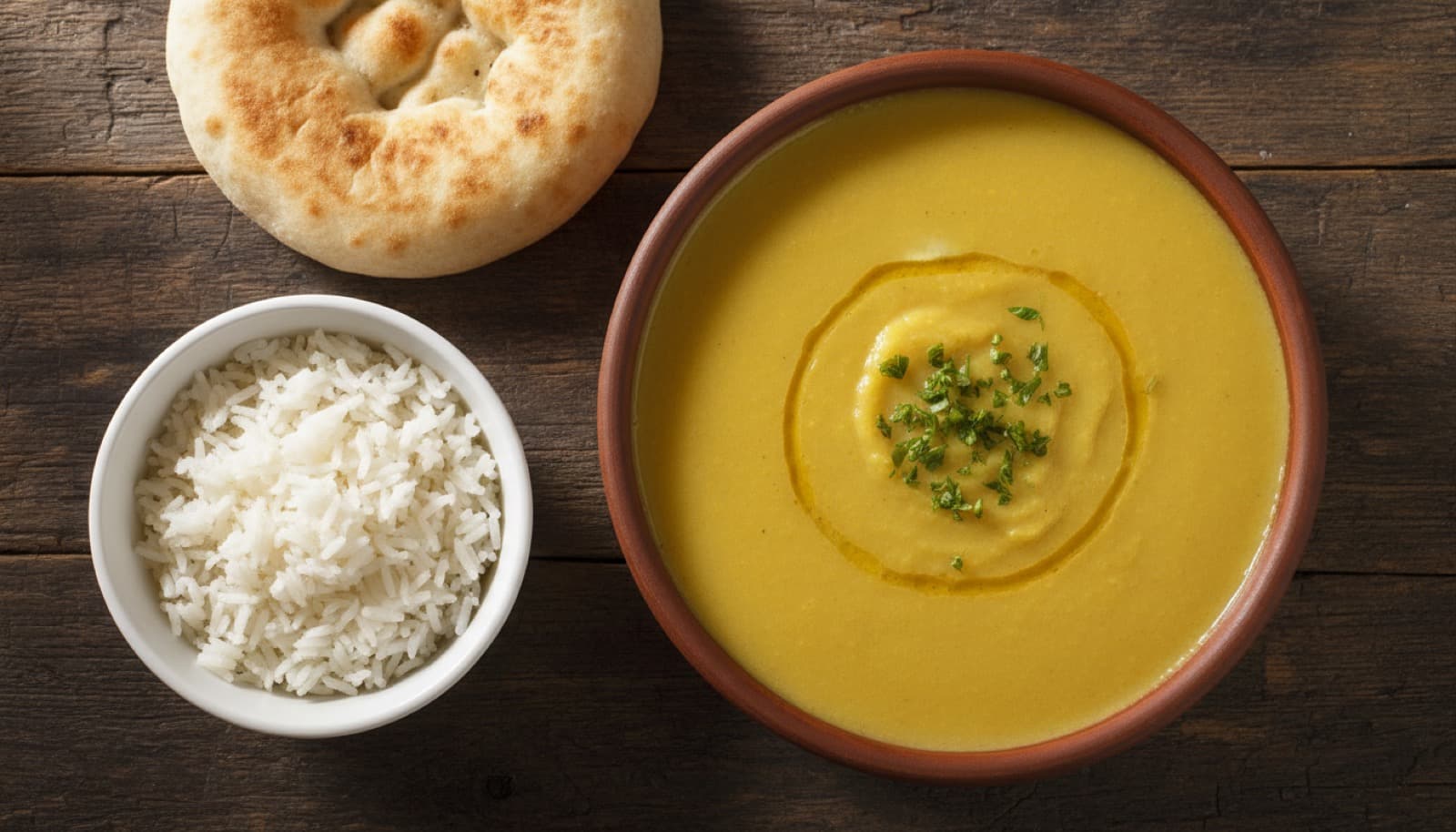
The red lentil dal worth cooking properly: red lentils simmered soft with tomato and turmeric, then finished with a tempered spice oil poured over at the end. Creamy, warming, one pot, 18g protein and 14g fibre per bowl. Ready in 35 minutes, served over rice.
Why this works
Every recipe on this site ships with an explanation of the technique decisions, why sear then braise, why the acid goes in at the end, why the fat renders before the aromatics. The method below is those decisions, in order.
Diaspora Co. Pragati Turmeric
Dal leans on a small number of spices, so their quality shows more than in a busy dish. Fresh, single-origin turmeric like Diaspora Co. Pragati is vivid and warm rather than the flat, sawdusty note of old supermarket turmeric that has sat in the cupboard for two years. Turmeric is the colour and the base warmth of the whole pot, so a tired jar drags everything down. Any turmeric bought recently from a shop with high turnover is the equal alternative; the enemy is age, not brand.
Ingredients
Serves 4- 1 1/2 cupsred lentils · rinsed until water runs clear
- 3 tbspneutral oil · divided
- 1onion · chopped
- 1 tbspfresh ginger · grated
- 4 clovesgarlic · minced, divided
- 1 tspground turmeric
- 1 1/2 tspground cumin
- 1 tspground coriander
- 1tomato · chopped
- 4 cupswater or vegetable stock
- 1/2lemon · juiced
- 1 tspcumin seeds · for the tarka
- 1dried red chili · for the tarka
- 2 tbspfresh coriander · chopped, to finish
- salt · to taste
Method
Rinse the red lentils until the water runs clear
Put the red lentils in a sieve and rinse under cold water, swirling with your hand, until the cloudy starch washes away and the water runs mostly clear. That surface starch is what makes an unrinsed dal turn to gluey paste. Rinsed lentils break down into a creamy but still distinct texture rather than wallpaper paste. It takes thirty seconds and it is the difference between a dal that eats light and one that sits heavy.
Build the base with onion, ginger, and garlic
Soften a chopped onion in a little oil over medium heat until translucent, then add a good amount of grated fresh ginger and minced garlic and cook another minute. This aromatic base is the savoury foundation the lentils sit on. Fresh ginger and garlic, not powder, are what give dal its lift; the powders taste dull and one-note here. Do not let the garlic colour, just release its smell.
Toast the ground spices in the oil before liquid goes in
Stir in ground turmeric, cumin, and a little coriander and let them cook in the oil with the aromatics for thirty seconds until fragrant. Blooming ground spices in fat wakes up their oils and stops the dal tasting raw and dusty. Add the water first and the spices stay muted. You should smell the cumin and turmeric bloom before anything wet hits the pan.
Add tomato, then the lentils and water
Stir in a chopped fresh tomato or a few spoons of tinned chopped tomato and let it break down for a minute, then add the rinsed lentils and enough water or stock to cover them by a couple of centimetres. The tomato brings acidity that balances the earthy lentils and the rich tempered oil to come. Too little liquid and the dal cooks dry and catches; you want it loose, since it thickens as it sits.
Simmer gently and stir so it does not catch
Bring it to a gentle simmer, part-cover, and cook for fifteen to twenty minutes, stirring now and then, until the lentils collapse into a soft, creamy mass. Red lentils have no skin so they break down fast; a hard boil makes them foam and stick to the base. Stir occasionally, scraping the bottom, and add a splash more water if it gets too thick. It is done when it is creamy and the lentils have lost their shape.
Season with salt and lemon only at the end
Salt the dal and add a squeeze of fresh lemon juice once the lentils are fully soft, not before. Salting lentils early can toughen their skins and slow the cooking, and the lemon is a fresh top note that dulls if it simmers. Taste and adjust: it should be savoury, gently spiced, and brightened by the acid. This final seasoning is what makes it taste finished rather than flat.
Make the tarka: sizzle whole spices in hot oil or ghee
In a small pan, heat oil or ghee until shimmering and add cumin seeds, a dried chilli, and a little more garlic, sizzling for under a minute until fragrant and the seeds pop. This tempered oil, the tarka, is the step that turns a plain lentil pot into real dal. The hot fat carries the toasted spice aroma across the whole dish. Watch it closely; the seeds go from toasted to burnt in seconds.
Pour the tarka over and finish with coriander
Pour the sizzling tarka straight over the dal in the pot so it hisses, then stir most of it through and leave a little on top for looks. Finish with a generous handful of chopped fresh coriander. Serve over basmati rice or with warm flatbread to scoop, and a spoon of yogurt on the side if you eat dairy. Eat it hot; the dal keeps thickening as it stands, so loosen leftovers with a splash of water when you reheat.
Variations
Substitutions and adaptations land with the photography shoot. The method holds across most reasonable swaps.
Storage
Refrigerator: 3 to 4 days, sealed. Freezer: up to 3 months. Reheat covered to retain moisture.
Frequently asked
- How much protein and fibre is in red lentil dal?
- About 18g of protein and 14g of fibre per generous bowl as written, before any rice. Red lentils are one of the best plant proteins you can build a cheap weeknight meal around, and they bring a large amount of fibre with almost no fat. That protein and fibre combination is what makes dal so filling for its calorie count. Serve it with rice for a complete amino acid profile, or add a spoon of yogurt if you eat dairy for a little more protein.
- Do I need to soak red lentils first?
- No. Red lentils are split and have no skin, so they cook in fifteen to twenty minutes straight from the packet, no soaking required. That is the whole appeal of using them for dal over other pulses. The only prep they need is a good rinse under cold water to wash off the surface starch, which stops the finished dal turning gluey. Whole lentils and other dried pulses do benefit from soaking, but not these.
- What is the tarka and can I skip it?
- The tarka is a small amount of hot oil or ghee in which you sizzle whole spices, cumin seeds, dried chilli, and garlic, then pour it over the finished dal. It is the single step that lifts dal from a plain lentil pot to something with real depth, because the hot fat carries toasted spice aroma right across the dish. You can technically skip it, but you lose most of what makes dal taste like dal, so it is worth the extra pan.
- Why did my dal turn out gluey or heavy?
- Two usual causes: you did not rinse the lentils, or you boiled them too hard. The surface starch on unrinsed red lentils turns to paste, so always rinse until the water runs clear. And red lentils should simmer gently, not boil furiously, or they foam, stick, and go stodgy. Keep the heat at a lazy simmer, stir now and then, and add a splash of water if it thickens too far. Done right the texture is creamy and light, not glue.
- Can I make red lentil dal ahead or freeze it?
- Yes, and it improves overnight as the spices settle. Cook it fully, cool it, and keep it in the fridge for up to four days or freeze it for up to three months. It thickens considerably as it stands, so loosen it with a good splash of water or stock when you reheat and taste for salt and lemon again. Make the tarka fresh when you serve reheated dal if you can; a spoon of fresh tempered oil brings a batch straight back to life.
- What should I serve with red lentil dal?
- Steamed basmati rice is the classic partner and turns the dal into a complete protein. Warm flatbread, naan, or roti are perfect for scooping. A spoon of thick yogurt or a swirl of coconut milk cools the spice and adds richness, and a fresh tomato and onion salad or a squeeze of extra lemon cuts through the earthiness. For a bigger spread, add a quick vegetable side and some mango chutney or lime pickle.
Related recipes
See all →- High-Protein
Beef Bourguignon: Dry the Meat, Crowd Nothing, Wait a Day
This is a braise that fails at the first step or not at all. Wet beef in a crowded pot steams, and a stew built on steamed beef cannot be rescued later by wine, stock or time. Dry the cubes, brown them in three batches, cook the garnish separately, and give it three hours at 325F. Then, ideally, put it in the fridge overnight, because the second day is a different dish.
240m42g Protein - High-Protein
How to Cook Tofu: Press It, Coat It in Starch, Sauce It Last
Tofu is bland and soggy for two mechanical reasons, and both are fixable. It is packed in water, so the surface cannot brown until that water is gone, and it is a set protein gel with no internal channels, so marinade does not penetrate it no matter how long you wait. Press it, coat it in cornstarch, fry it hard, and sauce it after it is crisp. An hour, most of it pressing.
60m20g Protein - High-Protein
Enchiladas: Fry the Tortillas, Fry the Sauce, Bake Them Briefly
Nearly every bad enchilada is the same enchilada: a raw corn tortilla soaked in canned sauce and baked until the whole tray turns to porridge. Two steps fix it permanently. Pass each tortilla through hot oil for twenty seconds so it waterproofs, and fry the blended chile sauce in fat before it goes anywhere near the pan. Ninety minutes, most of it the sauce, and twenty of it in the oven.
95m34g Protein
Get a tested recipe + a nutritional note in your inbox each Sunday.
One recipe a week, photographed on the same Tuesday it tested. Reviewed by an RD. No promotions, no pop-ups, no tracking.
The Clean Chef Starter Kit.
A 14-day anti-inflammatory meal plan PDF, grocery list by section, macros totaled per day, Sunday prep sequence. Free.
By subscribing, you agree to our Privacy Policy. One calm email a week. Unsubscribe anytime.
We're building a shop.
Curated cookware, pantry staples we actually buy, recipe-bundle PDFs. Be the first to know when it opens.
We'll only email you about the shop opening. Unsubscribe in any email. See our Privacy Policy.