- Calories
- 280
- Protein
- 7g
- Fiber
- 6g
- Sat. fat
- 2g
- Sodium
- 460mg
- Added sugar
- 2g
What this recipe does for you.
A potato soup that tastes rich and silky without a drop of cream: floury potatoes simmered soft in a well-built vegetable base, then part-blended so the starch itself does the thickening. Naturally vegan, gluten-free, one pot, and finished with something crisp on top. The two moves that keep it velvety instead of gluey, and why you blend only half.
Why this works
Every recipe on this site ships with an explanation of the technique decisions, why sear then braise, why the acid goes in at the end, why the fat renders before the aromatics. The method below is those decisions, in order.
Yukon Gold potatoes
Potato soup lives or dies on the potato, and Yukon Golds sit in the sweet spot: waxy enough to hold together while they simmer, but starchy enough to blend into a genuinely creamy body without cream. Pure floury bakers can go gluey when blended, and pure waxy potatoes never thicken. Yukon Golds give you both the creamy blend and the little chunks that keep their shape. Any medium-starch, yellow-fleshed potato does the same job; avoid a straight russet if you can.
Ingredients
Serves 4- 2 lbYukon Gold potatoes · cut in 2cm chunks
- 2 tbspolive oil
- 1onion · chopped
- 1celery stalk · chopped
- 1leek · sliced
- 3garlic cloves · minced
- 1 tspfresh thyme
- 4 cupsvegetable stock
- 1/2 cupunsweetened plant milk
- 1/2lemon · juiced
- 2 tbspchives · chopped, to serve
- kosher salt · to taste
- black pepper · to taste
Method
Build a proper base with onion, celery, and leek
Soften a chopped onion, a stick of celery, and a sliced leek in a little olive oil over medium heat until translucent and sweet, ten minutes or so, without letting them colour. This gentle base is where a potato soup gets its savour; skip it and blend potatoes into stock and you get wallpaper paste, not soup. Take your time and let the vegetables sweat and soften properly. The leek in particular brings a mellow sweetness that makes the soup taste like more than potato.
Bloom garlic and a little thyme in the fat
Stir in minced garlic and a teaspoon of fresh or dried thyme and cook for another minute until fragrant. Cooking the garlic briefly in the fat before any liquid goes in rounds off its raw edge and lets the thyme release its oils. These two carry most of the aromatic lift in a soup that is otherwise deliberately simple. Do not let the garlic brown or it turns bitter; you are just waking it up.
Cut the potatoes evenly so they cook at the same rate
Peel the Yukon Golds if you like a smoother soup, or leave the skins on for more fibre and rustic texture, and cut them into even two-centimetre chunks. Even pieces are the difference between potatoes that are all cooked through at once and a pot where some are collapsing while others stay hard. Uniform chunks also blend cleanly later. This is dull knife work but it is the quiet key to a soup with consistent texture.
Add the potatoes and just enough stock to cover
Tip in the potato chunks and pour in vegetable stock to barely cover them, no more. The instinct is to drown them, but too much liquid gives you thin, watery soup that no amount of blending will save, because the potatoes are what thicken it. You can always loosen a thick soup at the end with a splash more stock; you cannot easily rescue a watery one. Keep the liquid mean and let the starch do the work.
Simmer until the potatoes are truly soft
Bring it to a gentle simmer, part-cover, and cook for fifteen to twenty minutes until a potato chunk crushes with no resistance against the side of the pot. Undercooked potato blends grainy and never goes silky, so give it the full time. A lazy simmer, not a hard boil, stops the pot from catching and keeps the texture even. When the potatoes surrender completely to a spoon, you are ready to blend.
Blend only half, and blend it gently
Blend about half the soup, either by scooping some into a jug blender or with a stick blender pulsed in one part of the pot, then stir it back through. Blending half gives you a creamy, thick body with tender chunks still in it, which eats far better than a uniform puree. Just as important, blend gently and only briefly: over-working cooked potato whips out its starch and turns the soup gluey and gummy. A few short pulses is all it needs.
Finish for creaminess without cream
Stir in a splash of unsweetened plant milk or a spoon of coconut milk for extra silkiness, then season hard with salt and a good grind of pepper, tasting as you go. The blended starch already makes it creamy, so the plant milk is a small lift rather than the whole thickener. Potato soup needs more salt than you expect to stop it tasting flat and floury, so season boldly and taste until it comes alive. A squeeze of lemon at the end brightens the whole pot.
Serve with something crisp on top
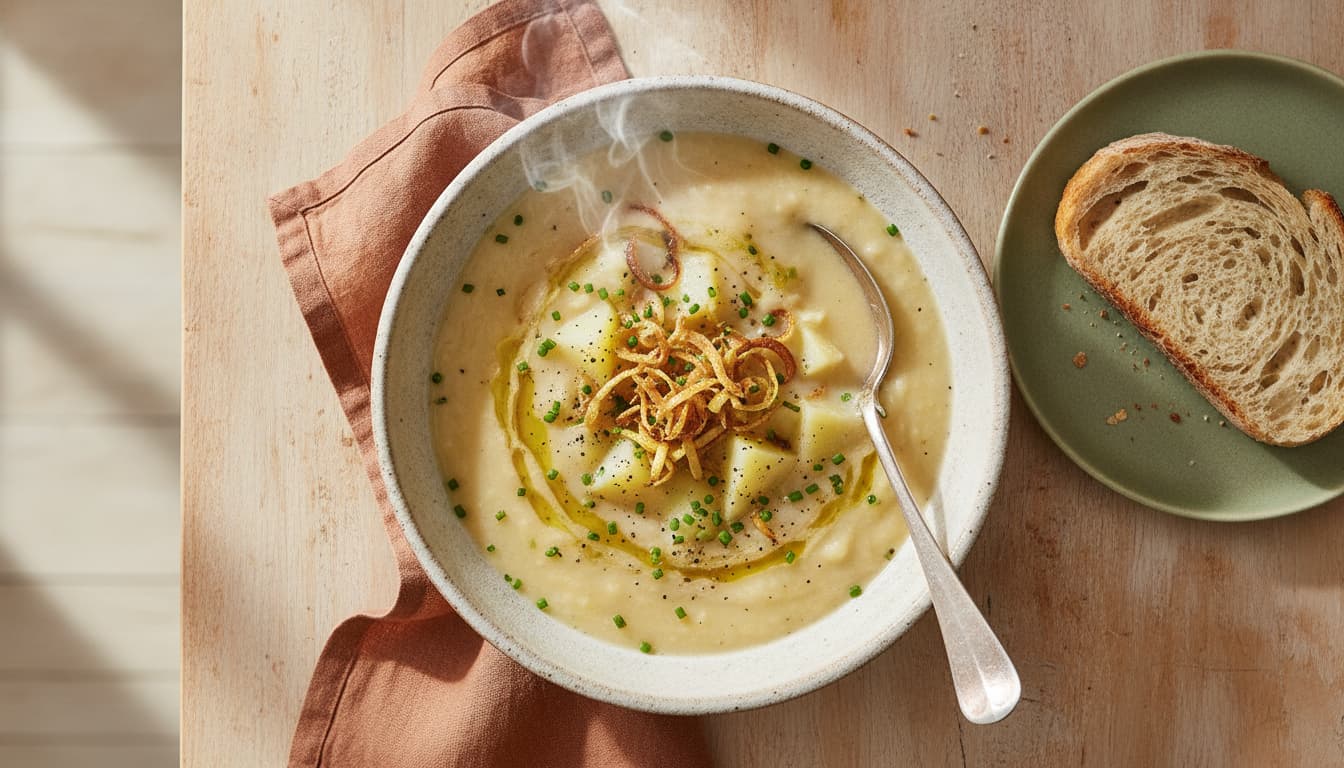
Ladle it out and finish with a contrast in texture: crisp roasted chickpeas, toasted seeds, fried leek, or a scatter of chives and a thread of good olive oil. A smooth soup begs for something crunchy to eat against, or it reads as one-note. That topping is what turns a bowl of blended potato into a proper dish. Serve it hot with bread, and loosen any leftovers with stock when you reheat, since it thickens considerably as it stands.
Variations
Substitutions and adaptations land with the photography shoot. The method holds across most reasonable swaps.
Storage
Refrigerator: 3 to 4 days, sealed. Freezer: up to 3 months. Reheat covered to retain moisture.
Frequently asked
- How do you make potato soup creamy without cream?
- You let the potato do it. Simmer floury or medium-starch potatoes soft in just enough liquid to cover, then blend about half the pot and stir it back in. The released starch thickens the soup into a genuinely creamy body with no dairy at all. A small splash of plant milk or coconut milk at the end adds a little extra silk, but the creaminess is mostly the blended potato itself, which is why the type of potato and blending only half both matter.
- Why did my potato soup turn out gluey?
- You over-blended it. Cooked potato is full of starch, and whipping it hard in a blender or working it too long with a stick blender releases that starch into a stretchy, gummy paste. Blend only half the soup, do it in short pulses, and stop the moment it is creamy. Using a straight floury baker like a russet makes this worse; a medium-starch potato like Yukon Gold is far more forgiving and blends silky rather than gluey.
- Which potatoes are best for potato soup?
- Medium-starch, yellow-fleshed potatoes like Yukon Gold are ideal because they blend into a creamy body while the unblended chunks still hold their shape. Very waxy potatoes never thicken the soup properly, and very floury bakers can turn gluey when blended and fall apart into mush. If Yukon Gold is not available, any all-rounder or general-purpose potato works. The one to avoid on its own is a pure baking russet.
- Can I make potato soup ahead or freeze it?
- It keeps beautifully in the fridge for up to four days and the flavour deepens overnight. It thickens a lot as it stands, so loosen it with stock or water when you reheat and check the seasoning again. Freezing is fine for a fully blended smooth version, but a chunky one can turn slightly grainy on thawing, as potato texture changes in the freezer. If you plan to freeze it, blend the whole pot smooth and it comes back better.
- How do I add more protein to potato soup?
- Potato soup is naturally low in protein, so build it up on top or stir it in. A spoon of white beans or a handful blended into the soup adds protein and extra creaminess at once. Crisp roasted chickpeas as the crunchy topping do the same. If you are not keeping it vegan, a spoon of Greek yogurt swirled in at the end or some crumbled bacon on top both raise the protein and the savour considerably.
- What can I serve with potato soup?
- It wants contrast in texture and something to mop with. Crusty bread or a toasted cheese sandwich is the classic partner, and a sharp green salad cuts the richness. For the bowl itself, crisp toppings earn their place: roasted chickpeas, fried leeks, toasted seeds, or chives with good olive oil. A little acid alongside, a pickle or a squeeze of lemon, keeps a smooth, starchy soup from feeling heavy.
Related recipes
See all →- Diet-Specific
Magnesium-Rich Foods: Pumpkin Seeds Beat Spinach, and Bread Lost Most of Its
An ounce of pumpkin seeds carries about 156mg of magnesium, which is more than a cup of cooked spinach and roughly five times what a banana delivers. Around half of adults in national survey data take in less than the estimated requirement, and the largest single reason is grain refining, which strips about eighty percent of the magnesium out of wheat before it reaches a loaf.
- Diet-Specific
Potassium-Rich Foods: The Banana Is Not Even in the Top Twenty
A medium banana has 422mg of potassium. A baked potato with the skin on has around 900mg, a cup of white beans about 1,000mg, and a cup of cooked spinach about 840mg. The banana became the symbol because it is portable, not because it is dense. What the number on the plate actually depends on is portion size, whether you cooked it in water, and how much sodium is sitting next to it.
- Diet-Specific
Vegetarian Recipes: Protein, Browning, and Actual Dinners
Vegetarian cooking almost never fails for lack of ideas. It fails on two things: not enough protein on the plate, and not enough browning in the pan. Fix those and a meatless dinner stops reading as the version without the main thing. Where the protein comes from, the four nutrients worth attention, the techniques that make plants taste cooked-for, and a week of dinners.
Get a tested recipe + a nutritional note in your inbox each Sunday.
One recipe a week, photographed on the same Tuesday it tested. Reviewed by an RD. No promotions, no pop-ups, no tracking.
The Clean Chef Starter Kit.
A 14-day anti-inflammatory meal plan PDF, grocery list by section, macros totaled per day, Sunday prep sequence. Free.
By subscribing, you agree to our Privacy Policy. One calm email a week. Unsubscribe anytime.
We're building a shop.
Curated cookware, pantry staples we actually buy, recipe-bundle PDFs. Be the first to know when it opens.
We'll only email you about the shop opening. Unsubscribe in any email. See our Privacy Policy.