- Calories
- 300
- Protein
- 11g
- Fiber
- 6g
- Sat. fat
- 3g
- Sodium
- 150mg
- Added sugar
- 0g
What this recipe does for you.
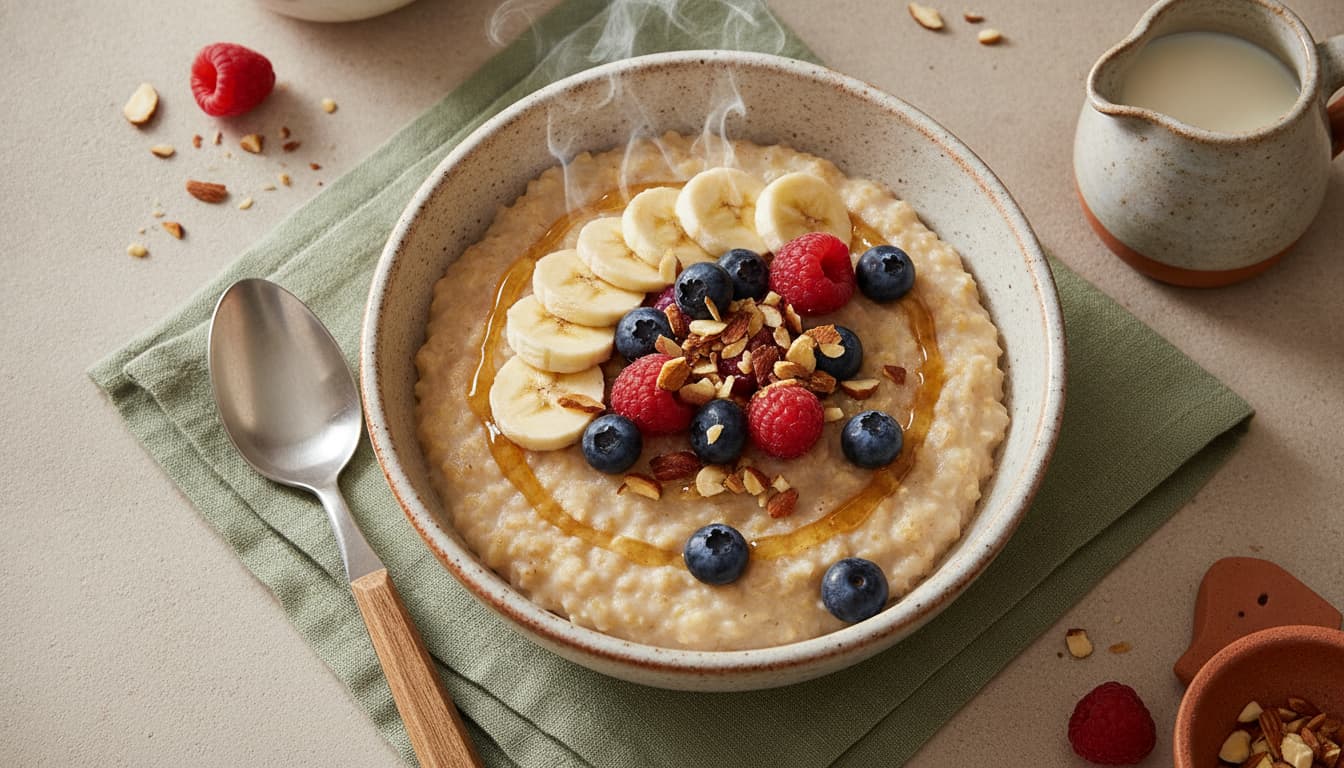
Warm, creamy stovetop porridge that stays silky instead of turning to glue: the oats start in cold liquid with a pinch of salt, get stirred over gentle heat, and are pulled just before they look done because they keep thickening off the heat. A mashed banana sweetens it with no added sugar. Naturally vegetarian and high in fiber, ready in five minutes. The right oats-to-liquid ratio and the one step that keeps porridge from going stodgy.
Why this works
Every recipe on this site ships with an explanation of the technique decisions, why sear then braise, why the acid goes in at the end, why the fat renders before the aromatics. The method below is those decisions, in order.
Ingredients
Serves 2- 1 cuprolled oats · certified gluten-free if needed
- 2 cupsmilk of choice · dairy, oat or almond, or half milk and half water
- 1 pinchsalt
- 1/2 tspground cinnamon
- 1 tbspground flaxseed · optional, for fiber and body
- 1 smallripe banana · mashed, for natural sweetness
- toppings · berries, nut butter, chopped nuts or a drizzle of honey
Method
The ratio is one part oats to two parts liquid
One cup of rolled oats to two cups of liquid feeds two people and lands creamy, not soupy or stiff. If you like it looser, go two-and-a-quarter; for a thick, spoon-stands-up bowl, drop to one-and-three-quarters. Measure it the first time and you will never need to again.
A pinch of salt is not optional
Salt is what separates porridge that tastes like breakfast from porridge that tastes like wet cardboard. Add a real pinch at the start, with the oats, so it cooks in. Even a sweet bowl needs it; without salt the oats read flat no matter how many toppings you pile on.
Use rolled oats, not instant, not steel-cut
Rolled (old-fashioned) oats give you creamy in about five minutes. Instant oats turn to paste and taste of nothing. Steel-cut oats are lovely but need 25 to 30 minutes and more liquid, so they are a different recipe. If gluten is a concern, buy oats labeled certified gluten-free, since ordinary oats are cross-contaminated with wheat.
Start in cold liquid and stir over gentle heat
Put the oats, liquid and salt in the pan together while it is still cold, then bring it up over medium heat, stirring often. Starting cold lets the starch release slowly and evenly, which is what makes it creamy. A screaming-hot pan scorches the bottom and leaves the middle raw.
Mash in half a banana for sweetness with no added sugar
Stir a mashed ripe banana in during the last minute and it melts into the porridge, sweetening the whole bowl naturally and adding body. This is how you get a sweet breakfast without reaching for sugar or syrup. Grated apple or a handful of raisins does the same job.
Pull it just before it looks done
Porridge keeps cooking and thickening in its own heat after you take it off the stove. Stop while it still looks slightly looser than you want, because 60 seconds later it will be exactly right. Cook it until it looks perfect in the pan and it will set to glue in the bowl.
Loosen with a splash of cold milk at the end
Right before serving, stir in a splash of cold milk. It brings the temperature down to eatable, thins it back to silky, and adds a fresh dairy note over the cooked oats. This is the trick that makes cafe porridge taste better than the pot you make at home in a rush.
Add texture with your toppings, not more sweetness
The banana already sweetened it, so use toppings for contrast: fresh berries for tartness, chopped toasted nuts or a spoon of nut butter for crunch and protein, a few seeds for bite. A light drizzle of honey is fine, but taste first; a good bowl rarely needs it.
Variations
Substitutions and adaptations land with the photography shoot. The method holds across most reasonable swaps.
Storage
Refrigerator: 3 to 4 days, sealed. Freezer: up to 3 months. Reheat covered to retain moisture.
Frequently asked
- What is the difference between porridge and oatmeal?
- They are essentially the same thing. Porridge is the older, broader word for any grain cooked in liquid until soft, and in the UK and much of Europe it usually means warm cooked oats. Oatmeal is the common American name for the oat version. This recipe is warm, cooked-on-the-stove oat porridge, which is different from cold overnight oats.
- Should I make porridge with water or milk?
- Milk, or a mix of milk and water, gives you the creamiest result and a little extra protein. All water works and is lighter, but you will want a slightly bigger pinch of salt and something rich on top, like nut butter, to make up for it. Oat and almond milk both make an excellent dairy-free bowl.
- How is this different from overnight oats?
- Overnight oats are soaked cold in the fridge and eaten cold or at room temperature, so they stay chewy. This is warm porridge, cooked on the stove, which makes the oats soft and creamy. If you want a hot breakfast in five minutes, cook it; if you want to grab it from the fridge, make overnight oats instead.
- How do I make porridge higher in protein or vegan?
- For more protein, cook it in milk, stir in a scoop of your usual protein powder or a spoon of Greek yogurt off the heat, and top with nuts or nut butter. To keep it vegan, use oat or almond milk and swap any honey for maple syrup or lean on the mashed banana for sweetness.
Related recipes
See all →- Meal Types
Fried Rice: Cold Rice, Hot Pan, and Soy Down the Side
Fried rice is a moisture-management problem wearing a stir-fry costume. Freshly cooked rice is saturated and its starch is still gelatinised, so it clumps and steams. Rice that has spent a night uncovered in the fridge has lost surface water and retrograded, and it separates into individual grains in a hot pan. Twenty-five minutes of cooking, and one decision made the day before.
25m22g Protein - Meal Types
Apple Crisp: Two Varieties, Cold Butter, Forty-Five Minutes
A watery apple crisp is not a topping problem. It is an apple problem and a time problem. One variety of apple gives you either mush or raw wedges, and thirty minutes is long enough to brown a topping but not long enough to cook fruit through and drive off its water. Two varieties, a spoon of cornstarch, coarse oat topping made with cold butter, and forty-five minutes at 375F. Seventy-five minutes total, and it wants twenty of them to rest.
75m3g Protein - Meal Types
Coleslaw: Salt the Cabbage, Squeeze It, Then Dress It
Coleslaw goes watery for one reason. Cabbage is ninety-two percent water, and if you dress it raw, the salt in the dressing pulls that water out over the next hour and dilutes everything you just made. Salt the shredded cabbage first, let it drain for thirty minutes, squeeze it, and then dress it. Fifty minutes including the wait, and the difference is a slaw that is still crunchy on day three.
50m3g Protein
Get a tested recipe + a nutritional note in your inbox each Sunday.
One recipe a week, photographed on the same Tuesday it tested. Reviewed by an RD. No promotions, no pop-ups, no tracking.
The Clean Chef Starter Kit.
A 14-day anti-inflammatory meal plan PDF, grocery list by section, macros totaled per day, Sunday prep sequence. Free.
By subscribing, you agree to our Privacy Policy. One calm email a week. Unsubscribe anytime.
We're building a shop.
Curated cookware, pantry staples we actually buy, recipe-bundle PDFs. Be the first to know when it opens.
We'll only email you about the shop opening. Unsubscribe in any email. See our Privacy Policy.