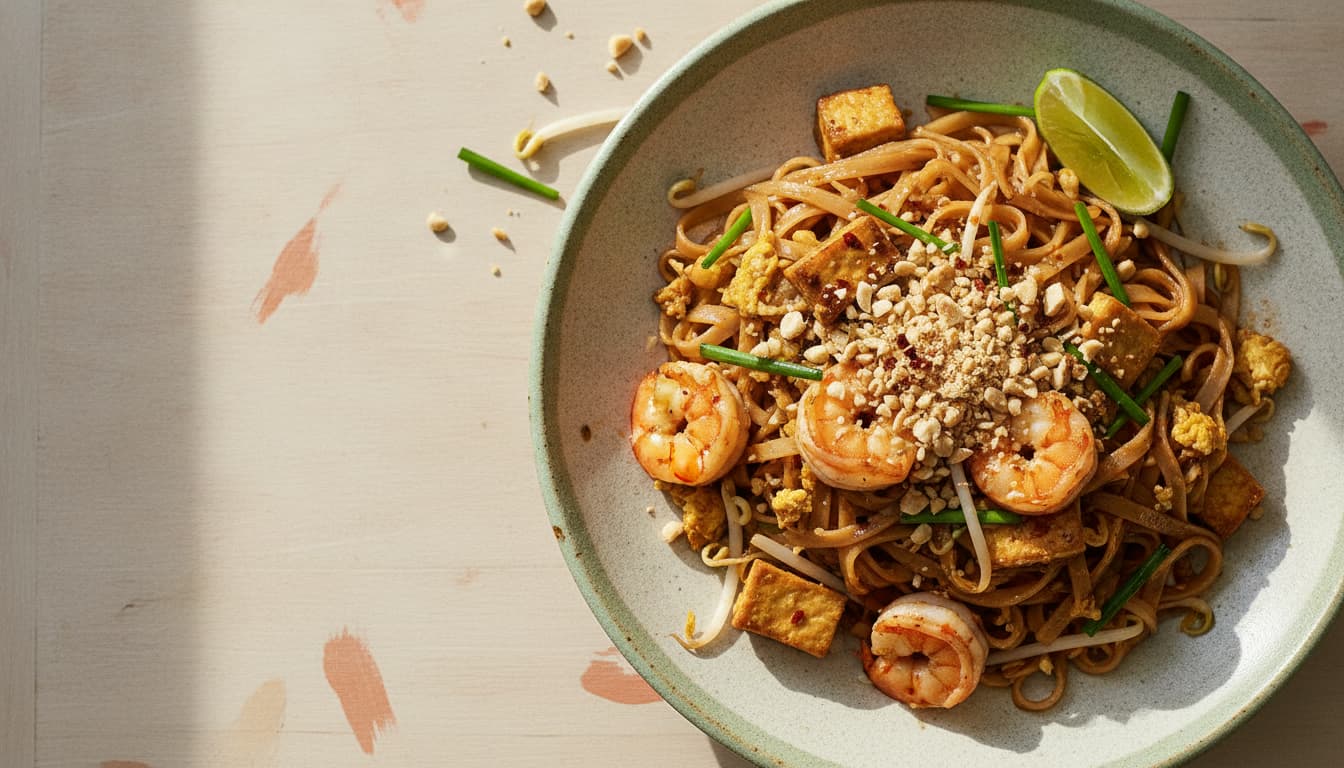
- Calories
- 520
- Protein
- 32g
- Fiber
- 4g
- Sat. fat
- 3g
- Sodium
- 890mg
- Added sugar
- 9g
What this recipe does for you.
Restaurant pad thai in the US is often sweet and orange because it is built on ketchup or sriracha. The real sauce is three ingredients in balance: tamarind for sour, fish sauce for salt, palm sugar for sweet. Soak the noodles instead of boiling them, cook in two batches so the pan stays hot, and it comes together in fifteen minutes at the stove.
Why this works
Every recipe on this site ships with an explanation of the technique decisions, why sear then braise, why the acid goes in at the end, why the fat renders before the aromatics. The method below is those decisions, in order.
Ingredients
Serves 4- 8 ozflat rice noodles · 1/4 inch wide, sold as banh pho or pad thai noodles
- 3 tbsptamarind concentrate · the wet paste, not the syrupy sweetened sauce
- 3 tbspfish sauce
- 3 tbsppalm sugar · chopped, or light brown sugar
- 12 ozlarge shrimp · peeled and deveined, patted dry
- 7 ozextra-firm tofu · pressed 20 minutes and cut into 1/2 inch cubes
- 3 largeeggs · beaten
- 3 tbspneutral oil · peanut or avocado, divided
- 4 clovesgarlic · finely chopped
- 1 smallshallot · thinly sliced
- 2 tbsppreserved sweet radish · optional, chopped, sold as chai poh
- 3 cupsbean sprouts · divided, half cooked and half raw
- 1 cupgarlic chives · cut into 2 inch lengths, or scallion greens
- 1/2 cuproasted peanuts · coarsely crushed
- 2 wholelimes · cut into wedges
- 1 tspchili flakes · to taste, at the table
Method
Mix the sauce before you turn on the burner
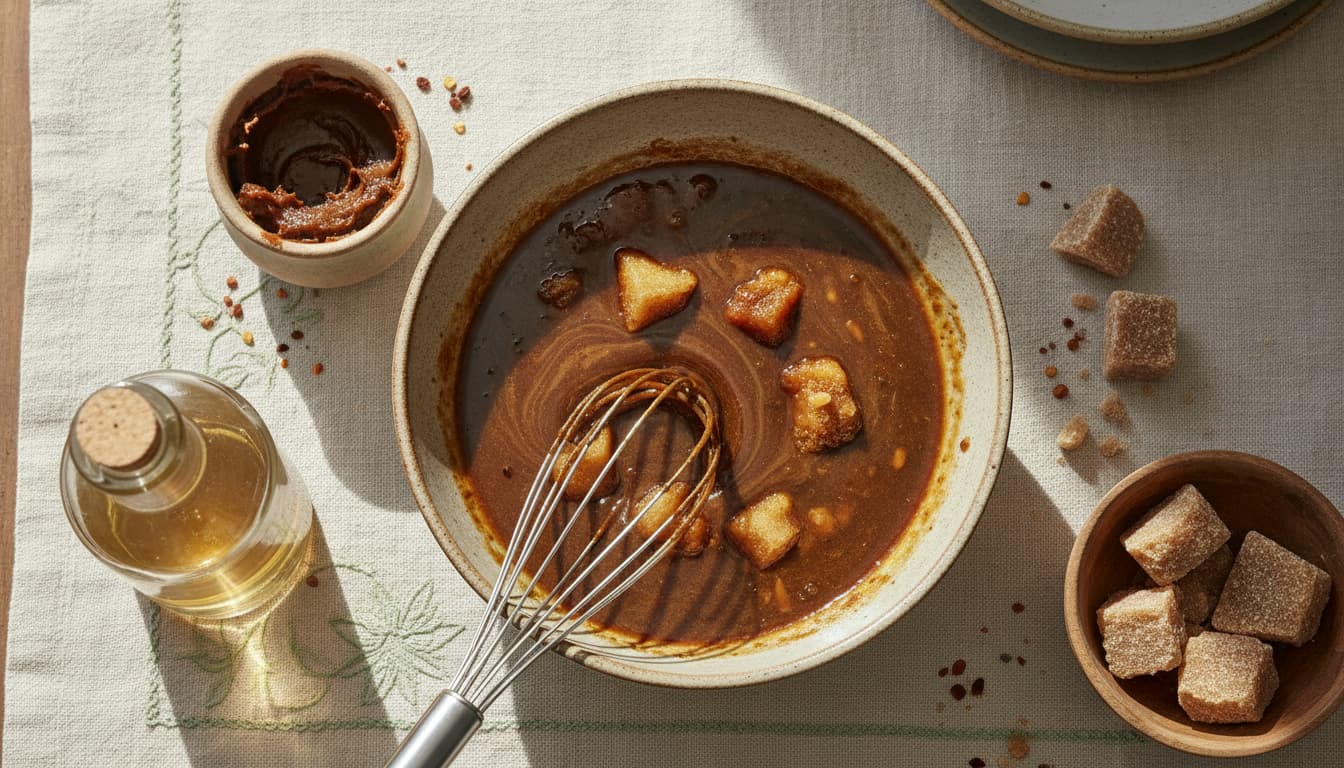
Three tablespoons each of tamarind concentrate, fish sauce and palm sugar, warmed together in a small pan until the sugar dissolves, then tasted. It should be aggressively sour, salty and sweet all at once, in that order of prominence. Adjust before it goes near the noodles, because once the pan is hot you have ninety seconds of attention to spare and none of it for balancing a sauce. Buy tamarind concentrate, not tamarind sauce, which is sweetened and will make the dish taste like the bad restaurant version.
Soak the noodles, never boil them
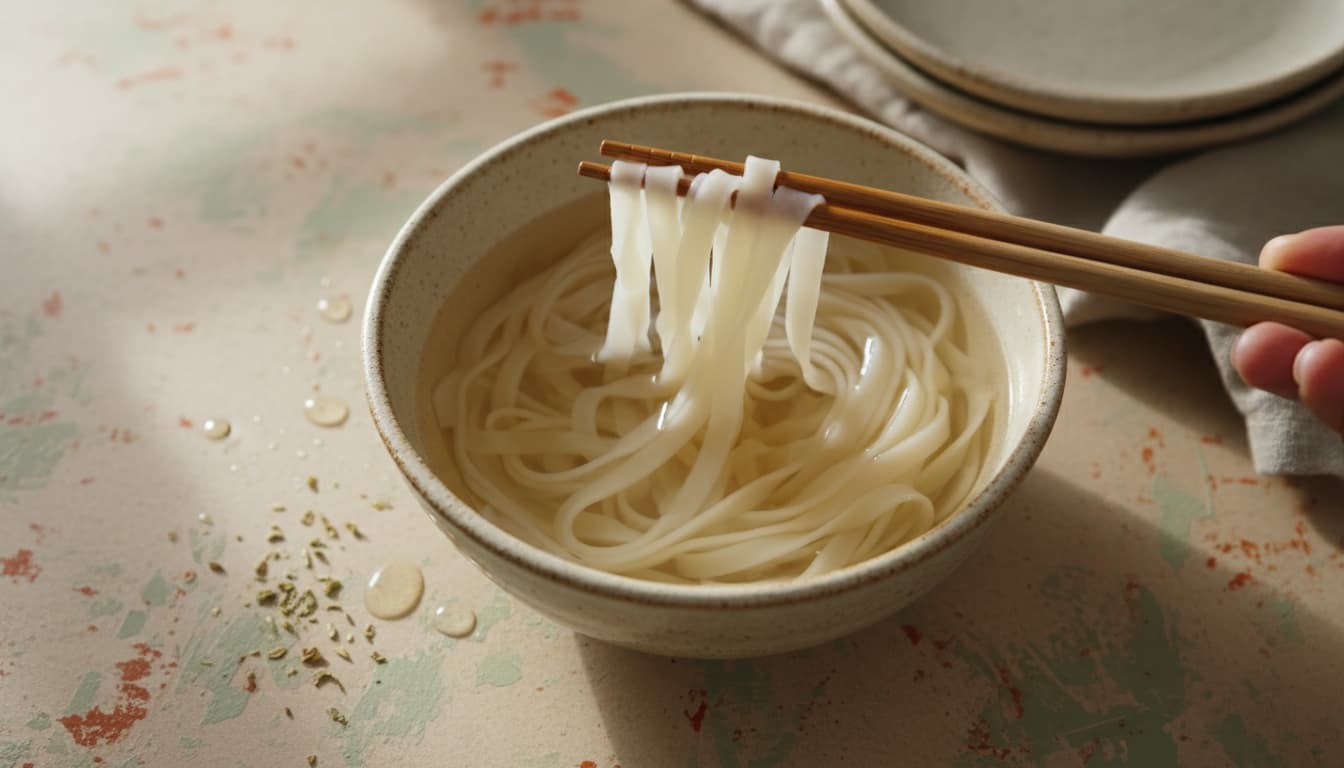
Cover the dry rice noodles in warm tap water for thirty to forty minutes, until they are pliable and bendable but still opaque and firm at the centre with a definite chalky bite. That is the target, and it looks undercooked because it is: the last third of the cooking happens in the pan, in sauce. Boiled noodles arrive at the pan already soft and turn to porridge on contact with liquid. Drain them well and toss with a teaspoon of oil if they are going to sit.
Press and fry the tofu first, then get it out of the way
Press the tofu under a plate with something heavy for twenty minutes, which is happening while the noodles soak, then pat it dry. A tablespoon of oil in a hot pan, cubes in one layer, and leave them until they release and turn deep gold on at least two sides, about six minutes total. Then remove them to a plate. Tofu added later, with the sauce, absorbs liquid and goes soft, and browning it in a pan that already has noodles in it is not possible.
Cook in two batches, and understand why
Pad thai is a fast stir-fry and a home burner cannot keep a full four servings hot enough. Everything in at once drops the temperature, the noodles release starch, the sauce boils rather than reduces, and you get a sticky mass. Two batches with the pan reheating between them takes four extra minutes and is the difference between pad thai and noodle stew. Use your widest, heaviest pan and get it genuinely hot before anything goes in.
Shrimp for ninety seconds, out of the pan while translucent in the middle
Dry shrimp into a hot oiled pan in one layer, forty-five seconds a side, then out. They will finish in the residual heat of the final toss. Shrimp cooked all the way through at this stage and then returned to a hot pan for two minutes is the standard route to rubber. This is the same logic as searing beef in batches: the protein leaves the pan early and comes back at the end.
The egg gets its own patch of pan
Garlic, shallot and the preserved radish in a tablespoon of oil for thirty seconds, then push everything to one side, pour the beaten egg into the empty half, and let it set for twenty seconds before breaking it up. Scrambling the egg into the aromatics from the start coats everything in a thin film of cooked egg and you lose the distinct soft curds. This is a small technique and it is visible in the finished plate.
Sauce onto the noodles, not into the pan
Add the drained noodles, then pour the sauce directly over them rather than into the bare pan where it will scorch on contact. Toss constantly with tongs for two to three minutes. The noodles will drink the sauce and go from chalky white to glossy and translucent, which is the doneness signal. If they are still firm and the pan is dry, add water two tablespoons at a time, not more sauce, or the dish goes over-salted.
Sprouts and chives in the last twenty seconds
Half the bean sprouts and all the garlic chives go in right at the end, tossed just long enough to wilt slightly and no longer. The other half of the sprouts goes on raw at the table, which gives you the temperature and texture contrast that makes the dish. Then the tofu, shrimp and egg fold back in, off the heat. Peanuts, lime and chili flakes are all applied by the person eating it, which is how it is served in Thailand.
Time honesty, and what the 55 minutes covers
The stove time is fifteen minutes. The other forty is the noodle soak and the tofu press, which overlap and require nothing from you except being in the building. If you want this on a weeknight, put the noodles in water and the tofu under a plate when you get home and do something else, then chop while they sit. What you cannot do is compress the soak, and boiling the noodles to save half an hour changes the dish.
In pictures
Variations
Substitutions and adaptations land with the photography shoot. The method holds across most reasonable swaps.
Storage
Refrigerator: 3 to 4 days, sealed. Freezer: up to 3 months. Reheat covered to retain moisture.
Frequently asked
- What is real pad thai sauce made of?
- Tamarind, fish sauce and palm sugar, in roughly equal parts by volume, and nothing else is required. Sour first, then salty, then sweet. The orange, sweet version common in US restaurants usually has ketchup or a sweetened tamarind sauce doing the work, which is why it tastes flat. If your sauce tastes one-dimensional, it is almost always short on tamarind. Buy the concentrate in a jar, taste it before you measure, because brands vary a lot in strength.
- Why are my pad thai noodles gummy?
- They were boiled instead of soaked, or soaked too long, or the pan was overcrowded. Rice noodles for pad thai should come out of their soak bendable but chalky and firm at the core, because they finish in the sauce. The other cause is cooking four servings at once on a home burner: the pan cools, the noodles release starch into a puddle instead of absorbing sauce, and they clump. Two batches fixes it more reliably than any change to the noodles.
- Can I make pad thai without fish sauce?
- You can, but you are trading away most of the depth. The nearest workable substitute is light soy sauce plus a small amount of white miso for the fermented note, at roughly two tablespoons soy and a teaspoon of miso in place of three tablespoons of fish sauce, then check the salt. For a vegan version, use that plus tofu and skip the shrimp and egg, and add a strip of kombu to the sauce as it warms for a savoury note.
- Is pad thai gluten-free?
- The noodles are rice, so the dish is naturally gluten-free, but two ingredients need checking. Most fish sauce is just anchovy and salt, but a few brands add wheat. If you substitute soy sauce anywhere, use tamari. Preserved radish is usually fine but read the jar. Restaurant pad thai frequently is not gluten-free because of shared woks and soy-based sauces added off-recipe, which is a good reason to make it at home if it matters medically.
- What can I use instead of tamarind concentrate?
- Nothing gets you all the way there, but the closest approximation is equal parts lime juice and rice vinegar with a small amount of dark brown sugar or a teaspoon of date paste for the fruity, slightly molasses undertone that tamarind carries. Use it in the same volume and expect a brighter, thinner sourness. Tamarind concentrate is cheap, keeps for a year in the fridge, and is worth ordering rather than working around.
Related recipes
See all →- Meal Types
Fried Rice: Cold Rice, Hot Pan, and Soy Down the Side
Fried rice is a moisture-management problem wearing a stir-fry costume. Freshly cooked rice is saturated and its starch is still gelatinised, so it clumps and steams. Rice that has spent a night uncovered in the fridge has lost surface water and retrograded, and it separates into individual grains in a hot pan. Twenty-five minutes of cooking, and one decision made the day before.
25m22g Protein - Meal Types
Apple Crisp: Two Varieties, Cold Butter, Forty-Five Minutes
A watery apple crisp is not a topping problem. It is an apple problem and a time problem. One variety of apple gives you either mush or raw wedges, and thirty minutes is long enough to brown a topping but not long enough to cook fruit through and drive off its water. Two varieties, a spoon of cornstarch, coarse oat topping made with cold butter, and forty-five minutes at 375F. Seventy-five minutes total, and it wants twenty of them to rest.
75m3g Protein - Meal Types
Coleslaw: Salt the Cabbage, Squeeze It, Then Dress It
Coleslaw goes watery for one reason. Cabbage is ninety-two percent water, and if you dress it raw, the salt in the dressing pulls that water out over the next hour and dilutes everything you just made. Salt the shredded cabbage first, let it drain for thirty minutes, squeeze it, and then dress it. Fifty minutes including the wait, and the difference is a slaw that is still crunchy on day three.
50m3g Protein
Get a tested recipe + a nutritional note in your inbox each Sunday.
One recipe a week, photographed on the same Tuesday it tested. Reviewed by an RD. No promotions, no pop-ups, no tracking.
The Clean Chef Starter Kit.
A 14-day anti-inflammatory meal plan PDF, grocery list by section, macros totaled per day, Sunday prep sequence. Free.
By subscribing, you agree to our Privacy Policy. One calm email a week. Unsubscribe anytime.
We're building a shop.
Curated cookware, pantry staples we actually buy, recipe-bundle PDFs. Be the first to know when it opens.
We'll only email you about the shop opening. Unsubscribe in any email. See our Privacy Policy.