- Calories
- 260
- Protein
- 30g
- Fiber
- 3g
- Sat. fat
- 2g
- Sodium
- 560mg
- Added sugar
- 3g
What this recipe does for you.
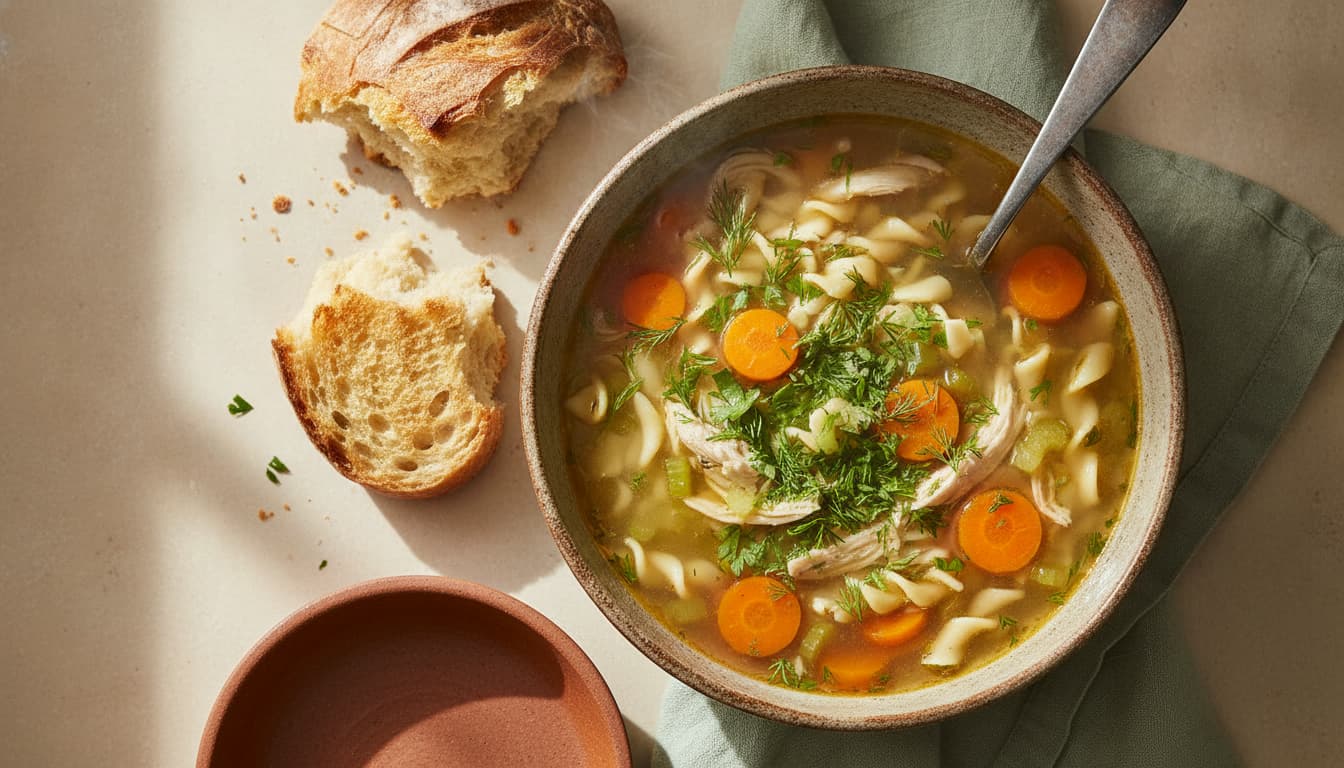
Chicken noodle soup that tastes clear and comforting instead of greasy and flat: chicken poached in a well-seasoned broth with carrot, celery and dill, noodles cooked separately. 30g protein a bowl.
Why this works
Every recipe on this site ships with an explanation of the technique decisions, why sear then braise, why the acid goes in at the end, why the fat renders before the aromatics. The method below is those decisions, in order.
Ingredients
Serves 5- 1.25 lbbone-in chicken thighs · skin removed
- 1 tbspolive oil
- 1onion · diced
- 3carrots · sliced
- 3 stalkscelery · sliced
- 3 clovesgarlic · minced
- 8 cupschicken broth · low-sodium
- 1bay leaf
- 2 cupsegg noodles · cooked separately
- 2 tbspfresh dill · chopped
- 1lemon · juiced, to finish
Method
Use bone-in thighs for a richer broth
Bones and thigh meat give the broth body and a deeper, more chicken-forward flavour than breast simmered in stock. The gelatin from the bones is what makes the soup taste restorative rather than like watered-down stock. Remove the skin so the broth stays clear, not greasy.
Poach the chicken, then shred it
Simmer the thighs gently in the broth until tender, then lift them out, pull the meat off the bones, and return the shredded meat. Poaching keeps the chicken silky, and shredding it means every spoonful has meat rather than a few big chunks.
Sweat the vegetables first for sweetness
Soften the onion, carrot and celery in a little oil before the broth goes in. This draws out their sweetness and builds a flavourful base. A bay leaf in the simmer adds a subtle background note.
Keep the noodles out of the pot
Cook the egg noodles separately and add them to each bowl. Noodles stored in the soup swell, go soft and soak up all your broth, so day-two soup becomes noodle porridge. Kept apart, the soup stays brothy all week.
Skim for a clear, clean broth
Skim off any foam and fat that rise during the simmer. This is what gives you a clear, clean-tasting soup rather than a cloudy, fatty one. A ladle and a steady hand for the first ten minutes is all it takes.
Finish with dill and lemon
Fresh dill and a squeeze of lemon at the end lift the whole bowl from comforting to genuinely bright. The acid wakes up the broth and the dill is the classic chicken-soup herb. Add both off the heat.
Variations
Substitutions and adaptations land with the photography shoot. The method holds across most reasonable swaps.
Storage
Refrigerator: 3 to 4 days, sealed. Freezer: up to 3 months. Reheat covered to retain moisture.
Frequently asked
- Why keep the noodles separate?
- Egg noodles left in the soup keep absorbing broth, so they bloat and go mushy while your soup dries out. Cooking them separately and adding them per bowl keeps both the noodles and the broth right, and leftovers stay good for four or five days.
- Can I use chicken breast?
- You can, but bone-in thighs make a noticeably richer broth and stay juicier. If you use breast, poach it gently and pull it as soon as it is cooked through, and consider using a good broth to make up for the flavour the bones would have given.
- How do I make it gluten-free?
- Swap the egg noodles for a gluten-free pasta, rice, or even spiralised vegetables. Cook whichever you choose separately and add per bowl. Check your broth is gluten-free and the rest of the soup is naturally free of gluten.
- Does chicken soup actually help a cold?
- There is modest evidence that hot chicken soup can ease congestion and has a mild anti-inflammatory effect, alongside the simple benefits of warm fluids and comfort. It is not a cure, but it is a genuinely nourishing thing to eat when you are run down.
Related recipes
See all →- Meal Types
Fried Rice: Cold Rice, Hot Pan, and Soy Down the Side
Fried rice is a moisture-management problem wearing a stir-fry costume. Freshly cooked rice is saturated and its starch is still gelatinised, so it clumps and steams. Rice that has spent a night uncovered in the fridge has lost surface water and retrograded, and it separates into individual grains in a hot pan. Twenty-five minutes of cooking, and one decision made the day before.
25m22g Protein - Meal Types
Apple Crisp: Two Varieties, Cold Butter, Forty-Five Minutes
A watery apple crisp is not a topping problem. It is an apple problem and a time problem. One variety of apple gives you either mush or raw wedges, and thirty minutes is long enough to brown a topping but not long enough to cook fruit through and drive off its water. Two varieties, a spoon of cornstarch, coarse oat topping made with cold butter, and forty-five minutes at 375F. Seventy-five minutes total, and it wants twenty of them to rest.
75m3g Protein - Meal Types
Coleslaw: Salt the Cabbage, Squeeze It, Then Dress It
Coleslaw goes watery for one reason. Cabbage is ninety-two percent water, and if you dress it raw, the salt in the dressing pulls that water out over the next hour and dilutes everything you just made. Salt the shredded cabbage first, let it drain for thirty minutes, squeeze it, and then dress it. Fifty minutes including the wait, and the difference is a slaw that is still crunchy on day three.
50m3g Protein
Get a tested recipe + a nutritional note in your inbox each Sunday.
One recipe a week, photographed on the same Tuesday it tested. Reviewed by an RD. No promotions, no pop-ups, no tracking.
The Clean Chef Starter Kit.
A 14-day anti-inflammatory meal plan PDF, grocery list by section, macros totaled per day, Sunday prep sequence. Free.
By subscribing, you agree to our Privacy Policy. One calm email a week. Unsubscribe anytime.
We're building a shop.
Curated cookware, pantry staples we actually buy, recipe-bundle PDFs. Be the first to know when it opens.
We'll only email you about the shop opening. Unsubscribe in any email. See our Privacy Policy.