- Calories
- 340
- Protein
- 34g
- Fiber
- 1g
- Sat. fat
- 3g
- Sodium
- 380mg
- Added sugar
- 0g
What this recipe does for you.
Chef-tested baked salmon that stays moist and rose-pink instead of dry and chalky. 22 minutes, 34g protein per serving, gluten-free and dairy-free.
Why this works
Every recipe on this site ships with an explanation of the technique decisions, why sear then braise, why the acid goes in at the end, why the fat renders before the aromatics. The method below is those decisions, in order.
Wild-caught sockeye or king salmon, skin-on
The single biggest lever on the plate is the fillet, not the seasoning. I buy skin-on wild sockeye when it's in season and skin-on king when it isn't. Skin-on protects the flesh from the pan heat and peels off cleanly after baking. Ask the counter for center-cut pieces of even thickness so they cook at the same rate.
Ingredients
Serves 4- 4 filletssalmon · skin-on, about 6 oz each
- 2 tbspextra-virgin olive oil
- 3 clovesgarlic · finely minced
- 1lemon · half juiced, half sliced into rounds
- 1 tbspfresh dill · chopped, plus more to finish
- 1/2 tspkosher salt
- 1/4 tspblack pepper · cracked
- 1/2 tspsmoked paprika
Method
Take the salmon out of the fridge 20 minutes before it bakes
Cold-from-the-fridge fillets seize and cook unevenly, the edges overcook while the center is still raw. Twenty minutes on the counter takes the chill off and is the easiest thing you can do for even doneness.
Pat the fillets bone-dry before oiling
Surface water steams instead of roasts and keeps the top pale. Press each fillet with paper towel until it stops leaving a wet mark, then rub the olive oil in. Dry fish, glossy oil coat, then season.
Bake at 400°F, not higher
425°F and above dries the outer quarter-inch before the middle is done. 400°F for 12 to 15 minutes depending on thickness is the tested window. A one-inch fillet needs about 13 minutes.
Bloom the garlic in the oil off the heat
Raw minced garlic scattered on top scorches and turns bitter in a hot oven. Stir it into the olive oil first and let it sit five minutes, then spoon that garlic oil over the fillets. You get garlic flavor without burnt flecks.
Lemon slices under, lemon juice after
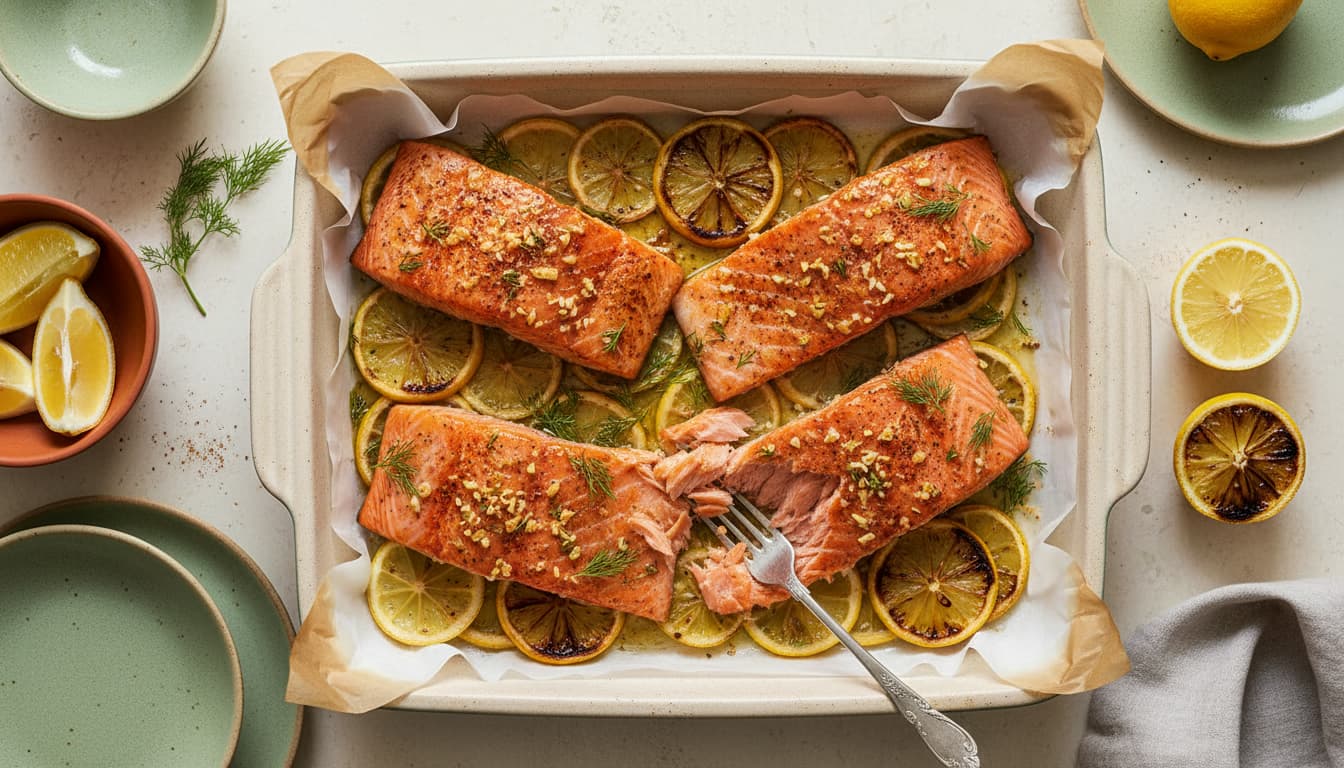
Lay the fillets on a bed of lemon rounds so the bottom perfumes as it bakes. Save the juice for the very end, off the heat, because heat dulls the acid and you want that bright hit on the plate.
Pull it at 125°F and let carryover finish the job
An instant-read thermometer in the thickest part is the only way to nail this. Pull at 125°F for a silky medium; it climbs to 130°F while it rests. Wait for 145°F in the oven and you've already overcooked it.
Watch for the white albumin as your visual cue
If white curds start weeping out of the flesh, the fillet is squeezing out moisture and heading toward dry. A little is normal; a lot means it's overcooking. Trust the thermometer, but the albumin is your backup alarm.
Rest 5 minutes before serving
Straight from the oven the juices are still mobile and run out the second you cut in. Five minutes lets them redistribute so the fillet stays moist on the plate instead of on the pan.
Broil the last 90 seconds if you want color
Baked salmon is gentle and pale by design. If you want a burnished top, switch to the broiler for the final 60 to 90 seconds and watch it the whole time. Add the smoked paprika before broiling so it toasts.
Save the skin, crisp it separately
Peel the skin off the rested fillet, lay it on a hot dry pan for two minutes a side, and you've got a crisp salmon-skin cracker to crumble over the top or a salad. Nothing wasted.
Leftovers go cold into a bowl, never reheated hard
Reheating salmon in a hot oven or microwave dries it and stinks up the kitchen. Flake it cold into a grain bowl or salad, or warm it gently for 30 seconds at half power. Fridge for 3 days.
Variations
Substitutions and adaptations land with the photography shoot. The method holds across most reasonable swaps.
Storage
Refrigerator: 3 to 4 days, sealed. Freezer: up to 3 months. Reheat covered to retain moisture.
Frequently asked
- How long do I bake salmon and at what temperature?
- 400°F for 12 to 15 minutes, depending on thickness. A standard one-inch center-cut fillet takes about 13 minutes to reach 125°F internal, which rests up to a silky 130°F. Thinner tail pieces can be done in 10. A thermometer beats the clock every time.
- How do I know when baked salmon is done?
- The reliable answer is temperature: 125 to 130°F in the thickest part for moist salmon. Visually, the flesh turns from translucent to opaque and flakes when you press it with a fork, but that visual cue usually means you're already at the upper edge of done. Pull a touch early.
- Should I bake salmon covered or uncovered?
- Uncovered for this recipe. Covering with foil steams the fish, which is gentle and forgiving but leaves the top pale and soft. Uncovered at 400°F gives you a lightly set surface and lets the garlic oil concentrate. If your fillets are very thin, tent loosely for the first few minutes only.
- Do I bake salmon skin-side up or down?
- Skin-side down. The skin acts as insulation between the flesh and the hot pan, so the bottom stays moist and the skin peels off cleanly once it's cooked. Lay it on the lemon rounds skin-down and don't flip it.
- Can I use frozen salmon?
- Yes, but thaw it fully first, overnight in the fridge or under cold running water in the bag. Baking from frozen makes the outside overcook before the center thaws. Once thawed, pat it extra dry, frozen fish holds more surface water.
- What sides go with baked salmon?
- It pairs with almost anything green and a starch. Our roasted vegetables (/roasted-vegetables) go in the oven alongside it at the same temperature, and a quinoa bowl (/quinoa-bowl) or salmon rice bowl base rounds it into a full plate. A squeeze more lemon and you're done.
Related recipes
See all →- High-Protein
Beef Bourguignon: Dry the Meat, Crowd Nothing, Wait a Day
This is a braise that fails at the first step or not at all. Wet beef in a crowded pot steams, and a stew built on steamed beef cannot be rescued later by wine, stock or time. Dry the cubes, brown them in three batches, cook the garnish separately, and give it three hours at 325F. Then, ideally, put it in the fridge overnight, because the second day is a different dish.
240m42g Protein - High-Protein
How to Cook Tofu: Press It, Coat It in Starch, Sauce It Last
Tofu is bland and soggy for two mechanical reasons, and both are fixable. It is packed in water, so the surface cannot brown until that water is gone, and it is a set protein gel with no internal channels, so marinade does not penetrate it no matter how long you wait. Press it, coat it in cornstarch, fry it hard, and sauce it after it is crisp. An hour, most of it pressing.
60m20g Protein - High-Protein
Enchiladas: Fry the Tortillas, Fry the Sauce, Bake Them Briefly
Nearly every bad enchilada is the same enchilada: a raw corn tortilla soaked in canned sauce and baked until the whole tray turns to porridge. Two steps fix it permanently. Pass each tortilla through hot oil for twenty seconds so it waterproofs, and fry the blended chile sauce in fat before it goes anywhere near the pan. Ninety minutes, most of it the sauce, and twenty of it in the oven.
95m34g Protein
Get a tested recipe + a nutritional note in your inbox each Sunday.
One recipe a week, photographed on the same Tuesday it tested. Reviewed by an RD. No promotions, no pop-ups, no tracking.
The Clean Chef Starter Kit.
A 14-day anti-inflammatory meal plan PDF, grocery list by section, macros totaled per day, Sunday prep sequence. Free.
By subscribing, you agree to our Privacy Policy. One calm email a week. Unsubscribe anytime.
We're building a shop.
Curated cookware, pantry staples we actually buy, recipe-bundle PDFs. Be the first to know when it opens.
We'll only email you about the shop opening. Unsubscribe in any email. See our Privacy Policy.