- Calories
- 130
- Protein
- 3g
- Fiber
- 4g
- Sat. fat
- 1g
- Sodium
- 220mg
- Added sugar
- 1g
What this recipe does for you.
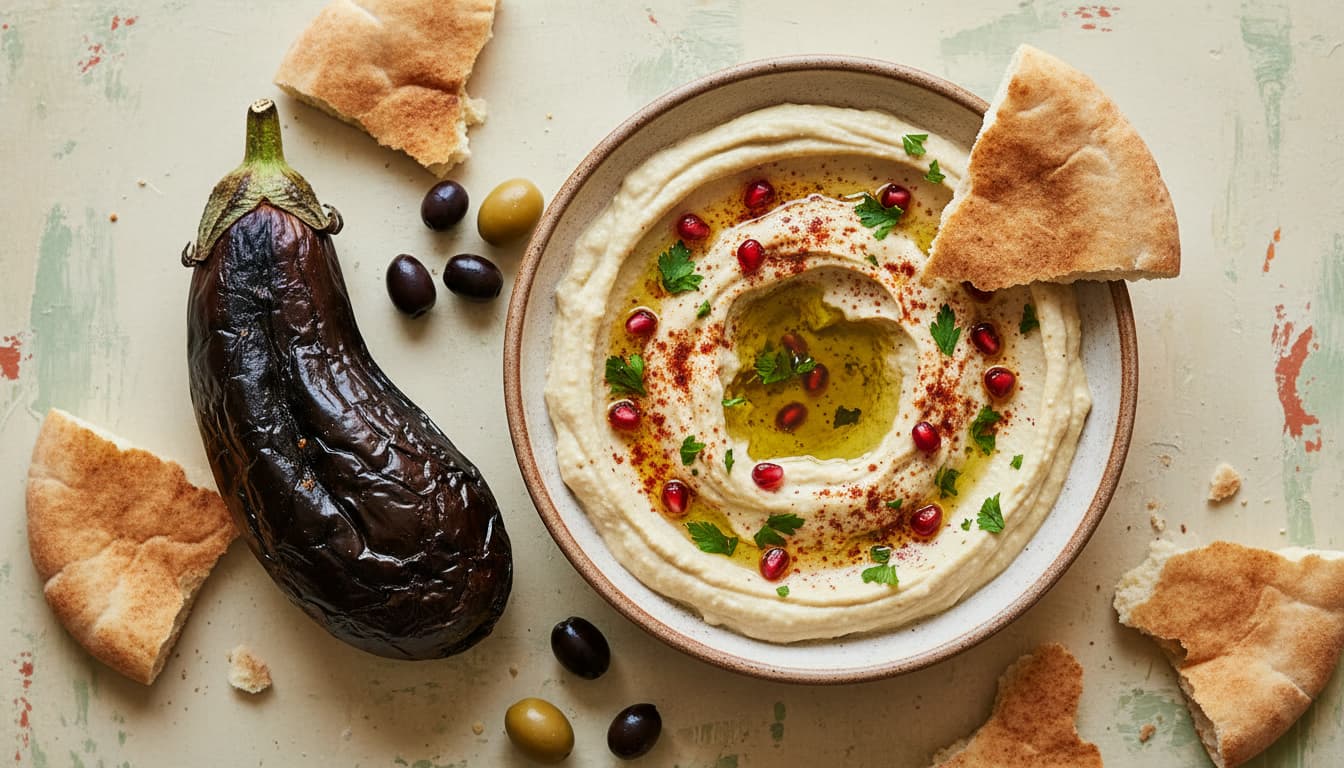
Baba ganoush that tastes smoky and creamy instead of bitter and watery: the eggplant is charred over a flame or in a hot oven, drained well, then stirred with tahini, lemon and garlic. Naturally vegan and gluten-free.
Why this works
Every recipe on this site ships with an explanation of the technique decisions, why sear then braise, why the acid goes in at the end, why the fat renders before the aromatics. The method below is those decisions, in order.
Ingredients
Serves 6- 2large eggplants · about 2 lb
- 1/4 cuptahini
- 1lemon · juiced
- 2 clovesgarlic · grated
- 2 tbspextra-virgin olive oil · plus more to finish
- 1/2 tspkosher salt · to taste
- 1 tbspflat-leaf parsley · chopped, to finish
- 1 pinchsmoked paprika · to finish
Method
Char the eggplant, really char it
The smoky flavour that defines baba ganoush comes from burning the skin of the eggplant black over a gas flame or under a hot grill until the whole thing collapses. Half-hearted roasting gives you a pale, flavourless puree. You want the skin fully charred and the inside completely soft.
No flame? Roast it hard in the oven
Without a gas hob, prick the eggplants and roast them at a high 240C until the skin blackens and blisters and the flesh caves in, about thirty-five minutes. You lose a little of the open-flame smoke, but a pinch of smoked paprika at the end makes up for it.
Drain the flesh thoroughly
Eggplant holds a lot of water, and wet flesh makes a thin, bland dip. Scoop the soft flesh into a colander and let it drain for ten to fifteen minutes, pressing gently. This is the step people skip that separates a thick, rich baba ganoush from a watery one.
Do not over-blend, keep some texture
Baba ganoush is traditionally chunky, not silky like hummus. Chop and mash the drained flesh with a fork or pulse it very lightly. A smooth machine puree loses the rustic character. You want to see the strands of eggplant.
Tahini, lemon and garlic in balance
Tahini brings creaminess and nutty depth, lemon brightens, and raw garlic gives a kick. Add the garlic gradually and taste, raw garlic builds as it sits, so what seems mild now can be sharp in an hour. Balance the three to taste.
Finish with oil, parsley and a rest
A generous pool of good olive oil, chopped parsley, and a dusting of smoked paprika on top. Let it sit at least thirty minutes, or overnight, so the flavours settle and the smoke deepens. Serve with warm flatbread or crunchy vegetables.
Variations
Substitutions and adaptations land with the photography shoot. The method holds across most reasonable swaps.
Storage
Refrigerator: 3 to 4 days, sealed. Freezer: up to 3 months. Reheat covered to retain moisture.
Frequently asked
- How do I get baba ganoush smoky without a grill?
- Char the eggplant directly over a gas flame if you have one, turning until the skin is black all over. Without gas, roast at a very high oven temperature until the skin blackens and blisters and the flesh collapses, then stir in a pinch of smoked paprika at the end to boost the smoky note.
- Why is my baba ganoush watery or bitter?
- Watery usually means the eggplant flesh was not drained, so scoop it into a colander and let it drain for ten to fifteen minutes before mixing. Bitterness comes from under-cooked eggplant, cook it until completely soft and collapsed, not just until the skin looks done.
- What is the difference between baba ganoush and hummus?
- Hummus is made from blended chickpeas and is smooth and thick. Baba ganoush is made from charred eggplant and is smoky, lighter and more rustic in texture. Both use tahini, lemon and garlic, but the base and the flavour are quite different.
- How long does it keep?
- Baba ganoush keeps three to four days covered in the fridge and often tastes better the next day as the smoky and garlic flavours settle. Give it a stir and a fresh drizzle of olive oil before serving, and bring it to room temperature for the best flavour.
Related recipes
See all →Gazpacho: An Emulsion, Not a Cold Tomato Soup
The Andalusian version is thick, orange-pink and creamy without any dairy in it, and the two things that get it there are stale bread and olive oil poured in slowly at the end. Watery red gazpacho is a blender-order problem. It needs genuinely ripe tomatoes, sherry vinegar rather than any other kind, and four hours in the fridge, which the time on this page includes.
270m4g ProteinTabbouleh: A Parsley Salad With Bulgur In It, Not the Reverse
Almost every tabbouleh sold outside the Levant has the ratio backwards: a bowl of wet bulgur with parsley stirred through. The Lebanese version is three quarters herbs by volume, with fine bulgur used the way you would use breadcrumbs, soaked in tomato juice rather than boiled. Forty-five minutes, no cooking at all, and most of the work is drying parsley and chopping it properly.
45m4g ProteinCarbonara: Four Ingredients, One Temperature, No Cream
Carbonara is not a cream sauce and it is not scrambled eggs. It is an emulsion of egg yolk, rendered pork fat, grated sheep cheese and starchy pasta water, held together by heat that stops just short of setting the egg. Everything that goes wrong goes wrong in the last ninety seconds. Thirty minutes, four ingredients, and a pan that comes off the burner before the eggs arrive.
30m27g Protein
Get a tested recipe + a nutritional note in your inbox each Sunday.
One recipe a week, photographed on the same Tuesday it tested. Reviewed by an RD. No promotions, no pop-ups, no tracking.
The Clean Chef Starter Kit.
A 14-day anti-inflammatory meal plan PDF, grocery list by section, macros totaled per day, Sunday prep sequence. Free.
By subscribing, you agree to our Privacy Policy. One calm email a week. Unsubscribe anytime.
We're building a shop.
Curated cookware, pantry staples we actually buy, recipe-bundle PDFs. Be the first to know when it opens.
We'll only email you about the shop opening. Unsubscribe in any email. See our Privacy Policy.