Best non-toxic cookware
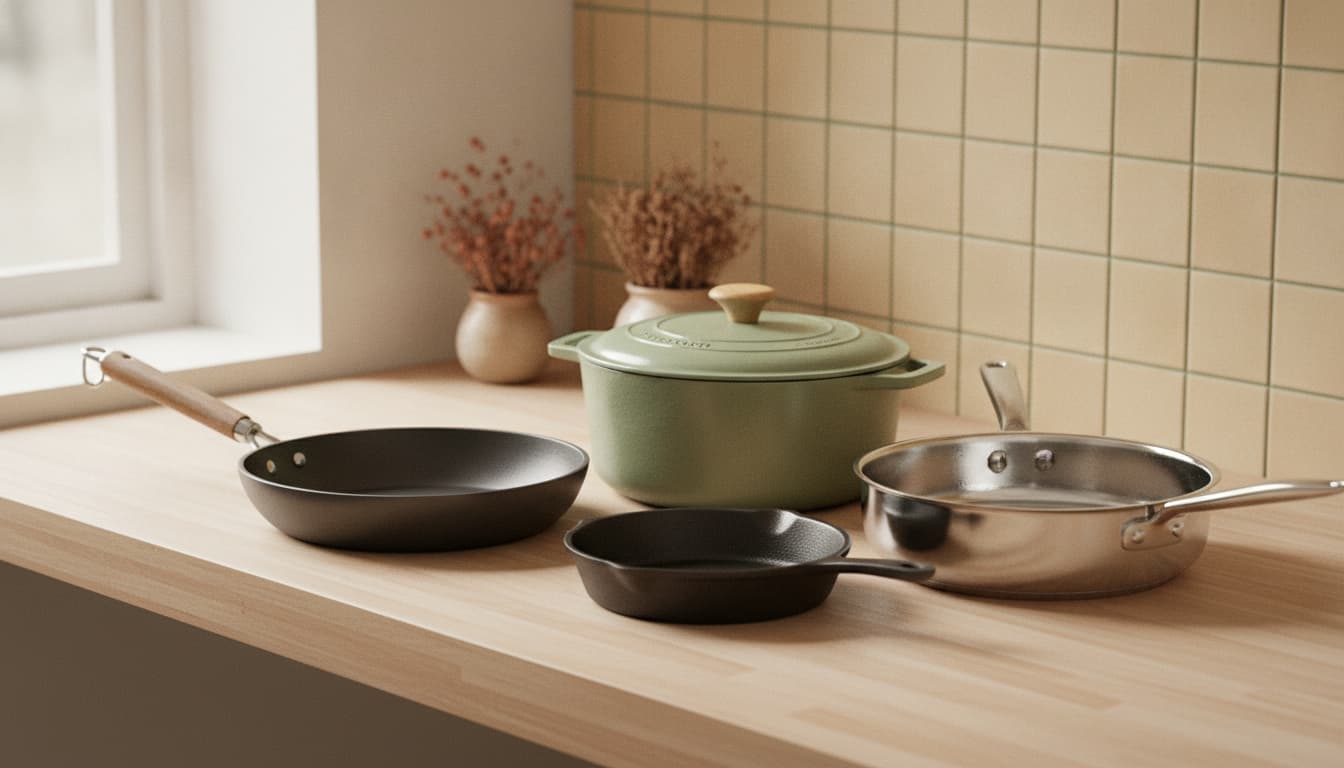
By The ThatCleanChef Kitchen · Updated June 18, 2026 · 9 min read
The non-toxic cookware we actually cook on, ranked. Carbon steel, ceramic, cast iron, stainless, plus the set we would skip and why.
- 01
Made In carbon-steel 12-inch frying pan
Carbon steel is our default for searing and high-heat cooking: it is essentially iron and carbon with zero coating to flake or off-gas. Once seasoned it builds a slick, naturally non-stick surface that fries eggs and crisps skin-on chicken without sticking. The honest trade-off is upkeep, you season it, hand-wash it, and dry it right away or it rusts, and acidic sauces will strip the seasoning. If you want one pan that does the most and lasts decades, this is it.
SponsoredCheck price · Direct - 02
Caraway ceramic-coated cookware set
For people who want a true non-stick feel without PTFE or PFOA, a sol-gel ceramic coating like Caraway is the most practical choice. Eggs and pancakes release cleanly, cleanup is fast, and the set looks good enough to leave on the stove. The catch is lifespan: every ceramic coating degrades with heat and abrasion, so expect the slickness to fade in roughly two to four years even with gentle use. Treat it as a convenience pan, not a forever pan, and keep the heat at medium.
SponsoredCheck price · Direct - 03
Lodge 12-inch cast-iron skillet
The cheapest genuinely non-toxic pan you can buy, and the one most likely to outlive you. Bare cast iron is just iron, it holds heat like nothing else, and it goes from stovetop to oven to broiler without a thought. It is heavy, slow to heat, and needs the same seasoning discipline as carbon steel, plus it can leach a little iron into very acidic dishes. For cornbread, searing, and shallow frying it is hard to beat at the price.
SponsoredCheck price · Amazon - 04
Le Creuset Signature 5.5-quart enameled Dutch oven
Enameled cast iron solves the acidity and seasoning problems of bare iron: the glass enamel is inert, so you can simmer tomato sauce and braise wine-based stews all day with no metallic taste and no rust worries. It is the workhorse for soups, braises, bread, and stock. The downsides are weight and price, and the enamel can chip or stain if you bang it around or crank empty pans on high. Buy once, use forever.
SponsoredCheck price · Amazon - 05
Xtrema 100% ceramic skillet
This is solid ceramic all the way through, not a metal pan with a sprayed-on coating, so there is no coating to wear off and nothing to leach. It is genuinely inert and dishwasher and oven safe to high temperatures. The honest reality is that it cooks nothing like the marketing suggests: it heats slowly and unevenly, it is not actually non-stick the way coated pans are, and it is fragile, drop it and it cracks. Worth it only if total material inertness is your top priority.
SponsoredCheck price · Amazon - 06
All-Clad D3 tri-ply stainless skillet
Stainless steel is the quiet non-toxic standby: no coating, inert at normal cooking temps, and built to be abused for life. The tri-ply build heats evenly and gives you real fond for pan sauces, which is exactly what coated pans cannot do. The learning curve is sticking, you have to preheat properly and let food release on its own, and very acidic or salty food can pull trace nickel into the dish. For everything except delicate eggs, it earns its keep.
SponsoredCheck price · Amazon - 07
Cheap unbranded ceramic-coated nonstick set (we would skip)
These flood marketplaces under vague names, promising the same PTFE-free non-stick as the premium ceramic brands for a fraction of the price. The problem is the coating: thin, poorly bonded, and prone to losing its release in under a year, at which point you are cooking on bare aluminum and replacing the set. There is also little transparency about what is actually in the coating or how it was tested. Buy one good ceramic pan over a cheap full set you will throw out.
SponsoredCheck price · Amazon
Where the technique comes from
About the ThatCleanChef Kitchen
A small team of recipe developers and food photographers testing recipes in home kitchens on home equipment. Every Nutrition Ledger is USDA FoodData Central-sourced and reviewed by Lena Marsh, RDN, MS. We don't pretend to be a single chef, we're the people behind the plates. Meet the full team →
Related posts
How to Cook Steak: Salt It Early, Dry It Properly, Use a Thermometer
There are only four variables in a steak and none of them is the pan. Thickness decides the method, surface moisture decides whether it browns or steams, internal temperature decides doneness, and the rest decides how much of the juice ends up on the board instead of in the meat. Salt forty-five minutes ahead, cook to a number rather than to a timer, and stop cutting into it to check.
Scrambled Eggs: Low Heat, Constant Motion, Off the Hob Early
Scrambled eggs are a temperature exercise with an eight-minute margin for error and almost nobody uses it. Egg protein sets between 145F and 165F, and above that it squeezes out water and turns to rubber sitting in a grey puddle. Low heat, a spatula that never stops, fat that goes in cold, salt at the start, and the pan off the burner while they still look underdone.
Mashed Potatoes: Cold Water Start, Warm Dairy, and Never a Blender
Gluey mash is not a seasoning problem, it is a mechanical one. Potato starch granules burst when you agitate them, and once they have burst nothing brings the texture back. Start the potatoes in cold salted water so they cook evenly, dry them over the burner, push them through a ricer rather than beating them, and add butter before dairy. Forty-five minutes including the pot you have to wash.
The Clean Chef Starter Kit.
A 14-day anti-inflammatory meal plan PDF, grocery list by section, macros totaled per day, Sunday prep sequence. Free.
By subscribing, you agree to our Privacy Policy. One calm email a week. Unsubscribe anytime.