- Calories
- 520
- Protein
- 44g
- Fiber
- 5g
- Sat. fat
- 7g
- Sodium
- 620mg
- Added sugar
- 0g
What this recipe does for you.
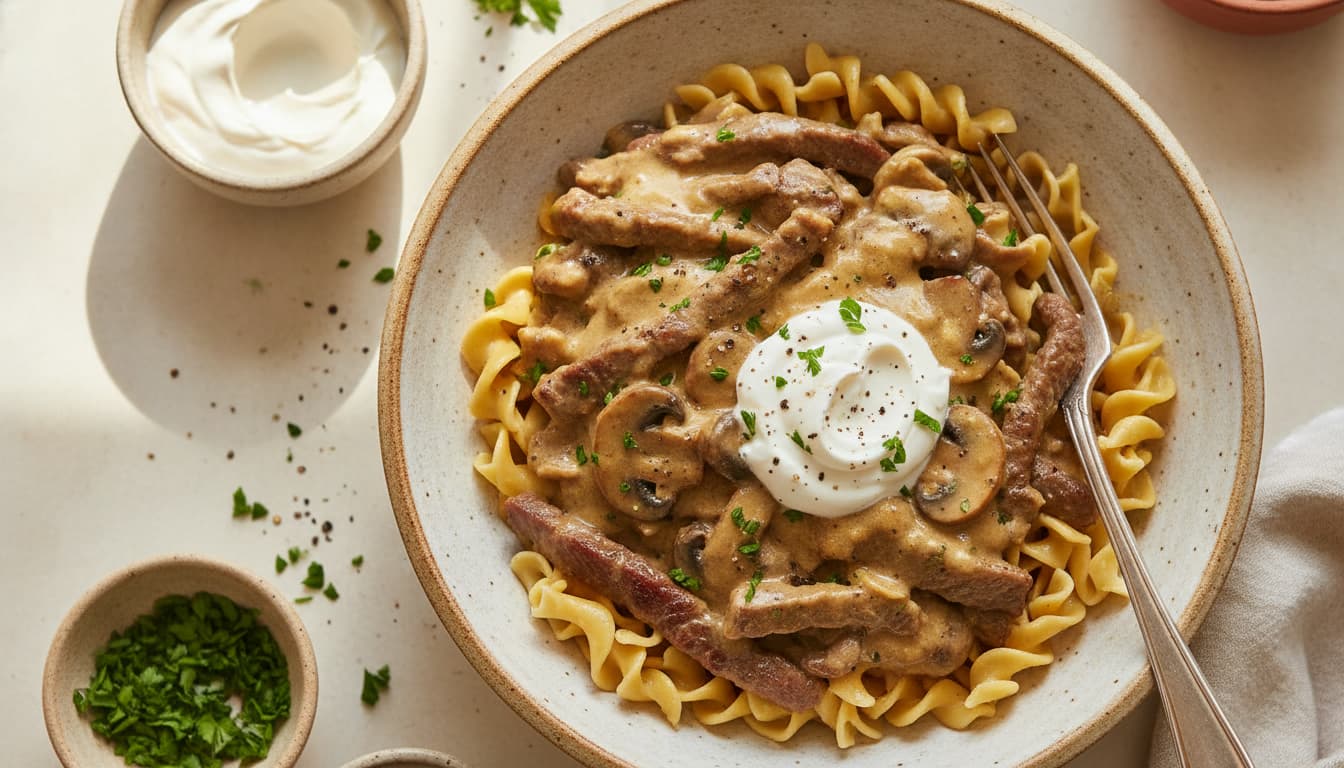
Two things go wrong with stroganoff: the beef turns to leather and the sauce splits. Both have the same fix, which is heat control at two specific moments. Sirloin sliced thin against the grain and seared in batches, mushrooms browned hard in a dry pan, and the dairy stirred in with the burner off. Four servings, 44g protein.
Why this works
Every recipe on this site ships with an explanation of the technique decisions, why sear then braise, why the acid goes in at the end, why the fat renders before the aromatics. The method below is those decisions, in order.
Ingredients
Serves 4- 1 1/4 lbsirloin steak · or flank, sliced 1/4 inch thick against the grain
- 1 tspkosher salt · divided between the beef and the sauce
- 1 tbspavocado oil · or another high-smoke-point fat
- 1 lbcremini mushrooms · quartered, or halved if small
- 1 tbspunsalted butter
- 1 largeshallot · finely chopped
- 3 clovesgarlic · minced
- 1 tbspcornstarch · whisked into 2 tbsp cold water as a slurry
- 1/2 cupdry white wine · or dry sherry, or stock plus 1 tsp vinegar
- 1 1/2 cupsunsalted beef stock
- 2 tspDijon mustard
- 3/4 cupfull-fat Greek yogurt · or sour cream, at room temperature
- 1/2 tspblack pepper · coarsely ground
- 3 tbspfresh dill · chopped, plus more to finish
- 8 ozwhole-wheat egg noodles · cooked to the low end of the package time
Method
Slice against the grain, quarter of an inch, and dry it
Look for the direction the muscle fibers run and cut across them, not along them. That single decision does more for tenderness in a quick-cooked beef dish than any marinade, because you are shortening the fibers with a knife instead of hoping heat will. A quarter inch is thin enough to cook in ninety seconds. Then pat the slices genuinely dry with paper towel and salt them, because wet beef steams grey instead of browning.
Sear in two batches, and accept that this takes an extra four minutes
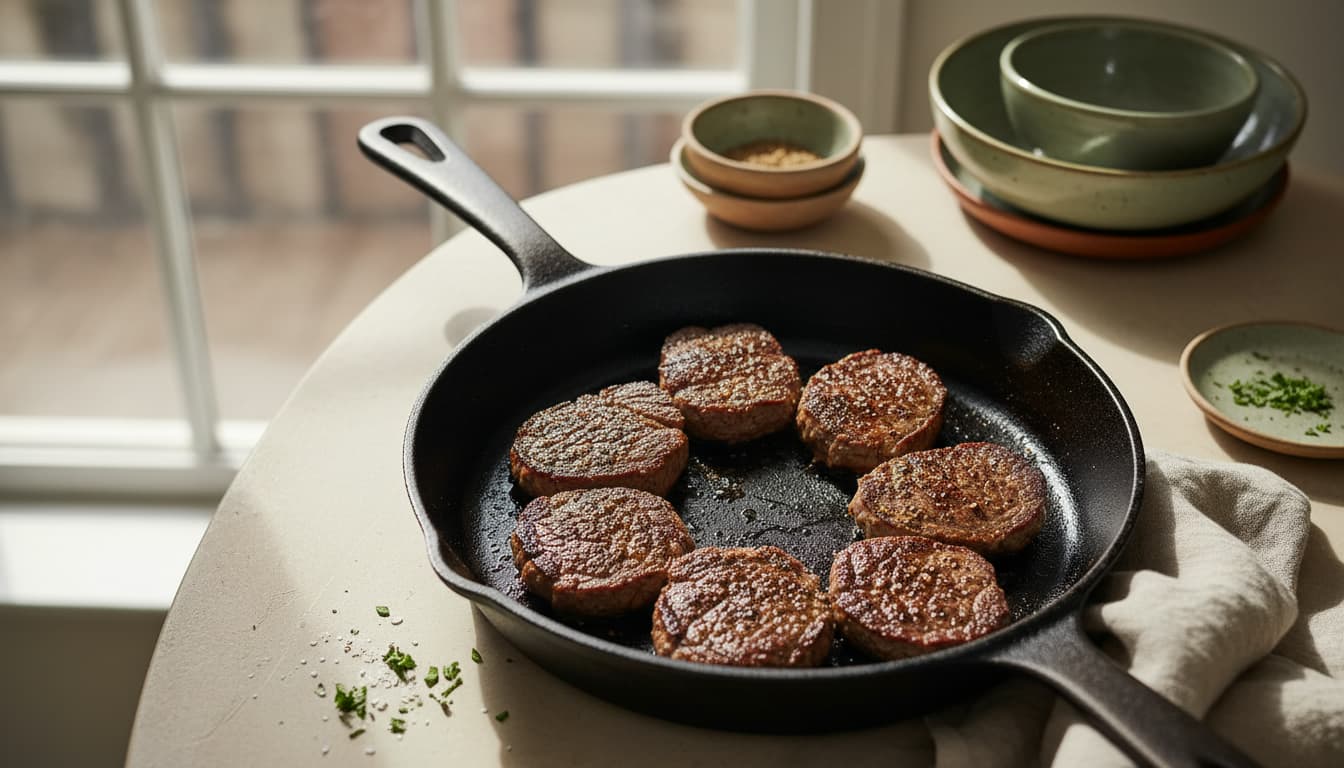
A pound and a quarter of beef in a twelve-inch skillet at once drops the pan temperature far enough that the meat releases water and boils in it. Two batches, ninety seconds a side, high heat, and pull each batch out while it is still pink in the middle, because it goes back into hot sauce later. If you only take one thing from this recipe, take this: the beef is finished in the sauce for sixty seconds at the end, not cooked through at the start.
Brown the mushrooms in a dry pan first
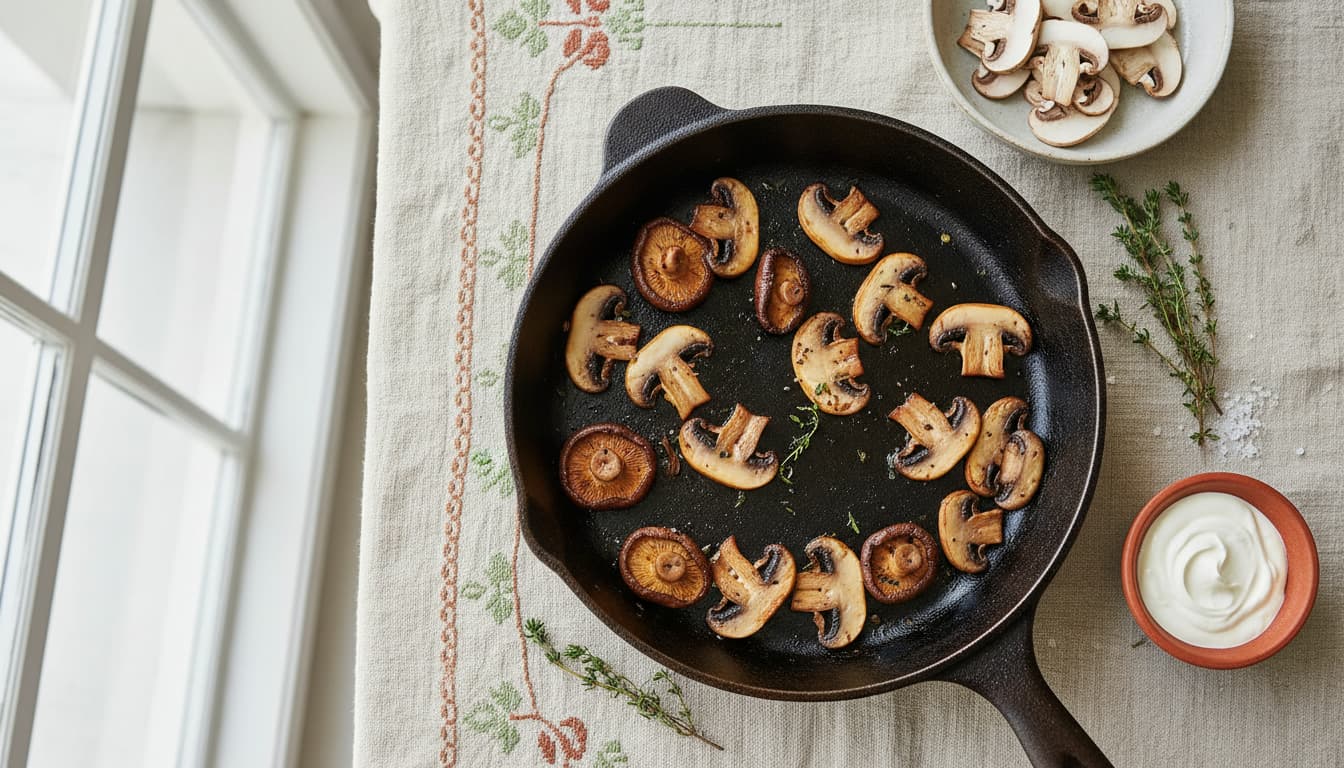
Mushrooms are about ninety percent water and they will not brown until that water has gone. Put them in the hot pan with no fat and no salt, spread out, and leave them alone. They will squeak, release liquid, and then the liquid will cook off and they will start to colour, at which point the butter goes in. That is four or five minutes of patience and it is the entire flavour base of the dish. Salted or oiled from the start, they stew.
Deglaze, because the fond is the sauce
Shallot and garlic into the mushrooms for a minute, then the wine into the hot pan, scraping the brown film off the bottom with a wooden spoon while it bubbles. That film is concentrated beef and mushroom flavour and it is the difference between this and a jar of gravy. Let the wine reduce until the pan is almost dry, maybe two minutes, then add the stock and the mustard. Reduce the whole thing by about a third.
Thicken with a slurry, not a roux
A flour roux at the start means cooking flour in fat before the mushrooms get their turn, and it dulls the sauce. Whisk a tablespoon of cornstarch into two tablespoons of cold water and stream it into the simmering stock, stirring, then let it bubble for a full minute so the starch loses its raw taste and reaches full thickening power. You want a sauce that coats the back of a spoon and slides off slowly, not one you could stand a fork in.
Take the pan off the heat before the yogurt goes in
This is the no-curdle rule and it is not negotiable. Yogurt and sour cream both split above roughly 180F, so kill the burner, wait thirty seconds, then temper: stir three tablespoons of the hot sauce into the yogurt in a separate bowl, then stir that mixture back into the pan. Room-temperature dairy splits less readily than fridge-cold. Full-fat is more stable than low-fat, which has less fat protecting the protein and breaks almost every time.
Beef back in for sixty seconds, off the heat
Return the seared beef and any juices that collected on the plate, stir once, and let it sit in the hot sauce for about a minute. Residual heat takes it from pink to just done without contracting it. Then pepper and dill. If the sauce has cooled too much for your liking, put it back on the lowest heat for thirty seconds only, and watch it, because you are now inside the temperature range where the dairy is fragile.
Noodles cooked short, and dressed immediately
Cook the egg noodles a minute under the package time, because they will keep softening in the sauce. Drain them but keep half a cup of the water: if the sauce tightens up when the noodles go in, that starchy water loosens it without thinning the flavour, which plain water does. Whole-wheat noodles bring the dish to 5g of fiber a serving and hold their bite better under sauce than white ones. Toss at the last moment.
Where the 520 calories sit
Roughly half is the noodles and the beef, and both are load-bearing. The changes that keep it here rather than near 800 are sirloin instead of a fattier cut, Greek yogurt instead of a cup of sour cream, one tablespoon of butter instead of four, and no cream at all. Greek yogurt also adds about 6g of protein a serving compared to sour cream, which is why the dish clears 44g without a larger portion of beef.
In pictures
Variations
Substitutions and adaptations land with the photography shoot. The method holds across most reasonable swaps.
Storage
Refrigerator: 3 to 4 days, sealed. Freezer: up to 3 months. Reheat covered to retain moisture.
Frequently asked
- Why did my stroganoff sauce curdle?
- The dairy went into liquid that was too hot, or it went in cold and straight from the fridge, or it was a low-fat version. Sour cream and yogurt both break above about 180F because the proteins coagulate and squeeze out water. Kill the heat, wait half a minute, temper a few spoons of hot sauce into the dairy first, then combine. Use full fat. If it has already split, a tablespoon of cornstarch slurry whisked in over low heat will usually pull it back together enough to serve.
- What is the best cut of beef for stroganoff?
- Sirloin is the value pick: tender enough for a ninety-second sear, lean, and it holds up in sauce. Flank and skirt work well and need strict attention to slicing across the grain. Tenderloin is the traditional choice and the most forgiving, at roughly three times the price for a dish where it is cut into strips and covered in sauce. Avoid chuck and stewing beef here; they need hours, and in forty minutes they will be tough no matter how thin you slice them.
- Can I use Greek yogurt instead of sour cream?
- Yes, and it is what this recipe is built on. Full-fat Greek yogurt gives you a slightly tangier sauce, about 6g more protein a serving, and roughly the same texture. It is marginally more prone to splitting than sour cream, so the off-heat and tempering steps matter more, not less. Do not use zero-percent, which has almost no fat buffering the proteins and will break. Skyr behaves the same way as Greek yogurt.
- Can I make stroganoff ahead?
- Partly. The mushroom and stock base holds three days in the fridge and reheats without complaint, so make that ahead and finish the dish on the night: sear the beef, warm the base, add the dairy off the heat. A fully assembled stroganoff reheated from cold will usually break, and the beef will overcook on the second pass. It does not freeze well for the same two reasons. Cook the noodles fresh, they take eight minutes.
- What can I serve it over instead of egg noodles?
- Mashed or boiled potatoes are the traditional Russian pairing and arguably better than noodles at catching the sauce. Rice works and takes on less sauce. For a lower-carbohydrate plate, cauliflower mash or a bed of wilted spinach both hold up, and roasted green beans give you something with texture against the soft sauce. Whatever you choose, salt it properly on its own terms, because unsalted starch under a good sauce still tastes like nothing.
Related recipes
See all →- Meal Types
Fried Rice: Cold Rice, Hot Pan, and Soy Down the Side
Fried rice is a moisture-management problem wearing a stir-fry costume. Freshly cooked rice is saturated and its starch is still gelatinised, so it clumps and steams. Rice that has spent a night uncovered in the fridge has lost surface water and retrograded, and it separates into individual grains in a hot pan. Twenty-five minutes of cooking, and one decision made the day before.
25m22g Protein - Meal Types
Apple Crisp: Two Varieties, Cold Butter, Forty-Five Minutes
A watery apple crisp is not a topping problem. It is an apple problem and a time problem. One variety of apple gives you either mush or raw wedges, and thirty minutes is long enough to brown a topping but not long enough to cook fruit through and drive off its water. Two varieties, a spoon of cornstarch, coarse oat topping made with cold butter, and forty-five minutes at 375F. Seventy-five minutes total, and it wants twenty of them to rest.
75m3g Protein - Meal Types
Coleslaw: Salt the Cabbage, Squeeze It, Then Dress It
Coleslaw goes watery for one reason. Cabbage is ninety-two percent water, and if you dress it raw, the salt in the dressing pulls that water out over the next hour and dilutes everything you just made. Salt the shredded cabbage first, let it drain for thirty minutes, squeeze it, and then dress it. Fifty minutes including the wait, and the difference is a slaw that is still crunchy on day three.
50m3g Protein
Get a tested recipe + a nutritional note in your inbox each Sunday.
One recipe a week, photographed on the same Tuesday it tested. Reviewed by an RD. No promotions, no pop-ups, no tracking.
The Clean Chef Starter Kit.
A 14-day anti-inflammatory meal plan PDF, grocery list by section, macros totaled per day, Sunday prep sequence. Free.
By subscribing, you agree to our Privacy Policy. One calm email a week. Unsubscribe anytime.
We're building a shop.
Curated cookware, pantry staples we actually buy, recipe-bundle PDFs. Be the first to know when it opens.
We'll only email you about the shop opening. Unsubscribe in any email. See our Privacy Policy.