- Calories
- 290
- Protein
- 24g
- Fiber
- 4g
- Sat. fat
- 5g
- Sodium
- 310mg
- Added sugar
- 6g
What this recipe does for you.
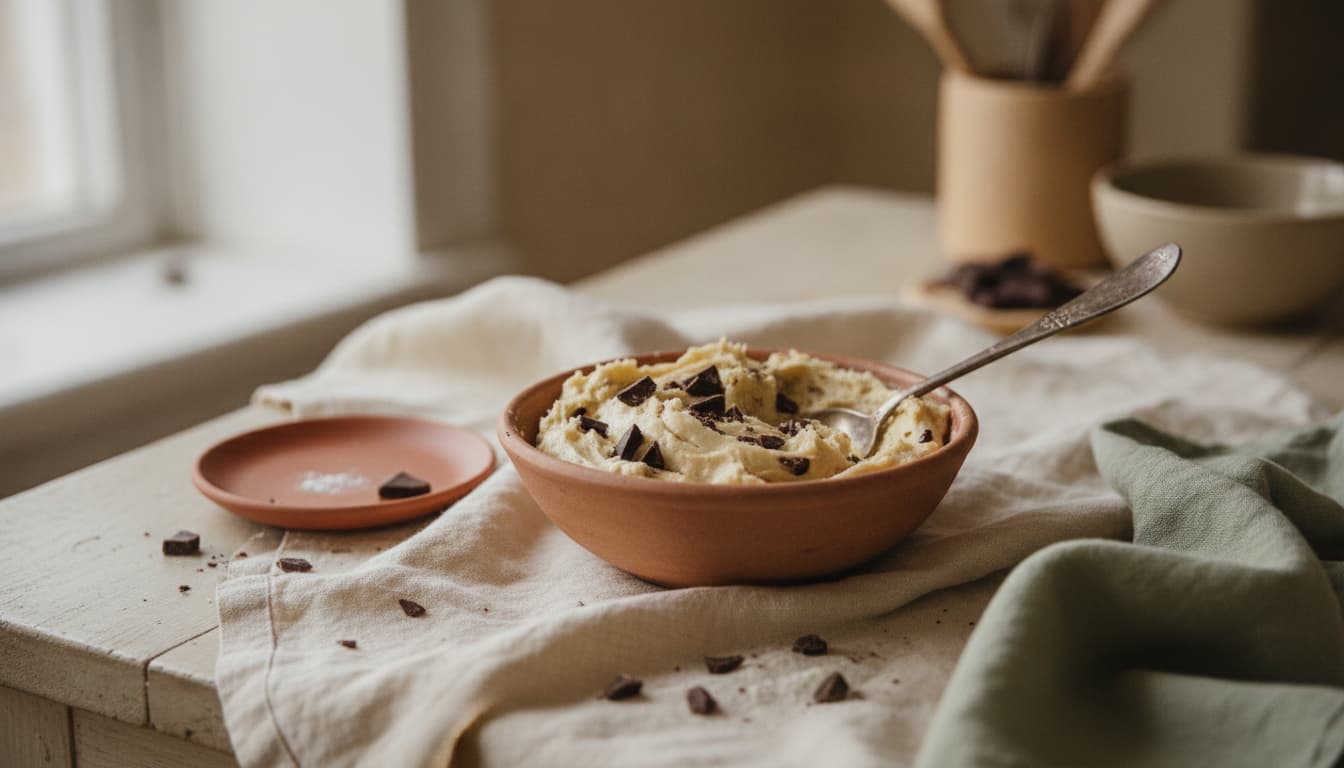
Blended cottage cheese cookie dough: 24g protein per bowl, 10 minutes plus a chill. A no-bake protein snack, honest about being a snack and not a dessert dupe.
Why this works
Every recipe on this site ships with an explanation of the technique decisions, why sear then braise, why the acid goes in at the end, why the fat renders before the aromatics. The method below is those decisions, in order.
Good Culture 4% Cottage Cheese
Blended is non-negotiable here, and the brand changes how smooth you can get. Good Culture's firmer curd blends to a thick, almost ricotta-smooth paste that holds the dough together, where watery supermarket-own tubs blend thin and slump. The 4% version makes a richer dough. UK readers: Longley Farm cottage cheese is the closest equivalent.
Ingredients
Serves 2- Good Culture 4% Cottage Cheese · The base that blends clean
- Aromatics, salt, fat (full ingredient list ships with photography)
Method
The ratio is half cup blended cottage cheese, half cup flour, two tablespoons sweetener
Half a cup of 4% cottage cheese blended smooth, half a cup of flour split between almond and oat, two tablespoons of maple syrup or honey, a teaspoon of vanilla, a pinch of salt, and a quarter cup of chopped dark chocolate. That is the whole bowl. The cottage cheese carries roughly half the 24g of protein.
Blend the cottage cheese first, on its own
This is the step that makes or breaks it. Cottage cheese straight from the tub stays lumpy and tastes of itself, which is exactly what you are trying to hide. Blitz it alone in a small blender or with a stick blender for 30 to 45 seconds until it is completely smooth and glossy with no visible curd. Do this before anything else goes in.
Split the flour: half almond, half oat
Almond flour alone reads damp and pasty against the wet cottage cheese. Oat flour alone goes dense. Half and half gives the closest thing to a cookie-dough crumb. Use blanched almond flour and either shop-bought oat flour or rolled oats blitzed fine. Add it a spoonful at a time so you can read the texture.
Sweeten lightly, then stop
Two tablespoons of maple syrup or honey is the published amount, which lands at about 6g of added sugar per serving. Real cookie dough has far more. Add the vanilla and salt with the sweetener, taste, and resist topping it up. This is a snack tuned for protein, not a dessert, and over-sweetening is what makes these recipes taste like cheese pretending to be pudding.
Fold the chocolate in cold, not warm
Chop dark chocolate into rubble or use mini chips, and fold them in only after the dough has chilled and firmed. Folding into warm dough streaks it grey and melts the chips. A quarter cup is plenty. Dark chocolate over milk keeps the added sugar honest and the flavour adult.
Chill 30 minutes before you eat it
Straight from the bowl it is loose and tastes raw. Thirty minutes in the fridge lets the oat flour hydrate and the dough firm into something you can scoop with a spoon. This is also where the cottage cheese flavour recedes and the cookie-dough flavour steps forward. Do not skip it.
Storage: 4 days in the fridge, do not freeze
Sealed in the fridge it holds for 4 days and arguably improves on day two as the flavours settle. It firms further when cold, so let it sit out five minutes before eating. Freezing splits the blended cottage cheese and turns the texture grainy on thaw, so make it in small batches instead.
Honest texture note: it is cookie-dough-adjacent, not a dupe
Be clear with yourself going in. This is a soft, scoopable, chocolate-studded protein snack that reads as cookie dough in flavour and intent. It is not identical to butter-and-brown-sugar raw dough, which is denser, richer, and sweeter. What you gain is 24g of protein and no raw egg or raw flour risk. What you trade is some of that fatty density. Worth it for a snack, not a swap for the real thing on a birthday.
Variations
Substitutions and adaptations land with the photography shoot. The method holds across most reasonable swaps.
Storage
Refrigerator: 3 to 4 days, sealed. Freezer: up to 3 months. Reheat covered to retain moisture.
Why we tested this cottage cheese cookie dough: 24g protein, no bake 3 times.
Every flagship recipe on this site goes through at least three rounds of kitchen testing before publication. We log what changed between tests so you can see the recipe's evolution, and so we can't quietly drop the failures.
- 01
Test 1
- What we tried
- Mashed cottage cheese by hand into almond flour and maple syrup, folded in chopped dark chocolate, ate straight away.
- What happened
- Curd stayed visibly lumpy and wet, the dough tasted of cottage cheese first and cookie dough second, and it slumped in the bowl rather than holding a scoopable shape.
- What we changed
- Moved the cottage cheese into a small blender to kill the curd, and added a chill step before eating.
- 02
Test 2
- What we tried
- Blended the cottage cheese smooth, mixed with almond flour only, maple syrup, vanilla, chilled 30 minutes, folded chocolate in cold.
- What happened
- Texture improved a lot but the almond flour alone read as slightly damp and pasty, and the dough was sweeter and looser than I wanted for a snack.
- What we changed
- Cut the almond flour with oat flour for a drier crumb, dialled the maple syrup back, added a pinch of salt to lift the chocolate.
- 03
Test 3
- What we tried
- Blended cottage cheese, half almond flour and half oat flour, less maple syrup, salt, vanilla, chilled 30 minutes, chocolate folded in cold.
- What happened
- Scoopable, spoonable, held its shape in the bowl, and read as a cookie-dough-flavoured protein snack rather than sweetened cheese. Repeated cleanly the next day from a fridge-stored batch.
- What we changed
- This is the published version. Blending plus the oat-flour cut plus the 30-minute chill are the three variables that matter.
Frequently asked
- Does it actually taste like cookie dough?
- It tastes cookie-dough-adjacent. Blended cottage cheese, oat flour, vanilla, salt and dark chocolate land in the right flavour neighbourhood, and once chilled the dairy tang recedes. But it is lighter and less fatty than real brown-sugar-and-butter dough, and we would rather tell you that than oversell it. Treat it as a protein snack that scratches the cookie-dough itch, not a one-for-one dessert.
- Can I skip blending and just mash it?
- No, and this is the one rule we would not bend. Mashed cottage cheese leaves visible curd and a wet, lumpy dough that tastes of cheese first. Blending it smooth before anything else goes in is what makes the whole recipe work. If you do not have a blender, a stick blender in a deep jug or even a fine sieve press will get you most of the way.
- Is the flour safe to eat raw?
- Oat flour and almond flour are not the same raw-flour risk as raw wheat flour, but to be properly safe you can toast rolled oats at 150C for 10 minutes before blitzing them into flour, and use blanched almond flour as sold. There is no raw egg in this recipe at all, which removes the other usual edible-dough concern.
- How do I push the protein higher?
- Swap a tablespoon of the oat flour for a tablespoon of unflavoured or vanilla whey or casein and add a splash more blended cottage cheese to keep it scoopable. That takes a serving from 24g toward 30g. Add the powder with the flour and taste as you go, since some powders are sweet and you may want to drop the maple syrup further.
- Can I make it gluten-free or nut-free?
- Gluten-free is easy: use certified gluten-free oats for the oat flour, since the almond flour is naturally gluten-free. Nut-free is harder because almond flour does real structural work here. Replace it with more oat flour plus a tablespoon of ground sunflower seeds, and expect a slightly denser, earthier dough.
Related recipes
See all →- High-Protein
Cottage Cheese Flatbread: 28g Protein, 20 Minutes
The viral cottage cheese flatbread, chef-tested. 28g protein per serving, 20 minutes, 4 ingredients.
20m28g Protein - High-Protein
High-Protein Breakfast Bowl: 42g Protein, 15 Minutes
Eggs, spinach, quinoa or sweet potato, salsa, avocado, 42g protein in a 15-minute bowl. Swappable base protein.
15m42g Protein - High-Protein
Greek Lemon Chicken
Bone-in thighs, lemon, oregano, garlic, a Mediterranean pillar recipe, 45 minutes, 36g protein.
45m36g Protein
Get a tested recipe + a nutritional note in your inbox each Sunday.
One recipe a week, photographed on the same Tuesday it tested. Reviewed by an RD. No promotions, no pop-ups, no tracking.
The Clean Chef Starter Kit.
A 14-day anti-inflammatory meal plan PDF, grocery list by section, macros totaled per day, Sunday prep sequence. Free.
By subscribing, you agree to our Privacy Policy. One calm email a week. Unsubscribe anytime.
We're building a shop.
Curated cookware, pantry staples we actually buy, recipe-bundle PDFs. Be the first to know when it opens.
We'll only email you about the shop opening. Unsubscribe in any email. See our Privacy Policy.