- Calories
- 420
- Protein
- 48g
- Fiber
- 0g
- Sat. fat
- 6g
- Sodium
- 520mg
- Added sugar
- 0g
What this recipe does for you.
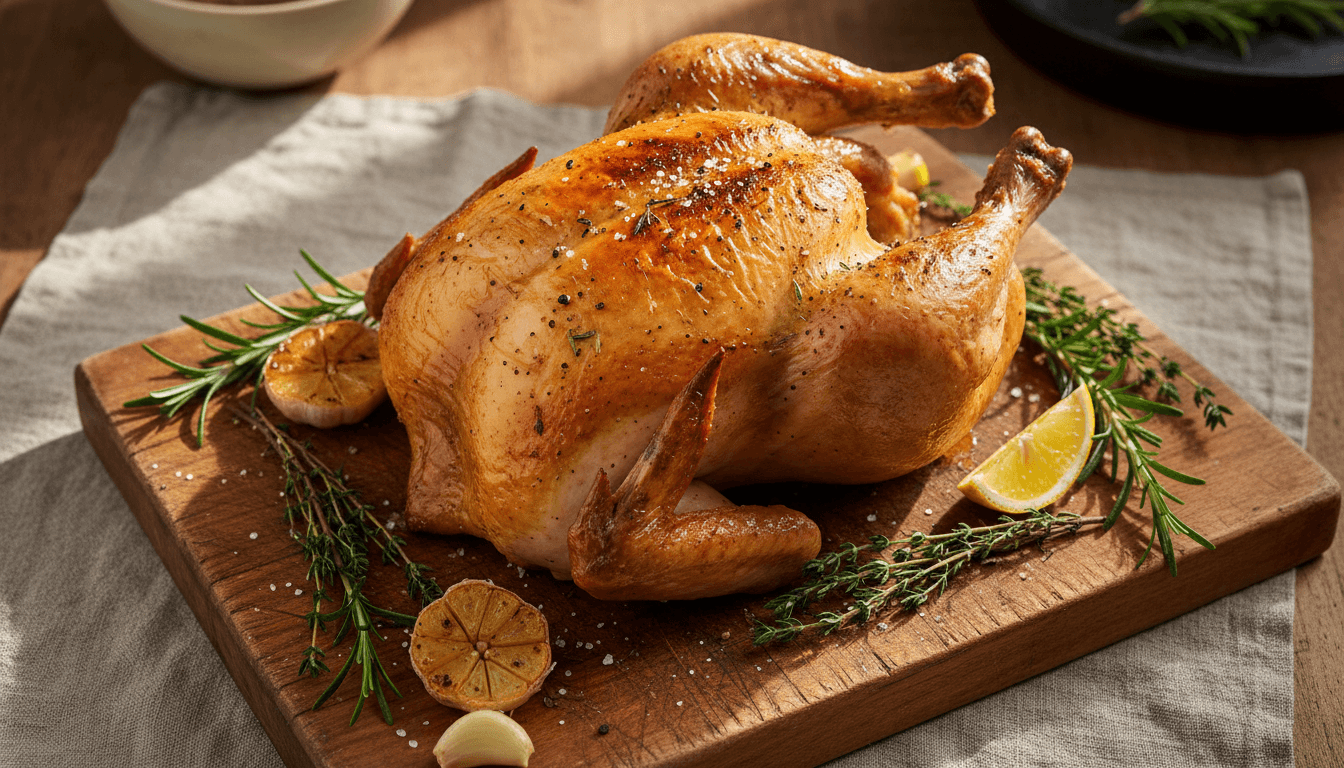
The technique pillar, dry brine, spatchcock, high heat, sheet pan. 2 hours total, 6 servings.
Why this works
Every recipe on this site ships with an explanation of the technique decisions, why sear then braise, why the acid goes in at the end, why the fat renders before the aromatics. The method below is those decisions, in order.
Wüsthof Classic 8-inch Chef's Knife + Kitchen Shears
To spatchcock a chicken well, you need real kitchen shears and a sharp chef's knife. Wüsthof Come-Apart shears are my default, they take the backbone out cleanly. The 8-inch Wüsthof Classic breaks the breastbone in one press. Victorinox is the budget alternative that does the same job at half the price; I'd go Victorinox first, upgrade later.
Ingredients
Serves 6- Wüsthof Classic 8-inch Chef's Knife + Kitchen Shears · The spatchcock tools
- Aromatics, salt, fat (full ingredient list ships with photography)
Method
Start with a good bird, 4 to 4.5 lbs
Smaller roasts faster and more evenly. Over 5 lbs, the breast overcooks before the thighs hit temp. Mary's air-chilled, Bell & Evans, or a farmer's-market bird if you have one. Organic matters less than air-chilled and small.
Dry brine 24 hours, minimum 12
Kosher salt (Diamond Crystal), one teaspoon per pound, rubbed all over including the cavity. Uncovered on a rack in the fridge for 24 hours. The skin dries out, the salt penetrates, the meat seasons all the way through. This is the single biggest upgrade you can make.
Spatchcock, remove the backbone
Bird breast-side down, shears down either side of the spine, remove it. Flip, press the breastbone flat. Twenty seconds of work. The bird now cooks in 45 minutes instead of 75 and cooks evenly, breast and thigh finish at the same time.
Keep the backbone, don't throw it out
The backbone goes into a freezer bag with any other chicken scraps. When you have two pounds, make stock. This is where your bone broth pipeline starts. Labeled, dated, freezer.
Sheet pan + rack, not roasting pan
A half-sheet pan with a wire rack set inside. The bird sits on the rack, air circulates below. The drippings collect in the pan for gravy. A rimmed Nordic Ware sheet pan and any wire rack that fits.
High heat, 425°F, not low and slow
Spatchcocked birds take high heat beautifully. 425°F for 45-55 minutes. The skin crisps hard, the meat stays juicy because the cook time is short. Low-and-slow roast chicken gives you soggy skin and dry breast.
Butter and herbs under the skin, not on top
Compound butter, softened butter (Kerrygold, room temp) with thyme, garlic, lemon zest. Slide your fingers between the skin and the breast, push the butter in. This bastes the meat from the inside as it cooks. On top, it just melts off.
Vegetables under the rack, not touching the bird
Halved shallots, carrots, lemon wedges, garlic heads in the sheet pan below the rack. They catch the drippings and roast into a side dish. Don't crowd, a single layer or they steam.
Instant-read thermometer, 155°F breast, 175°F thigh
A Thermapen or any $25 instant-read. Breast at 155°F (carryover to 160-162°F resting), thigh at 175°F. This is the only reliable way to know. Time-and-visual-check is how people overcook birds for decades.
Rest 15 minutes, tented loosely
The bird keeps cooking on the rack for 15 minutes. Tent with foil loose enough that steam escapes, tight tenting softens the skin. Juices redistribute, carving is cleaner, and the dinner is better.
Pan sauce in 5 minutes while it rests
Pour off excess fat (save it, chicken fat is gold for frying eggs). Deglaze the sheet pan with half a cup of white wine or broth, scrape up the fond, reduce by half, whisk in a tablespoon of cold butter off-heat. Season. That's dinner-tier gravy in five minutes.
Carve warm, not hot, and use the carcass
Breast off the bone, slice against the grain. Thighs and drumsticks whole or pulled. The carcass goes into the stockpot with that saved backbone (item 4) and whatever vegetable scraps you have. You get three meals: dinner, next-day leftovers, and a quart of stock.
Variations
Substitutions and adaptations land with the photography shoot. The method holds across most reasonable swaps.
Storage
Refrigerator: 3 to 4 days, sealed. Freezer: up to 3 months. Reheat covered to retain moisture.
Frequently asked
- Do I really need to dry brine?
- You don't need to, but you should. A dry-brined chicken and an un-brined chicken side by side is a real comparison, the brined one seasons all the way through, the skin crisps dramatically better, and the meat holds moisture. Twelve hours is the minimum useful window; 24 is the sweet spot. Skip this step and every other step matters less.
- Spatchcock or roast whole?
- Spatchcock. I've tested both enough times to stop having the argument. Spatchcocked birds cook faster, more evenly, and have more crispy skin surface area. The only case for whole-roasting is presentation for a holiday table, and even then, the carved bird on a platter doesn't need to arrive whole.
- What if I don't have kitchen shears?
- You can spatchcock with a sharp chef's knife, cut down either side of the spine, press hard. It's harder and messier. Victorinox kitchen shears are $20 and they pay for themselves in the first use. Worth the small investment.
- Can I do this in a cast iron skillet instead?
- Yes, a 12-inch Lodge or Staub braiser. The bird won't spatchcock fully flat in a 10-inch, so size up. Drippings concentrate more, skin is slightly less crispy on the sides that touch the pan. Still a good roast; sheet pan is the default because the skin gets more uniform exposure.
- What's the fail mode to watch for?
- Two: bird too big (over 5 lbs, breast overcooks), and pulling it at the wrong temp. A $25 thermometer fixes the second. Buy the right size bird and you avoid the first. Other than that, high heat and time take care of themselves.
- How do I get really crispy skin?
- Three things, in order: dry brine 24 hours uncovered (skin dries out), pat the bird dry right before roasting, 425°F heat. Some people swear by a blast of 475°F for the last 10 minutes, I don't find it necessary if the first three are done well. Never tent foil during roasting; that steams the skin soft.
- What do I do with all the leftovers?
- Three meals plan: roast chicken for dinner (1), shredded chicken over grain bowls or in chicken salad for lunch (2), carcass into stock for a soup or risotto later in the week (3). A 4-lb bird feeds a family of four for one full dinner, gives you 2-3 servings of leftovers, and yields about a quart of stock. It's one of the best use-to-effort ratios in home cooking.
Related recipes
See all →- Technique
Bone Broth: Slow Method, Real Gel, Sippable
A 24-hour bone broth recipe that gels at the fridge, collagen-rich, low-sodium, sippable from a mug. Tested for connective-tissue support alongside BPC-157 and TB-500 protocols.
1480m9g Protein - Technique
Air Fryer Chicken Breast: Juicy, 18 Minutes
The reliable juicy method: quick brine, 375F/190C, time by thickness, pull at 165F/74C. 18 minutes active, 4 servings, honest about dry-out.
33m38g Protein - Technique
Best Non-Toxic Cookware: What We Actually Cook On
The non-toxic cookware we actually cook on, ranked. Carbon steel, ceramic, cast iron, stainless, plus the set we would skip and why.
Get a tested recipe + a nutritional note in your inbox each Sunday.
One recipe a week, photographed on the same Tuesday it tested. Reviewed by an RD. No promotions, no pop-ups, no tracking.
The Clean Chef Starter Kit.
A 14-day anti-inflammatory meal plan PDF, grocery list by section, macros totaled per day, Sunday prep sequence. Free.
By subscribing, you agree to our Privacy Policy. One calm email a week. Unsubscribe anytime.
We're building a shop.
Curated cookware, pantry staples we actually buy, recipe-bundle PDFs. Be the first to know when it opens.
We'll only email you about the shop opening. Unsubscribe in any email. See our Privacy Policy.