- Calories
- 340
- Protein
- 38g
- Fiber
- 1g
- Sat. fat
- 2g
- Sodium
- 420mg
- Added sugar
- 0g
What this recipe does for you.
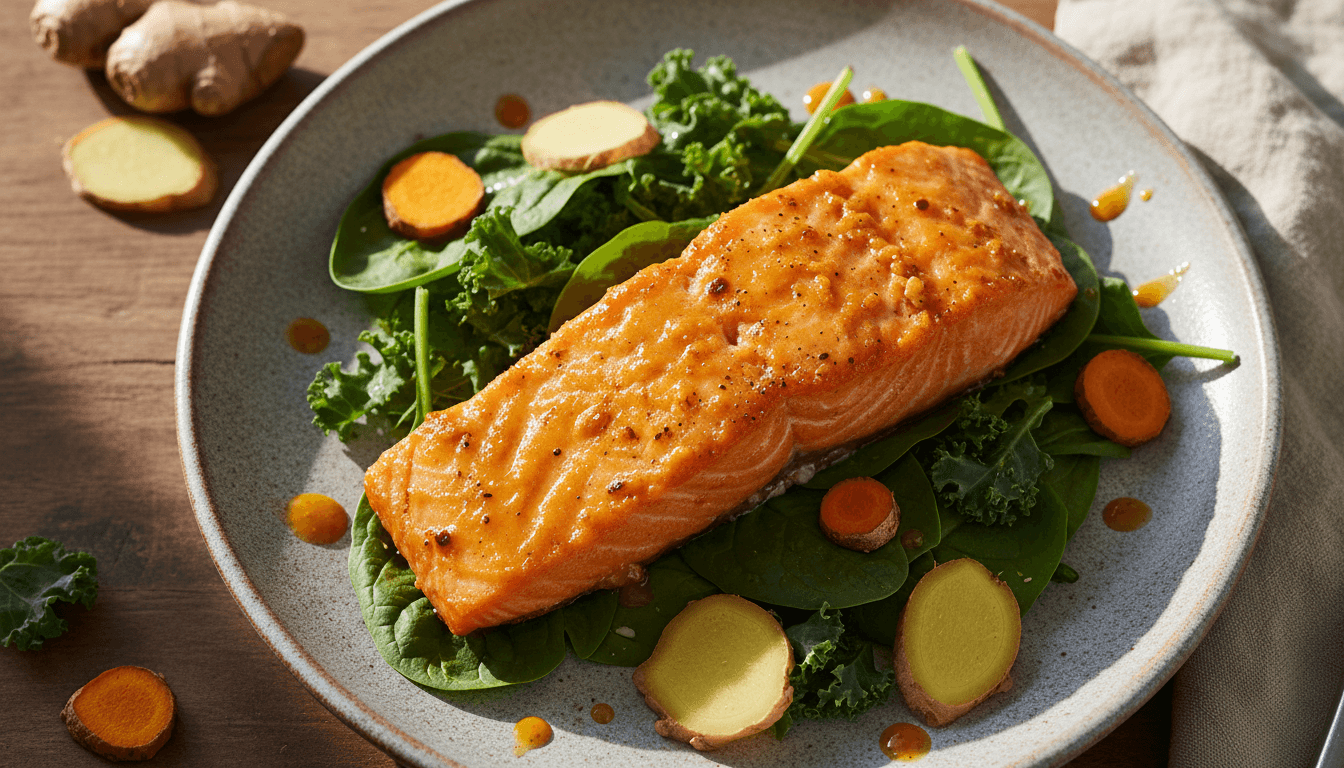
A 20-minute anti-inflammatory salmon with turmeric, ginger, garlic, and coconut aminos. 38g protein per fillet.
Why this works
Every recipe on this site ships with an explanation of the technique decisions, why sear then braise, why the acid goes in at the end, why the fat renders before the aromatics. The method below is those decisions, in order.
Vital Choice Wild Sockeye Salmon
If you have a fish counter you trust, buy there. If you don't, Vital Choice ships wild Alaskan portioned fillets that thaw well and cook better than most grocery-store salmon. Sockeye has the richest omega-3 profile. Butcher Box's wild salmon add-on is the subscription alternative. Farmed Atlantic is fine if you go with ASC-certified, but wild is the upgrade.
Ingredients
Serves 2- Vital Choice Wild Sockeye Salmon · The fish
- Aromatics, salt, fat (full ingredient list ships with photography)
Method
Pat the fillets dry, completely
Wet fish steams. Dry fish sears. Paper towels, press firmly, both sides. Do this even if you think it looks dry. The difference in crust is enormous.
Salt 15 minutes before cooking, not at the last minute
Kosher salt, half a teaspoon per fillet, on the counter while you make the glaze. This firms the flesh and seasons it through. Salting right before cooking pulls water to the surface, the opposite of what you want.
Bloom the turmeric and ginger in oil, off the heat
Warm the oil, grated ginger, minced garlic, ground turmeric, and pepper in a small pan. When it sizzles softly (about 45 seconds), pull it from the heat. Let it sit while you preheat. This is your glaze base.
Coconut aminos, not soy (if you want Whole30)
Coconut Secret coconut aminos is the default. Tablespoon into the glaze. If you're not on Whole30, tamari works, deeper flavor, slightly saltier. Don't skip this step; it's where umami comes from.
400°F oven, skin-side down, parchment-lined sheet pan
Not 425, not 375. 400°F for 10-12 minutes depending on fillet thickness. Skin-side down on parchment, it releases cleanly and the skin crisps against the paper. A Nordic Ware sheet pan is what I use.
Thickness dictates time, not the recipe
One-inch thick at the thickest point is the baseline. Thinner fillets come out at 8 minutes. Thicker (like a cold-water king) goes 13-14. Pull at 125°F internal, carryover cooks it to 130°F, which is where good salmon peaks.
Brush the glaze on twice, once before, once after
Brush half the glaze on the fillets before they go in. Brush the remaining half on when they come out. Pre-bake glaze sets and concentrates; post-bake glaze stays bright. Both matter.
Finish with lime, always
A wedge per plate, squeezed over just before serving. Acid cuts the richness of the salmon and brightens the turmeric. Lemon works too, but lime is more ginger-friendly.
Cilantro on top, stems included
A small handful, chopped. Stems have the same flavor as the leaves and they're not wrong to eat. If cilantro tastes like soap to you, parsley or basil work, basil is the underrated swap here.
Serve over jasmine rice or cauliflower rice
The glaze pools on the plate and wants a starch to soak it up. Jasmine if you're not restricting; cauliflower rice (frozen is fine, Trader Joe's works) if you're Whole30 or low-carb. The rice is the vehicle, not the star.
Make the glaze 3 days ahead
The glaze holds in a jar in the fridge for 3 days. Weeknight version: salmon out at 5:30, glaze from the fridge, oven on, 20 minutes later you're eating. Batch the glaze if you cook salmon weekly.
Flake leftovers over salad the next day
Salmon doesn't reheat gracefully. What it does do: flake beautifully, cold, over a bed of greens with a spoon of the glaze thinned with olive oil. Better than reheated. Plan for this explicitly.
Variations
Substitutions and adaptations land with the photography shoot. The method holds across most reasonable swaps.
Storage
Refrigerator: 3 to 4 days, sealed. Freezer: up to 3 months. Reheat covered to retain moisture.
Frequently asked
- Can I use frozen salmon?
- Yes, if you thaw it properly. Overnight in the fridge, or 30 minutes under cold running water in sealed plastic. Never thaw on the counter. Pat it extra dry, frozen fish holds more water. The cook time is the same once thawed.
- Skin on or off?
- Skin on, always. It protects the flesh from overcooking, crisps against the parchment, and you can peel it off at the plate if you don't want to eat it. The omega-3s and flavor are in the fat right under the skin, so removing it early costs you both.
- How do I know when it's done without a thermometer?
- Press the top of the thickest part with the back of a fork. If it flakes easily and the flakes separate cleanly, it's done. If you see any translucent pink in the flake lines, give it 2 more minutes. A $25 instant-read thermometer (Thermapen One is the premium pick, ThermoPop is the budget one) saves you the guesswork.
- Can I grill this instead of baking?
- Yes, medium-high, skin-side down, 6 minutes, flip, 2 minutes. The glaze will char quickly, so brush before and after, not during. Use a well-oiled grate. Cast iron grill pan indoors works the same way.
- What's the sodium story?
- About 420mg per serving as written, with the coconut aminos doing most of the work. If you're sodium-restricted, cut the added salt and rely on the aminos alone, that drops it closer to 290mg. USDA FDC is the source for the unsalted salmon numbers.
- Does the turmeric actually do anything?
- The curcumin evidence for inflammation modulation is reasonable (Hewlings & Kalman 2017) at culinary doses over time, especially paired with black pepper. One meal is not therapy. Twice a week for a year, as part of a broader pattern, is where the signal shows up. I cook with it because it tastes good; the research is a tailwind.
Related recipes
See all →- Diet-Specific
Protizánětlivá zlatá kuřecí polévka
Kuchyní vyzkoušená protizánětlivá kuřecí polévka s kurkumou, zázvorem a kostním vývarem. 55 min, 32 g bílkovin, výživová tabulka níže.
55m32g Protein - Diet-Specific
The Anti-Inflammatory Diet: A Cook's Version
Evidence brief, ingredient inventory, weekly framework, and the 7-day meal plan. Pillar for the Anti-Inflammatory hub.
- Diet-Specific
Lentil and Sweet Potato Stew: One Pot, 18g Fiber
A weeknight one-pot stew. Red lentils, sweet potato, coconut milk, turmeric, lemon. 18g fiber per bowl, the kind of food that fixes a tired evening.
35m18g Protein
Get a tested recipe + a nutritional note in your inbox each Sunday.
One recipe a week, photographed on the same Tuesday it tested. Reviewed by an RD. No promotions, no pop-ups, no tracking.
The Clean Chef Starter Kit.
A 14-day anti-inflammatory meal plan PDF, grocery list by section, macros totaled per day, Sunday prep sequence. Free.
By subscribing, you agree to our Privacy Policy. One calm email a week. Unsubscribe anytime.
We're building a shop.
Curated cookware, pantry staples we actually buy, recipe-bundle PDFs. Be the first to know when it opens.
We'll only email you about the shop opening. Unsubscribe in any email. See our Privacy Policy.