- Calories
- 230
- Protein
- 19g
- Fiber
- 2g
- Sat. fat
- 3g
- Sodium
- 520mg
- Added sugar
- 0g
What this recipe does for you.
High-protein cottage cheese bagels from the viral two-ingredient dough, blended for a smooth crumb. 19g protein each, 35 minutes including the bake. Honest about texture.
Why this works
Every recipe on this site ships with an explanation of the technique decisions, why sear then braise, why the acid goes in at the end, why the fat renders before the aromatics. The method below is those decisions, in order.
Good Culture 4% Cottage Cheese
Blended cottage cheese is doing most of the work here, so the brand matters more than it looks. Good Culture 4% blends to a thick smooth paste without weeping water, which keeps the dough from going slack. Thinner supermarket-own versions need a tablespoon of flour to compensate. UK readers: Longley Farm cottage cheese blends to the same consistency.
Ingredients
Serves 4- Good Culture 4% Cottage Cheese · The protein base
- Aromatics, salt, fat (full ingredient list ships with photography)
Method
The ratio is one cup flour to one cup blended cottage cheese, plus one egg
One cup of self-raising flour, one cup of cottage cheese blended completely smooth, one egg worked into the dough. A pinch of salt. That is the base. The cottage cheese replaces the yogurt from the viral version and carries most of the 19g of protein. No yeast, no proving, no second rise.
Blend the cottage cheese until there is no curd left
This is the step that separates a good bagel from a patchy one. Tip the cottage cheese into a blender or use a stick blender in a jug and run it for 30 to 40 seconds until it looks like thick cream. Visible curd means visible curd in the baked bagel, plus uneven protein. Do not skip this to save a washing-up job.
Use self-raising flour, or add baking powder yourself
Self-raising flour is what gives these lift without yeast. If you only have plain flour, add two teaspoons of baking powder per cup and a pinch of salt. The dough will be sticky and shaggy, which is correct. Resist adding extra flour to make it tidy because that is what turns the crumb dense.
Shape with wet hands and keep the hole wide
Divide the dough into four, roll each piece into a rope with damp hands, and join the ends into a ring. Make the centre hole wider than looks right because the dough closes up as it bakes. A pinched-shut hole gives you a bun, not a bagel.
Egg wash is not optional if you want it to look like a bagel
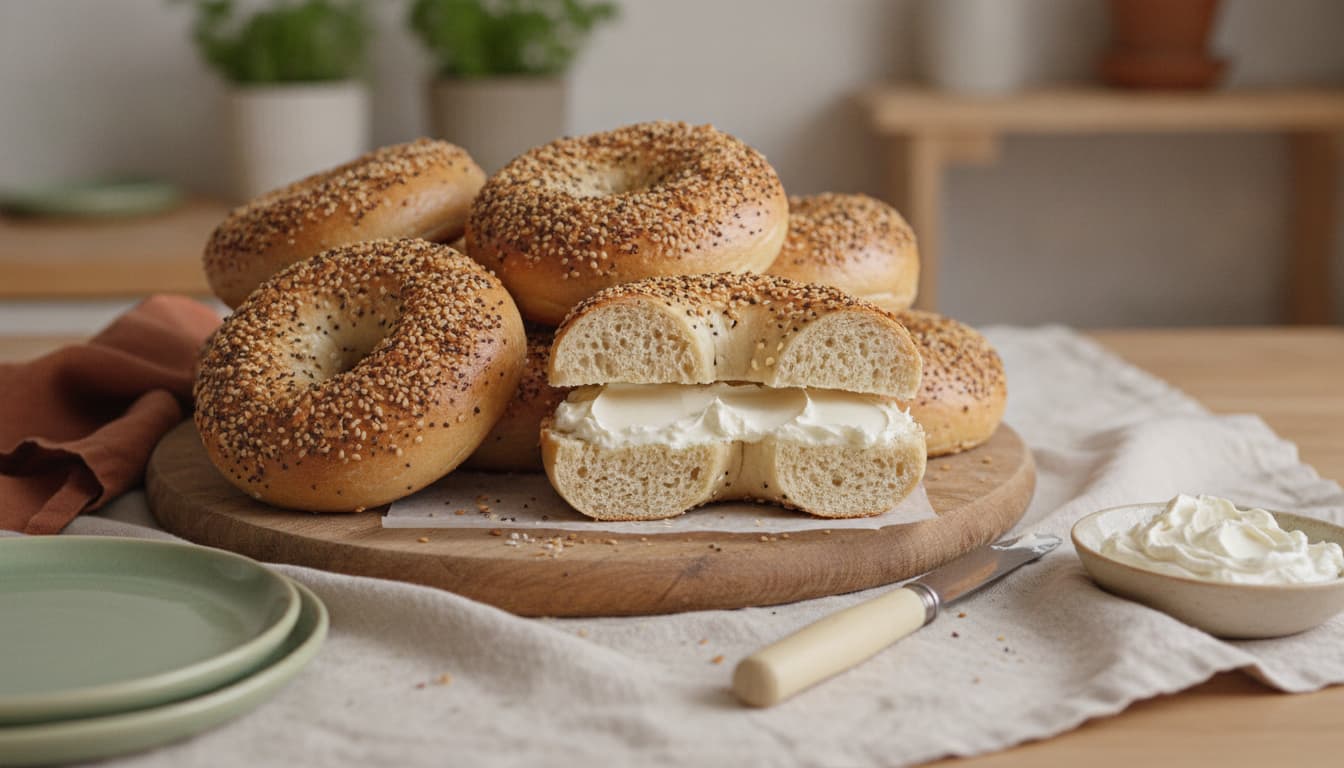
Without an egg wash these bake up pale and matte. Brush the tops with a beaten egg before baking for the glossy chewy crust that reads as a real bagel. This is also the glue for seasoning. Everything-bagel mix, sesame, or poppy seeds all stick to a wet egg wash and fall off a dry top.
Bake at 200C for 23 minutes, no boiling needed
Traditional bagels are boiled then baked. This dough is too soft to boil and does not need it. Bake at 200C fan for 23 minutes until deep golden and firm to a tap on the base. Lower and slower leaves the centre gummy, which was the main fault in early tests. Cool for ten minutes before slicing or the crumb tears.
Be honest about texture: this is a soft roll, not a New York bagel
No two-ingredient dough gives you the dense chew of a boiled, malted, overnight-proofed bagel. What you get is a soft high-protein roll in a bagel shape, ready in 35 minutes with no proving. It toasts well, holds cream cheese and smoked salmon, and lands 19g of protein. Judge it on that, not against a proper bakery bagel.
Make-ahead: bake four, freeze three, toast from frozen
The batch of four keeps two days in a sealed tin before going stale, so freeze what you will not eat fast. Slice before freezing, bag them, and toast straight from the freezer. Frozen and toasted is actually better than day-two fresh because the toast restores the chew the soft crumb loses overnight.
Variations
Substitutions and adaptations land with the photography shoot. The method holds across most reasonable swaps.
Storage
Refrigerator: 3 to 4 days, sealed. Freezer: up to 3 months. Reheat covered to retain moisture.
Why we tested this cottage cheese bagels: 19g protein, 35 minutes 3 times.
Every flagship recipe on this site goes through at least three rounds of kitchen testing before publication. We log what changed between tests so you can see the recipe's evolution, and so we can't quietly drop the failures.
- 01
Test 1
- What we tried
- Standard viral move: one cup self-raising flour, one cup Greek yogurt, no cottage cheese, hand-mixed and baked at 190C.
- What happened
- Edible but dense and faintly sour, with a gummy ring near the centre. Protein landed around 11g per bagel, lower than the recipes promised.
- What we changed
- Swapped half the yogurt for blended cottage cheese to push protein up, and raised the oven to 200C to fight the gumminess.
- 02
Test 2
- What we tried
- Three quarter cup blended cottage cheese plus quarter cup Greek yogurt, one cup self-raising flour, blended cheese stirred in by hand, baked 200C.
- What happened
- Better protein (around 17g) and a cleaner flavour, but the curd was still visible and the crumb was patchy where the cottage cheese had not broken down.
- What we changed
- Blended the cottage cheese completely smooth before adding flour, and brushed an egg wash on for colour and a real bagel sheen.
- 03
Test 3
- What we tried
- One cup self-raising flour, one cup fully blended cottage cheese, one egg in the dough plus an egg wash on top, everything-bagel seasoning, baked 200C for 23 minutes.
- What happened
- Smooth tight crumb, no visible curd, glossy chewy top, 19g protein per bagel. Held shape through the bake and sliced cleanly the next morning from the fridge.
- What we changed
- This is the published version. Blending the cottage cheese fully was the variable that fixed both the texture and the protein.
Frequently asked
- Why add cottage cheese to the two-ingredient dough at all?
- Protein. The original yogurt-and-flour version lands around 11g per bagel. Swapping the yogurt for blended cottage cheese pushes that to 19g without changing the method, because cottage cheese is denser in protein than Greek yogurt for the same volume. You also get a slightly milder, less sour flavour.
- Do I have to blend the cottage cheese?
- Yes, if you want a smooth crumb. Unblended curd stays visible in the baked bagel and leaves the protein unevenly distributed through the dough. A 30 to 40 second blitz in any blender or with a stick blender fixes it. This was the single change that took the recipe from acceptable to good.
- Can I make these without self-raising flour?
- Yes. Use one cup of plain flour plus two teaspoons of baking powder and a pinch of salt. The rise is slightly less even but the bagels still hold their shape. Do not try to make them with almond or coconut flour at a one to one swap because neither absorbs enough water and the dough will not come together.
- Are these actually like a real bagel?
- No, and it is worth saying plainly. A proper bagel is boiled, often malted, and proofed overnight, which is where the dense chew comes from. These are soft high-protein rolls in a bagel shape. They are genuinely good toasted with cream cheese, they just are not a New York bagel and no quick recipe will be.
- What is the protein per bagel and how is it calculated?
- About 19g per bagel across a batch of four, from the flour, the egg, and roughly one cup of cottage cheese split four ways. The exact number shifts with your cottage cheese brand and fat percentage, so treat 19g as a tested estimate rather than a precise figure.
Related recipes
See all →- High-Protein
Cottage Cheese Flatbread: 28g Protein, 20 Minutes
The viral cottage cheese flatbread, chef-tested. 28g protein per serving, 20 minutes, 4 ingredients.
20m28g Protein - High-Protein
High-Protein Breakfast Bowl: 42g Protein, 15 Minutes
Eggs, spinach, quinoa or sweet potato, salsa, avocado, 42g protein in a 15-minute bowl. Swappable base protein.
15m42g Protein - High-Protein
Greek Lemon Chicken
Bone-in thighs, lemon, oregano, garlic, a Mediterranean pillar recipe, 45 minutes, 36g protein.
45m36g Protein
Get a tested recipe + a nutritional note in your inbox each Sunday.
One recipe a week, photographed on the same Tuesday it tested. Reviewed by an RD. No promotions, no pop-ups, no tracking.
The Clean Chef Starter Kit.
A 14-day anti-inflammatory meal plan PDF, grocery list by section, macros totaled per day, Sunday prep sequence. Free.
By subscribing, you agree to our Privacy Policy. One calm email a week. Unsubscribe anytime.
We're building a shop.
Curated cookware, pantry staples we actually buy, recipe-bundle PDFs. Be the first to know when it opens.
We'll only email you about the shop opening. Unsubscribe in any email. See our Privacy Policy.